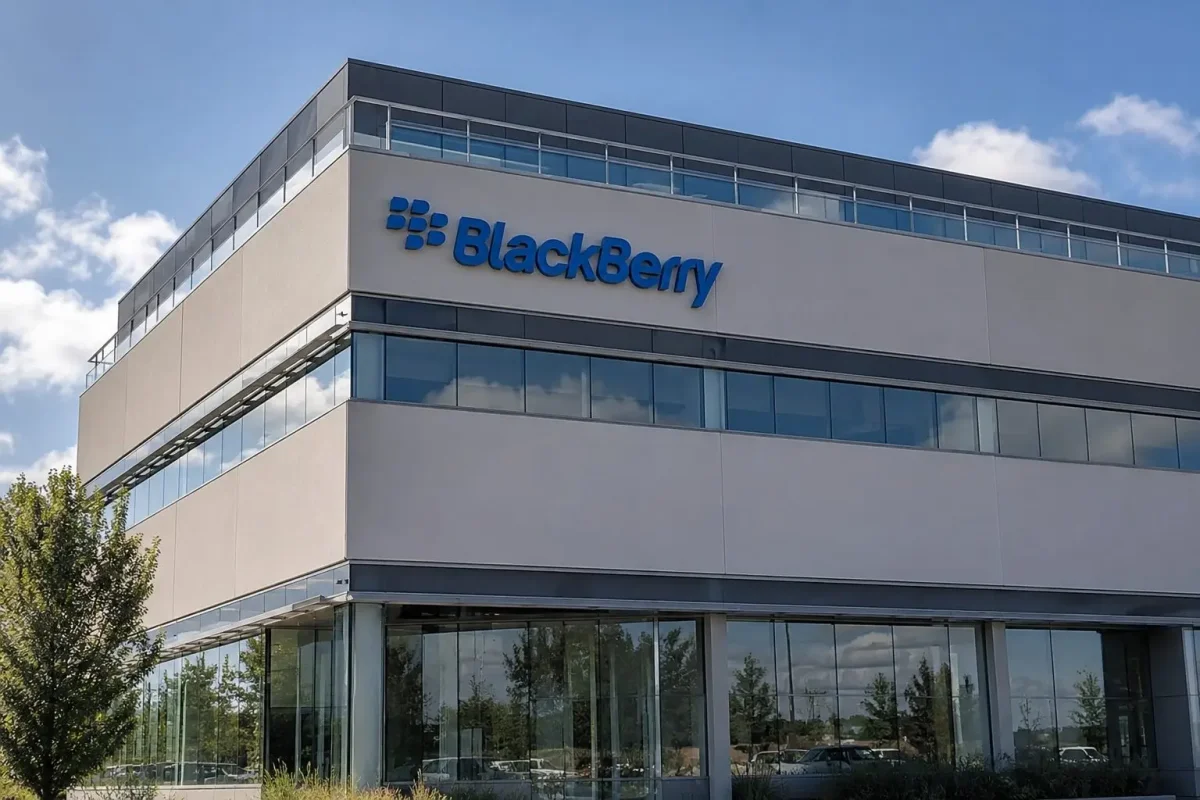
BlackBerry Limited experienced a significant rally in U.S. trading on Tuesday, with shares climbing 6.1% to close at $8.39. The stock reached an intraday high of $8.77, accompanied by robust trading volume of approximately 39.7 million shares. This surge follows the Memorial Day holiday, as markets reopened with a positive tone across technology stocks.
The upward momentum was fueled by key developments in the company's security and automotive software segments. Notably, BlackBerry announced the re-certification of its AtHoc emergency communications platform under the FedRAMP Class D High designation for 2026. FedRAMP is the U.S. government's cloud security approval program, and Class D High is reserved for sensitive unclassified information where failure could have severe consequences. This re-certification underscores the platform's operational maturity and security rigor, as highlighted by Ramon Pinero, general manager of BlackBerry AtHoc.
Additionally, BlackBerry renewed its normal course issuer bid, allowing the company to repurchase up to 26.8 million shares, representing approximately 4.58% of the public float. The buyback plan, disclosed in an SEC filing on May 8, signals management's confidence in the company's valuation and future prospects.
Analyst sentiment remains mixed. CIBC raised its price target on BlackBerry to $8.50, reflecting optimism around the company's strategic direction. However, S&P Global maintained a Hold rating, with an average analyst target of $5.16 based on prior estimates. The divergence highlights the ongoing debate about BlackBerry's turnaround story and its ability to monetize its software assets.
BlackBerry's QNX embedded software unit, used in automotive and industrial applications, posted record quarterly revenue of $78.7 million, a 20% year-over-year increase. This contributed to overall fourth-quarter revenue of $156.0 million, up 10% year over year. CEO John Giamatteo stated, "We are no longer a company in transition," emphasizing the company's focus on secure communications and QNX. The QNX royalty backlog stands at approximately $950 million, reflecting future revenue from customer wins.
The broader market also supported BlackBerry's gains, with the S&P 500 and Nasdaq rising on AI optimism. However, the stock's move did not trigger a broad cybersecurity rally, as peers like CrowdStrike, Palo Alto Networks, and SentinelOne showed mixed performance. The Nasdaq-100 ETF (QQQ) gained 1.4%, indicating strength in large-cap tech.
Looking ahead, BlackBerry's fiscal first-quarter results are expected around June 25, with the quarter ending May 31. Investors will closely monitor whether the QNX backlog and FedRAMP progress translate into sustainable revenue growth. Risks remain, including potential valuation concerns and broader tech sentiment shifts.