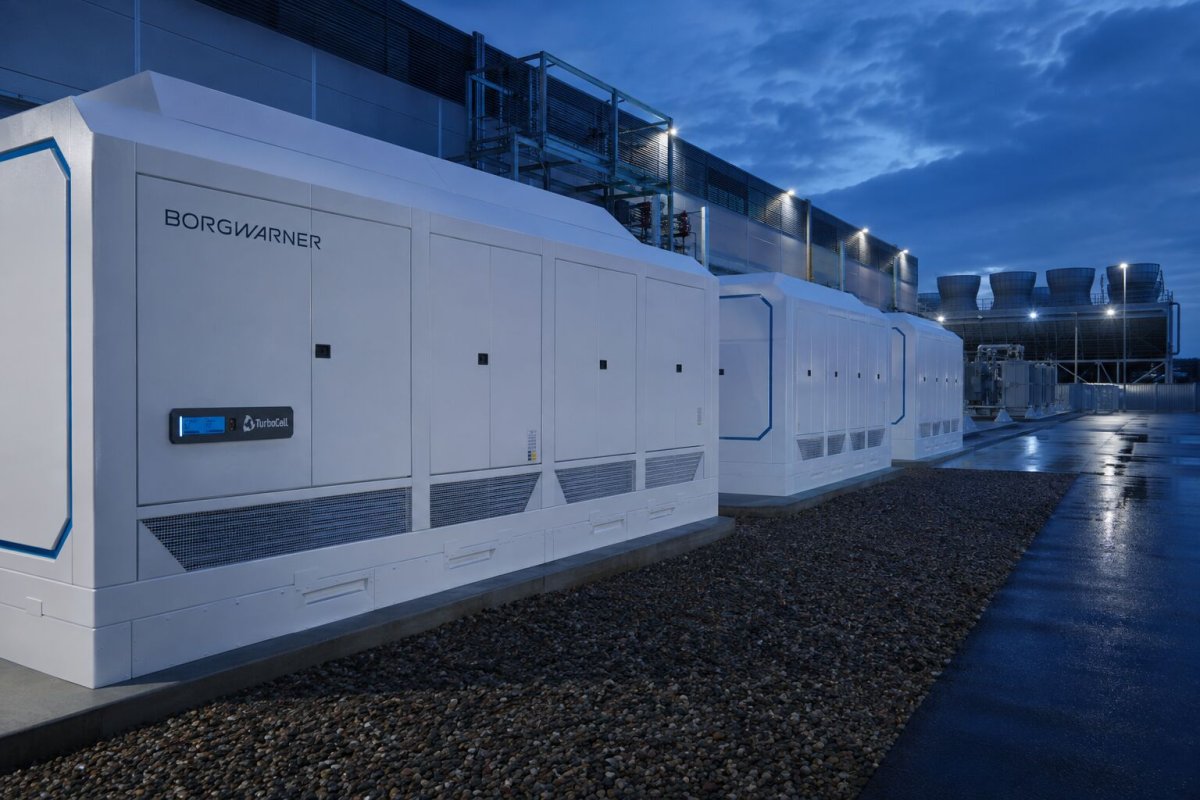
BorgWarner (NYSE: BWA) has once again confirmed its ambitious foray into the artificial intelligence infrastructure power market, reiterating its production timeline and revenue expectations in a recent regulatory filing. The company, known primarily for automotive components, is positioning itself as a key player in the rapidly growing data-center power segment.
In a Form 8-K filed after the market close on Friday, September 4, 2026, BorgWarner stated that it still expects to begin production of its turbine-generator systems in 2027. The initial installed capacity is projected at 2 gigawatts (GW), with first-year sales anticipated to exceed $300 million. This figure, while significant, represents only about 2.1% of the midpoint of BorgWarner's 2026 sales guidance, which stands between $14.0 billion and $14.3 billion.
The filing was notably direct, with the company stating it was submitted 'in response to questions.' It repeated the previously announced timing, capacity, and sales figures but did not introduce new details such as a second customer, margin targets, or larger orders. This has left some investors wanting more concrete financial metrics to assess the project's profitability.
Market Reaction and Stock Performance
BorgWarner's shares experienced a notable uptick on Friday, closing at $67.54, up 2.8% from the previous session. The stock traded within a range of $65.65 to $67.73 during regular hours. However, the gains were partially erased in after-hours trading, with a last recorded trade at $65.96, which wiped out most of the session's advance. This movement occurred prior to the 8-K filing, so the market's initial reaction to the announcement remains to be seen when trading resumes on Tuesday, following the Labor Day holiday.
The project traces its origins to a February supply agreement with TurboCell, a subsidiary of Endeavour. BorgWarner has been developing this modular power system for over three years, designed to serve prime, backup, and peak-shaving power needs at AI campuses and microgrids. The systems are versatile, capable of running on natural gas, propane, diesel, or hydrogen, and boast efficiency above 36% across 60% to 90% load conditions.
Strategic Implications and Growth Potential
One of the most intriguing aspects of this venture is BorgWarner's vertical integration strategy. The company expects to control approximately 65% of the system's content, leveraging its expertise in turbocharging, thermal management, power electronics, and software. This level of integration could provide more substantial economic benefits than a typical contract manufacturing arrangement, potentially offering higher margins and greater control over the supply chain.
CEO Joseph Fadool commented in February that the system could 'open avenues for further profitable growth.' However, Friday's filing did not provide a gross-margin bridge or any additional financial details to validate this claim. Investors are left awaiting more concrete data on profitability, which remains a key uncertainty.
The move into data-center power comes at a time when BorgWarner's core automotive business is facing headwinds. In the second quarter, the company reported sales of $3.65 billion and an adjusted operating margin of 11.3%, with adjusted earnings per share of $1.42, up 17% year-over-year. However, organic sales declined 1.2% in the quarter, and the company expects its weighted light-vehicle markets to range from a 3% decline to flat this year. The data-center power initiative offers a new demand cycle that is not tied to vehicle production, providing a potential growth avenue.
Analyst Sentiment and Price Targets
Wall Street has taken note of BorgWarner's potential in this emerging market. According to S&P Global analyst data compiled by StockAnalysis, the consensus rating is a 'Moderate Buy,' with 11 positive ratings (7 strong buy, 4 buy) and 5 holds. No sell ratings were recorded in the August set. The average 12-month price target stands at $80.13, representing an 18.6% upside from Friday's close of $67.54. Targets range from a low of $62 to a high of $95, reflecting wide divergence in expectations. For instance, Argus recently cut its target to $67, while RBC initiated coverage with an $87 target.
This wide spread indicates that the market has not yet reached a consensus on how much value to assign to BorgWarner's non-auto growth initiatives. The $300 million sales target is a management expectation, not recognized revenue, and there are risks including production delays, changes in customer deployment, and undisclosed margin or purchase-volume protections. Additionally, fuel costs, permitting, and grid-connection regulations could slow data-center projects.
As BorgWarner prepares to resume trading on Tuesday, investors will be watching to see if the 8-K filing steadies confidence or if the company can eventually secure a second customer and provide a clearer picture of the project's economics. The filing answered questions about timing but left the financials open to interpretation.