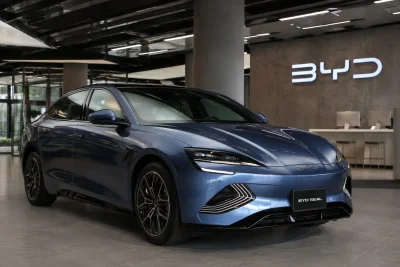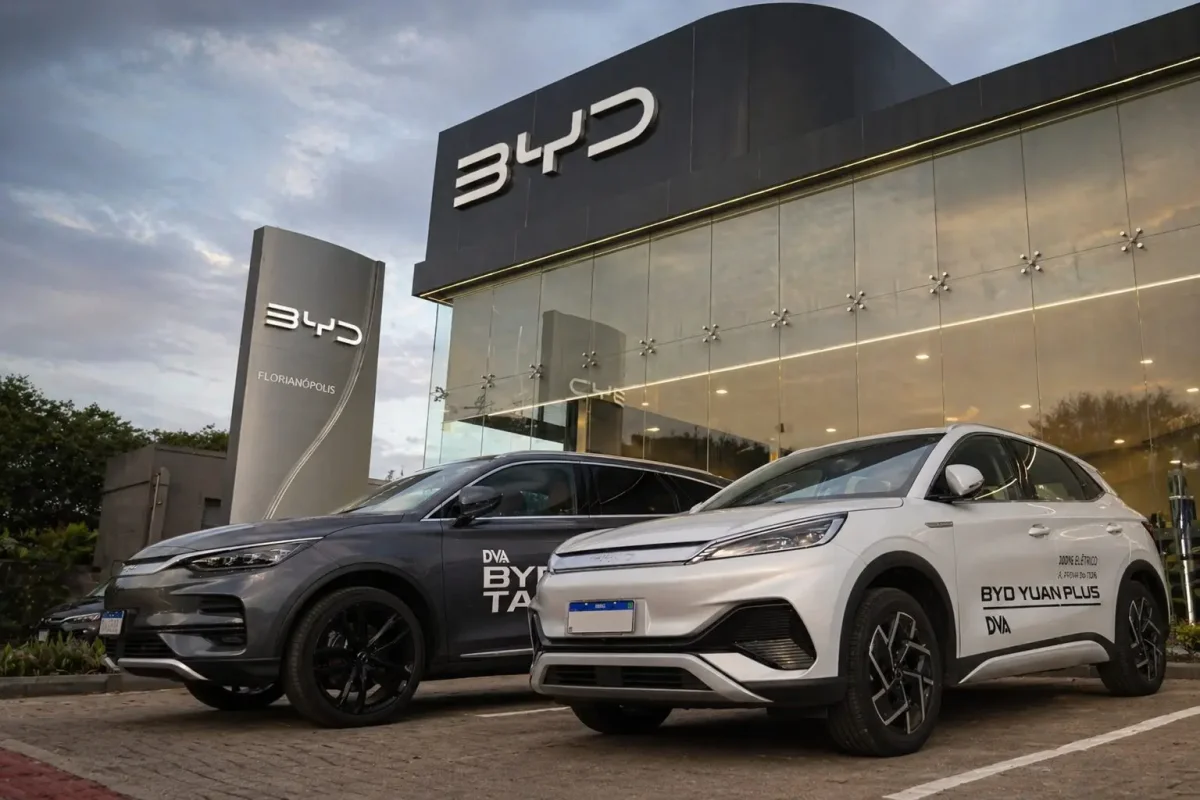
BYD Co. experienced a steep 55.38% decline in first-quarter net profit, landing at 4.08 billion yuan, marking the sharpest drop in recent years. The Chinese electric vehicle giant faced headwinds from weak domestic demand and aggressive price cuts across the industry. Revenue also slipped 11.82% to 150.23 billion yuan, according to the company's filing with the stock exchange. Operating cash flow came in 67.48% lower compared to the same period last year.
This performance is notable because BYD was widely seen as one of the automakers best positioned to weather China's fierce EV price war, leveraging its scale, efficiency, and growing overseas sales. However, Bloomberg noted that this was BYD's weakest quarterly profit in over three years, though the figure roughly matched analyst expectations.
The weakness in quarterly numbers reflects broader challenges. According to the Financial Times, sluggish demand in China is overshadowing stronger appetite for electric vehicles globally. Reuters highlighted weaker local sales, reduced trade-in incentives for lower-priced EVs and plug-in hybrids, and intensifying competition from rivals like Geely and Leapmotor.
BYD released its earnings report after market close at 18:34 Hong Kong time, missing the main trading hours in both Hong Kong and Shenzhen. As a result, the full market reaction is expected on Wednesday. According to the South China Morning Post, net profit came in right on target at 4.09 billion yuan, matching consensus, while revenue actually topped the 140 billion yuan expectation. Still, the report noted that this was the weakest quarterly revenue since Q2 2024, and profit hit its lowest point since Q1 2023.
BYD sold 700,463 new energy vehicles in the first quarter, a 30.01% year-over-year decline. This figure includes both fully electric models and plug-in hybrids sold in China. Exports for March climbed to 120,083 units, providing some support beyond the domestic market.
BYD is trying to shift the narrative away from price competition and toward its technological advantages. Executive Vice President Stella Li told Reuters that "flash charging" is key, describing it as the final hurdle for EV buyers. BYD plans to roll out approximately 20,000 flash-charging stations across China and another 6,000 internationally over the coming year.
Europe is emerging as a new battleground. Kia's CEO noted shrinking price differences with Chinese competitors, while Reuters reported that BYD car registrations in Europe jumped nearly 150% in March, outpacing the broader market and pressuring established automakers to offer steeper discounts and more budget-friendly models.
However, overseas expansion and faster charging may not immediately improve margins. "Given the weakness in the Chinese EV market, we don't expect share to be easily recovered," Macquarie analyst Eugene Hsiao said after BYD rolled out its battery upgrade in March. He is closely watching how volumes develop.
BYD Chairman Wang Chuanfu, speaking in March after the company reported its first yearly profit drop in four years, described the competitive landscape for China's new-energy vehicles as "fever pitch" and said the sector has entered a "knockout stage."
Looking ahead, BYD's April sales numbers are expected before the end of the week, and wider China auto statistics—including Tesla's China sales—are due in early May.