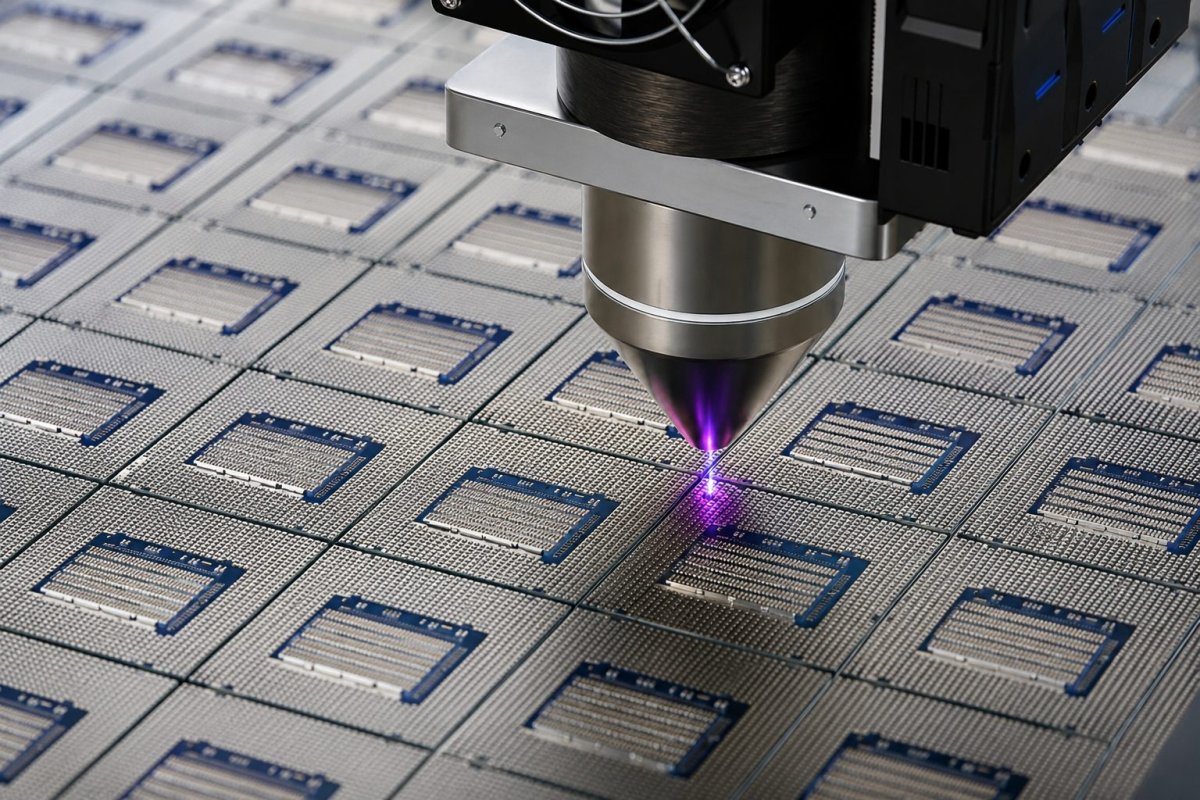
The semiconductor sector experienced a robust rally on Friday, with the Philadelphia Semiconductor Index climbing approximately 5%. This surge propelled AI-focused exchange-traded funds (ETFs) higher and helped the S&P 500 and Nasdaq Composite achieve record closing levels. Nvidia (NVDA) extended its gains, while Micron Technology (MU) and Sandisk (SNDK) each surged about 12%, underscoring renewed investor enthusiasm for chipmakers and AI infrastructure plays.
The rally was broad-based, encompassing U.S., Taiwanese, and South Korean chip ETFs. The VanEck Semiconductor ETF (SMH) rose roughly 4.7%, while the iShares PHLX Semiconductor Sector Index ETF (SOXX) advanced about 5.4%. The iShares MSCI Taiwan ETF (EWT) added 1.8%, and the iShares MSCI South Korea ETF (EWY) jumped 7.4%, reflecting strong demand for Asian semiconductor exposure. Industrial supplier Eaton Corporation (ETN) edged up around 0.8% after reporting solid quarterly results.
AI Trade Expands Beyond Chip Designers
Investors are increasingly rotating beyond pure chip designers into ETFs and companies supplying power infrastructure for data centers. This shift highlights the broadening of the AI trade, as capital flows into hardware and energy-related plays. The Philadelphia Semiconductor Index's near-5% leap was a key catalyst, signaling that the AI rally remains intact despite recent volatility.
Eaton Reports Strong Q1, Raises Outlook
Eaton reported first-quarter sales of $7.5 billion, up 17% year over year, with adjusted earnings of $2.81 per share. The company raised its 2026 organic growth forecast to a range of 9% to 11%, citing "strong demand across our markets." CEO Paulo Ruiz credited robust data-center orders, which surged roughly 240% in the Electrical Americas segment. Eaton also completed $11 billion in acquisitions, including Boyd Thermal and Ultra PCS, further aligning with AI infrastructure needs.
However, Eaton's stock stumbled earlier in the week, dropping as much as 8.1% on Tuesday, as investors scrutinized modest guidance tweaks and segment margins that, while ahead of projections, landed 120 basis points below last year's levels. This dip underscores that even companies beating forecasts face pressure if margins disappoint.
ETF Performance and Concentration Risks
Year-to-date through May 7, SMH posted a 49.96% NAV return, with assets of $60.99 billion and a 0.35% expense ratio. SOXX returned 63.68%, while EWT and EWY climbed 48.43% and 85.22%, respectively. SMH's concentration is notable: Nvidia comprised 16.91% of the fund, and Taiwan Semiconductor Manufacturing Co. (TSM) accounted for 10.30%. SOXX holds 30 U.S.-listed semiconductor names, while EWT and EWY focus on Taiwan and South Korea—key players in advanced chips and memory.
This concentration has fueled gains but also poses risks. If capital spending dries up or memory prices falter, the same dynamics could unwind quickly. "The Asian chip rally was getting dangerous," warned Nick Ferres, CIO at Vantage Point Asset Management.
Asia's Chip Giants in the Spotlight
Asia's three most valuable firms—TSMC, Samsung Electronics (SSNLF), and SK Hynix—are all chip giants, with all-time high profits thrusting them into the global AI supply chain. "It's a seller's market for AI suppliers," said Alex Huang, fund chairman at Fubon Financial Holding. This regional strength is a key driver behind the gains in EWT and EWY.
Market Outlook and Risks
Despite near-term volatility, the U.S. economy appears resilient, with first-quarter S&P 500 earnings on pace for a nearly 29% jump, led by AI-driven giants. Rob Williams, chief investment strategist at Sage Advisory Services, noted the economy seems "hard to wreck." For now, chip ETFs and AI infrastructure stocks remain at the forefront, but investors should remain vigilant about concentration and margin pressures.