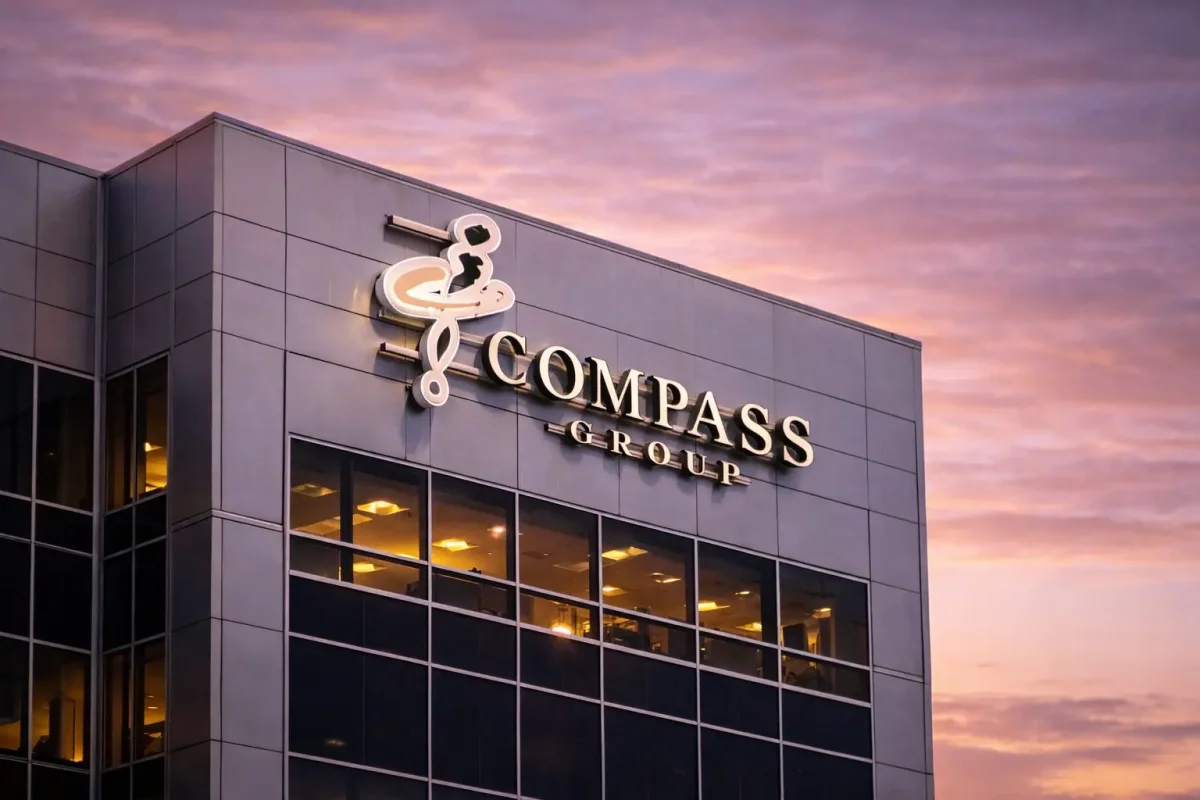
Shares of Compass Group PLC staged a notable rally on Thursday, advancing 3.18% to close at 2,306 pence. This gain positioned the stock among the top performers on the FTSE 100, which itself retreated 1.5% to a three-week low. The move represents a significant rebound for the world's largest contract caterer, which has been recovering from a sharp sell-off in February.
Steady Guidance Amidst Market Volatility
Last month, Compass left its medium-term financial forecasts unchanged. The company continues to target roughly 7% organic revenue growth by 2026, with acquisitions expected to contribute an additional 2% to profit. Management anticipates underlying operating profit will rise by approximately 10% over the period, supported by ongoing margin improvement. The firm noted some easing of inflationary pressures, though volume growth remains the primary driver of gains.
Operational Performance Remains Robust
The company's recent operational metrics underscore its fundamental strength. For the first quarter, Compass reported organic revenue growth of 7.3%, a figure that strips out the effects of acquisitions and currency movements. Annualised new business wins increased by 10% to reach $4 billion, while client retention stayed exceptionally high at over 96%.
Despite this solid performance, a significant overhang persists. Investor concern is focused on the potential for artificial intelligence to reduce white-collar office occupancy, thereby threatening demand for corporate catering services. This is particularly relevant for Compass, as clients in the technology, professional, and financial services sectors collectively account for about 20% of its total revenue.
Leadership Downplays AI Risk, Highlights Opportunity
Chief Executive Dominic Blakemore has pushed back against the prevailing market anxiety. In recent discussions with analysts, Blakemore stated that Compass sees "more opportunity than risk" in the AI trend. He clarified that entry-level positions, which are most susceptible to automation, constitute only 10% to 15% of the company's exposure to white-collar office roles, which itself represents 13% of its total business.
The narrative has been partly shaped by comparisons to French rival Sodexo, which recently projected slower revenue growth for 2026, citing pressures in the U.S. market. Compass, however, has maintained its optimistic outlook for North American demand. When Compass announced its acquisition of Vermaat back in July, analysts at JPMorgan viewed the move positively for the sector, noting that Sodexo's challenges had limited spillover effect.
Integration of Vermaat Acquisition Proceeds
A key near-term challenge for Compass is the integration of its recently completed $1.7 billion acquisition of Vermaat. The deal, finalized in December, strengthens Compass's foothold in the high-end foodservice market across the Netherlands, France, and Germany. Vermaat was reportedly on track to generate around 700 million euros in sales for 2025, boasting a double-digit operating margin.
Nevertheless, several risks remain on the horizon. A more pronounced decline in white-collar employment, diminished pricing power as inflation cools, or integration difficulties with the Vermaat business could all impede growth. Some analysts have also cited the growing popularity of weight-loss drugs as a potential long-term threat to canteen volumes, though Blakemore noted Compass has not observed any material impact from this trend to date.
Investors now face a two-month wait for the next significant data point, with Compass scheduled to report its half-year results on May 11. This period will allow the market to assess whether Thursday's share price recovery signals a more durable re-rating of the stock, or if Compass remains constrained by persistent uncertainty surrounding the future of office-based demand.