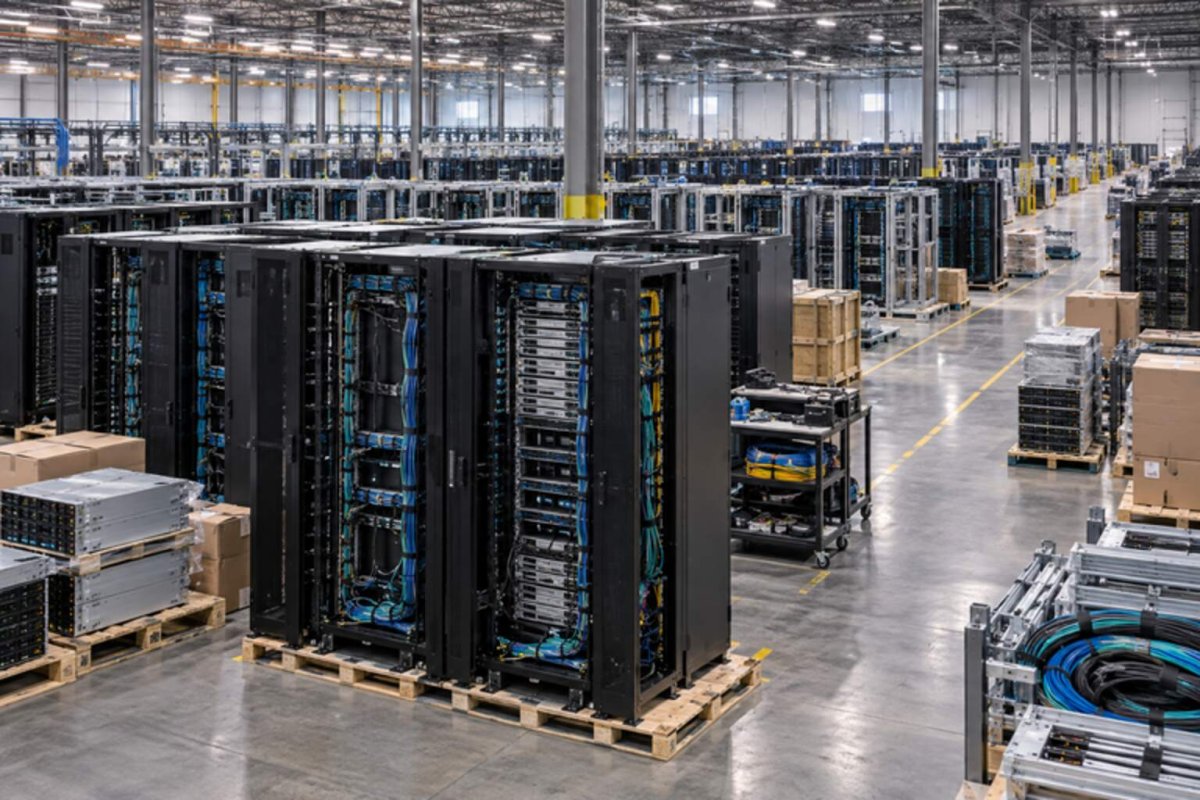
Computacenter has raised its 2026 profit guidance, setting a new floor of £380 million in adjusted pre-tax profit. This marks an 11.5% increase over the £340.9 million consensus figure compiled by the company, signaling robust demand for AI infrastructure. The upgrade comes on the back of a £9.3 billion committed product backlog, though the company is asking investors to fund growth before the full impact of working capital and lower-margin hardware sales is reflected in its accounts.
Strong First-Half Performance
In its September 8 results, the FTSE 100 technology reseller reported adjusted pre-tax profit of £152.4 million for the first half, an 87% jump from £81.5 million a year earlier. Revenue climbed 71.6% to £6.85 billion, while gross profit rose 30.5% to £657.9 million. The interim dividend was increased 14.8% to 27.1 pence per share.
This is a genuine earnings upgrade, not just a restatement of July's promise to beat expectations. The July trading update referenced consensus adjusted pre-tax profit of £313.7 million; by Tuesday's report, that consensus had already moved to £340.9 million, and management has now set a floor above that level.
Backlog Growth Driven by AI and North America
The committed product backlog surged 323.2% year-over-year and 29.5% from the end of 2025 on a constant-currency basis. North America was the primary driver, with its June backlog reaching £6.94 billion. The region generated 62% of group adjusted operating profit before central costs, up from 44% a year earlier.
Demand from hyperscalers, “neocloud” operators, and enterprises building AI infrastructure fueled the step-change. North American adjusted operating profit grew 148.4% in constant currency, and the company noted a strong start to the second half with further increases in committed orders.
However, this concentration cuts both ways. While Computacenter now benefits from a powerful data-center spending cycle, a greater share of earnings depends on a small number of large infrastructure deployments in one region. Delays in customer projects, component availability, or a pause in hyperscaler capital expenditure could have a more pronounced impact than in the past.
Margin Mix and Cash Conversion
Gross margin fell to 9.6% from 12.6%, a 303-basis-point decline, largely due to the mix of high-volume Technology Sourcing for hyperscale and neocloud customers, which adds significant invoiced revenue at thinner percentage margins. While this is not automatically poor economics—gross profit still grew 30.5% and operating leverage nearly doubled adjusted operating profit—it shifts the focus to different metrics.
The first half used £82.6 million of operating cash and produced a £138.9 million free-cash outflow. Inventory ballooned to £1.26 billion, up 161.1% from £482.8 million at the end of 2025, as equipment accumulated for large North American and UK projects. Management says the stock is almost entirely tied to committed customer orders, reducing demand risk but not timing risk.
Invoice financing also increased, with non-recourse trade-receivable financing outstanding reaching £140.5 million versus £38.8 million at year-end. Adjusted net funds fell to £308.7 million from £606.0 million after £124.2 million of acquisition payments and the working-capital build, though the figure remains above £278.0 million a year earlier.
Valuation and Key Metrics to Watch
At a reference close of 5,600 pence on September 7, just 1.5% below its 52-week high, the stock's market value was around £5.94 billion. That implies a multiple of about 15.6 times the new £380 million pre-tax-profit floor. Applying the midpoint of the company's 28.5%-30.5% tax-rate guidance and the first-half diluted share count yields a rough multiple near 22 times after-tax earnings—an analytical yardstick, not company earnings-per-share guidance.
The valuation leaves little room for a merely respectable second half. The bullish case hinges on the £9.3 billion backlog converting on schedule, gross profit continuing to compound despite lower margin percentages, and working capital releasing cash. The strongest rebuttal is already in the numbers: first-half profit growth far outpaced gross-profit growth, North America is gaining share, and management has set a floor above an already-rising consensus.
The next decisive figures will not be another headline revenue percentage. Instead, investors should watch year-end inventory, receivables financing, free cash flow, and the proportion of profit coming from the largest infrastructure customers. These will determine whether Computacenter's AI backlog becomes a durable earnings engine or simply a larger, more capital-intensive order book.