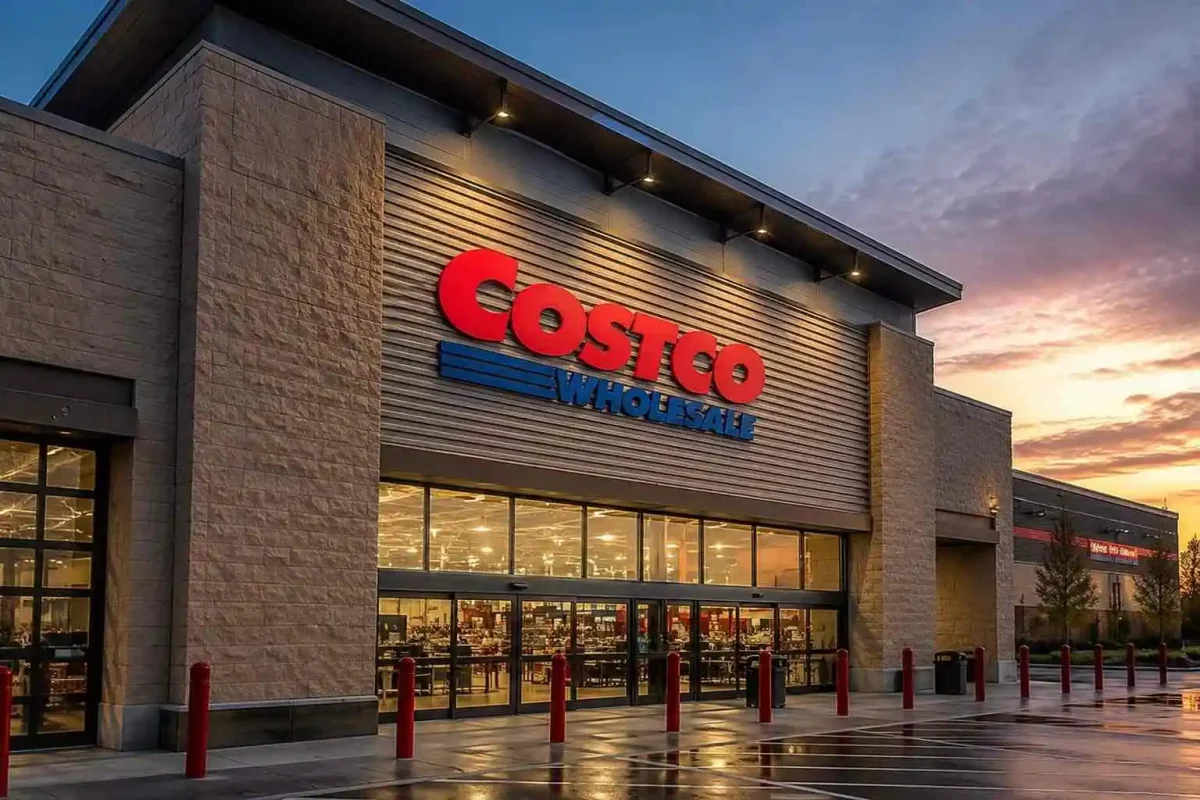
Costco Wholesale (NASDAQ:COST) shares advanced 3.6% to $986.08 during Tuesday morning trading, fueled by a sector-wide rotation into consumer staples rather than company-specific catalysts. The Consumer Staples Select Sector SPDR Fund (NYSEARCA:XLP) rose 3.9%, while three major retail peers—Walmart (WMT), BJ's Wholesale Club (BJ), and Target (TGT)—posted an average gain of 3.8%, slightly outpacing Costco's move. The rally coincided with a 1.9% decline in technology stocks amid renewed concerns over AI investment and Chinese competition.
Costco reported a 7.0% increase in adjusted comparable sales for June, with digitally enabled sales surging 21.5%. Net sales for the month reached $29.24 billion, up 10.6% year-over-year. For the fiscal third quarter, net income rose 15% to $2.19 billion on net sales of $69.15 billion, an 11.6% increase. The company's operational momentum remains robust, with membership fees climbing 10.7% and paid memberships growing 4.1% to 82.9 million. Executive memberships increased 9.6%, and renewal rates in the U.S. and Canada hit 92.2%.
Valuation at a Premium
Despite the strong fundamentals, Costco's valuation remains stretched. The stock trades at a trailing price-to-earnings multiple of 49.6, significantly above its 10-year median of 37. This premium is evident when compared to peers: Walmart trades at 40.6 times earnings, BJ's at 22.6 times, and Target at 19.2 times. For Costco to match Walmart's P/E, earnings per share would need to rise 22% to $24.27, a level that exceeds the consensus fiscal 2027 estimate by 7% and approaches the fiscal 2028 projection of $24.97. This suggests the current share price already discounts substantial earnings growth over the next two years.
GuruFocus valuation models present a stark contrast, estimating intrinsic values of $421.23 based on earnings and $559.77 based on free cash flow. Tuesday's price stands 76% to 134% above these model projections, highlighting the divergence between market sentiment and fundamental metrics. The publisher notes low predictability and sensitivity to discount rate changes.
Market Context and Risks
The recent rally appears driven by portfolio allocation shifts rather than fresh data on Costco. Investors rotated into defensive staples as technology stocks faltered, with the sector index advancing 3.1% while semiconductors declined. Costco's long-term performance remains impressive—shares gained 459.6% over the past decade through July 17, versus the S&P 500's 244.7% return. However, the current P/E is 34% above the 10-year median, raising caution among value-oriented investors.
Key risks include a slowdown in store traffic, pressure on food margins, fluctuations in fuel prices, and currency headwinds. Rising interest rates could further compress Costco's premium valuation multiple. The company's CFO, Gary Millerchip, noted in May that Costco has widened price gaps to maintain customer loyalty, a strategy that Zacks strategist Bryan Hayes called "classic Costco" but acknowledged potential short-term margin challenges.
Outlook and Analyst Sentiment
Costco operated 933 warehouses as of early July and aims to open over 30 net new locations annually in the coming years, though fiscal 2026 guidance was trimmed to 26 due to project delays. Fourth-quarter earnings are scheduled for release on September 24. The most recent analyst poll shows 24 Buy or Overweight ratings and 17 lower ratings, with a consensus Overweight stance and a median price target of $1,100, implying approximately 12% upside from Tuesday's closing price.
Tuesday's rally is primarily a reflection of sector rotation rather than a re-rating of Costco's fundamentals. The September earnings report will be crucial to demonstrate whether earnings growth can catch up to the elevated valuation. Until then, investors may need to weigh the company's strong operational track record against the risk of multiple compression in a rising rate environment.