The Dow Jones Industrial Average posted a modest gain on Tuesday, March 17, 2026, as market participants turned their focus to the impending monetary policy decision from the Federal Reserve. The blue-chip index added 125.40 points, or 0.27%, closing at 47,071.81, according to delayed data. The broader S&P 500 rose 0.36%, while the technology-heavy Nasdaq Composite increased by 0.41%.
Fed Expectations and Inflationary Pressures
Investors have significantly tempered their expectations for interest rate cuts this year, with market pricing now indicating only one quarter-point reduction is anticipated by December. This marks a sharp pullback from more dovish forecasts earlier in the year. The shift comes as persistently high energy prices threaten to reignite inflationary pressures, complicating the Fed's path forward.
Brent crude futures traded at $101.53 per barrel, with U.S. West Texas Intermediate crude not far behind at $94.71. The elevated prices are directly tied to ongoing conflict in the Middle East, which has amplified global supply concerns. Notably, the Strait of Hormuz—a chokepoint for roughly one-fifth of global oil and liquefied natural gas shipments—remains a focal point of market anxiety. Recent strikes on energy infrastructure in the United Arab Emirates have already curtailed the nation's output by more than 50%.
Sector Performance and Corporate Highlights
Gains were led by the travel, financial, and energy sectors. Major airlines provided a boost after Delta Air Lines and American Airlines upwardly revised their revenue guidance for the current quarter. This optimism filtered through to cruise operators as well. In finance, alternative asset managers including Blackstone, Apollo Global Management, and KKR advanced. The energy sector saw strength in shares of Occidental Petroleum, EQT, and ConocoPhillips.
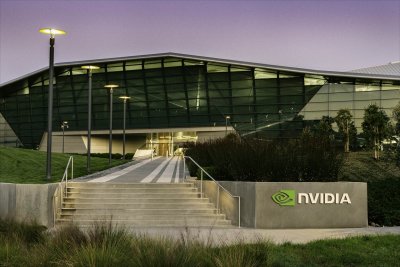
The market's advance builds on a stronger rebound from the previous session. On Monday, the Dow closed at 46,946.41, while the S&P 500 registered its largest single-day jump in over a month. The Nasdaq's 1.22% gain was fueled in part by a rotation back into artificial intelligence-focused stocks, spurred by Nvidia's developer conference and news of substantial job cuts at Meta Platforms.
Analyst Perspectives on Market Sentiment
Market professionals offered nuanced views on the current environment. Dennis Dick, founder of Triple D Trading, suggested that inflation fears are beginning to recede for both consumers and investors. "Investors are starting to see the forest through the trees," he remarked. Conversely, Peter Andersen of Andersen Capital Management highlighted the economic uncertainty created by the geopolitical conflict, describing it as "too many moving parts" for the Federal Reserve to easily decipher the underlying economic picture.
Despite the gains, indicators suggest markets are not pricing in a runaway surge in risk. The S&P 500 remains approximately 2% below its pre-conflict level, and certain hedge metrics against a sharp downturn have retreated. Scott Nations of Nations Indexes noted that trader concern over a potential catastrophic "tail event" had eased. Christopher Jacobson, a strategist at Susquehanna, observed that demand for downside protection had "faded" somewhat, though he added that investors were not yet aggressively betting on a swift recovery.
The Path Ahead and Key Risks
The immediate hurdle for markets arrives on Wednesday with the conclusion of the Federal Open Market Committee's two-day meeting. While the Fed is widely expected to leave the benchmark interest rate unchanged, traders will meticulously dissect the accompanying policy statement and listen for signals from Chair Jerome Powell during his press conference. The central challenge for the committee is balancing the inflationary impulse from higher energy costs against signs of a gradually cooling labor market.
The primary risks that could reverse the market's tentative upward move are clear: a further spike in oil prices or a more hawkish-than-anticipated tone from the Fed. For now, the Dow is edging higher, but the prevailing movement is underscored by a distinct note of caution as investors await the central bank's next move amid a complex global backdrop.