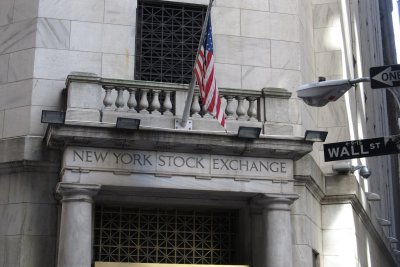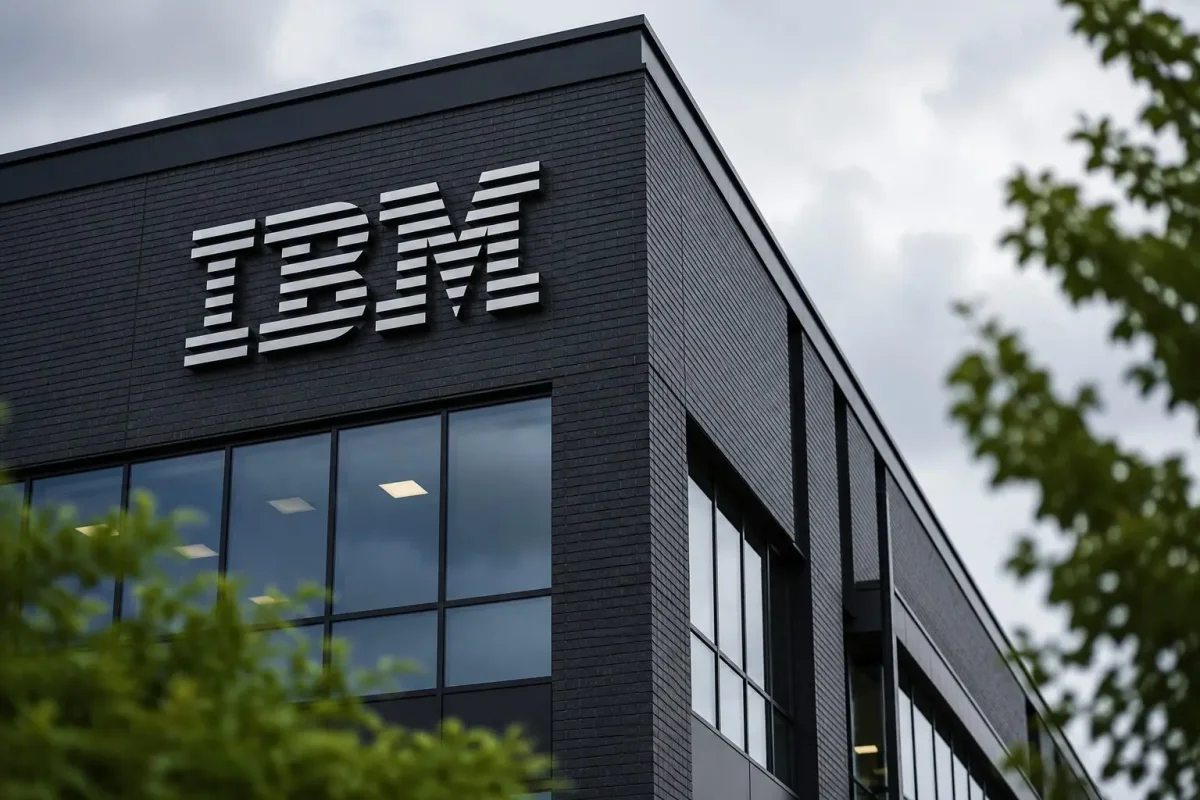
New York, July 14, 2026 – The Dow Jones Industrial Average slipped roughly 0.13% by late Tuesday morning, but the headline masked a broader market advance fueled by a cooler-than-expected inflation report. The blue-chip index’s modest decline was largely due to a steep drop in IBM (NYSE:IBM), which shaved about 449 points off the Dow. Without IBM’s move, the Dow would have been up approximately 379 points, according to calculations based on the index’s price-weighted methodology.
At 11:47 a.m. EDT, the S&P 500 rose 0.37%, the Nasdaq Composite gained 0.93%, and the Russell 2000 added 0.50%. The divergence between the Dow and the other major indexes highlighted the impact of price weighting, where a $1 change in any component affects the index equally. IBM’s $75.61 decline was nearly offset by strong gains in Goldman Sachs (NYSE:GS), which surged $72.42, and JPMorgan Chase (NYSE:JPM), which added $6.90. Together, these two financial giants contributed a combined 471 points to the Dow, nearly neutralizing IBM’s drag.
Inflation Data Eases Rate-Hike Fears
The Consumer Price Index (CPI) fell 0.4% in June from May, landing at a 3.5% year-over-year increase, well below the 3.8% forecast by Reuters. Core CPI, which excludes food and energy, was unchanged month-over-month and rose 2.6% annually. The softer inflation reading pushed market odds of a Federal Reserve rate hike in July down to near 15%, from 35% a day earlier. This supportive rate environment helped lift most sectors, with nine of the S&P 500’s 11 sectors trading higher. The Philadelphia semiconductor index climbed about 3.1%, and advancing issues outnumbered decliners on both the NYSE and Nasdaq.
IBM’s Weak Guidance Sparks Software Sector Jitters
IBM’s slide came after the company issued disappointing guidance for the second quarter. The technology giant expects revenue growth of about 1%, implying roughly $17.2 billion in sales, well short of the $17.86 billion analysts had anticipated. Adjusted earnings per share are forecast at $2.93, also missing consensus estimates. CEO Arvind Krishna attributed the shortfall to a “magnitude of capex reprioritization” that the company did not anticipate, as customers shifted spending toward servers, storage, and memory, away from software. The news weighed on other software stocks, with Microsoft (NASDAQ:MSFT) and ServiceNow (NYSE:NOW) slipping at the open, as investors worried that AI infrastructure spending was crowding out software budgets. “An ugly moment for IBM and software stocks,” said Chris Beauchamp, chief market analyst at IG Group.
Energy and Treasury Markets React
While the CPI drop was largely driven by a 5.7% decline in energy prices and a 9.7% fall in gasoline, those gains may prove temporary. By late Tuesday morning, Brent crude oil had rebounded to $84.57 a barrel, and U.S. crude to $78.94, amid renewed tensions between the U.S. and Iran. “The favorable CPI number … could be very different next month,” cautioned Tim Ghriskey, senior portfolio strategist at Ingalls & Snyder. In Treasury markets, yields fell, with the two-year note down 0.07 percentage point to 4.193% and the 10-year note off about 0.035 point to 4.575%.
Bank Earnings Provide a Bright Spot
Goldman Sachs jumped 6.92% after reporting quarterly profit that beat expectations and set a new record in equities trading revenue. JPMorgan Chase rose 2.06% on record quarterly profit. Their combined strength almost erased IBM’s impact on the Dow, even though the moves were unrelated. “All eyes are on earnings season,” said Mark Hackett, chief market strategist at Nationwide Investment Management Group. With IBM’s full results due July 22, investors will be watching closely to see if the spending slowdown is a temporary end-of-quarter blip or a more persistent drag on software demand.
Market Summary at 11:47 a.m. EDT
- Dow Jones Industrial Average: 52,428.93 (-0.13%)
- S&P 500: 7,542.84 (+0.37%)
- Nasdaq Composite: 26,113.34 (+0.93%)
- Russell 2000: 2,967.79 (+0.50%)
Overall, the Dow’s small decline belied a market that was broadly higher, with the inflation data providing a tailwind and bank earnings offering a counterbalance to IBM’s software slowdown. The coming weeks will test whether this relief is sustainable.