Energy Vault Holdings Inc. and Eskom Holdings SOC Ltd. have entered into a strategic development agreement to deploy a gravity-based energy storage system at Eskom's Hendrina Power Station in Mpumalanga, South Africa. The initial project will deliver 25 megawatts of power over a four-hour duration, totaling 100 megawatt-hours of capacity, utilizing Energy Vault's proprietary EVx 2.0 technology.
The partnership aims to scale storage capacity significantly at the Hendrina site, with potential expansion up to 4 gigawatts, as the companies target co-developing as much as 4 gigawatt-hours of gravity storage across the 16-nation Southern African Development Community by 2035. This initiative comes as coal continues to dominate South Africa's electricity generation, accounting for 83% of the nation's power supply in 2024, according to official data.
Repurposing Coal Infrastructure
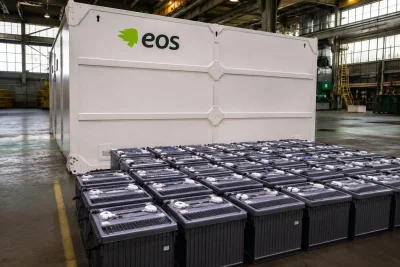
The Hendrina project represents a novel approach to repurposing aging coal-fired power plant assets. Energy Vault's EVx 2.0 platform can utilize coal ash—a waste product from combustion—as feedstock for the storage blocks, each weighing between 25 and 30 tons. This transforms a byproduct of coal generation into a key component of a clean energy storage solution.
Gravity storage operates as a mechanical battery: electricity is stored by hoisting massive composite blocks, and energy is recaptured when the blocks are lowered. Energy Vault claims its long-duration systems can provide storage from four up to 24 hours, offering a flexible alternative to traditional chemical batteries.
Market Context and Competition
The agreement places Energy Vault in a competitive landscape for long-duration energy storage. Form Energy is advancing its iron-air battery technology, announcing plans in March for a 10-MW, 1,000-MWh installation in Ireland. Highview Power is developing a liquid-air storage facility near Manchester, targeting 300 MWh with six hours of duration. However, many developers face challenges in competing with lithium-ion batteries, which currently dominate grid storage in many markets.
Eskom's improved operational performance has reduced load shedding, with the utility projecting no outages between April 1 and August 31, 2026, due to fewer unplanned plant failures. Long-duration storage is designed to support grid stability as renewable energy sources like wind and solar expand their share of the power mix.
Financial and Strategic Implications
Energy Vault CEO Robert Piconi characterized the Eskom deal as a "transformational milestone." Dan Marokane, Eskom's head, stated that the technology will play a "pivotal role" in advancing the utility's Just Energy Transition objectives. The agreement includes Energy Vault supplying its EVx 2.0 system, equipment, engineering services, project management, and onsite training.
Key commercial details remain undisclosed, including project costs, financing structure, construction timeline, power pricing, and operational start date. Energy Vault's first-quarter revenue rose to $21.9 million from $8.5 million year-over-year, with a backlog of $1.35 billion as of May 5. The company's stock traded at $4.84 on Tuesday afternoon in New York, giving it a market capitalization near $792 million.
This development underscores Energy Vault's strategic shift toward owning and operating storage and power assets, leveraging its technology to address grid challenges in emerging markets while contributing to South Africa's energy transition away from coal dependency.