Ford Motor Company (NYSE: F) saw its stock rise 2.3% to $14.46 in afternoon trading on Thursday, defying the announcement of two new vehicle recalls. The automaker’s shares traded on heavy volume of 24.95 million shares, as investors appeared to focus on the company’s broader earnings outlook rather than the immediate recall costs.
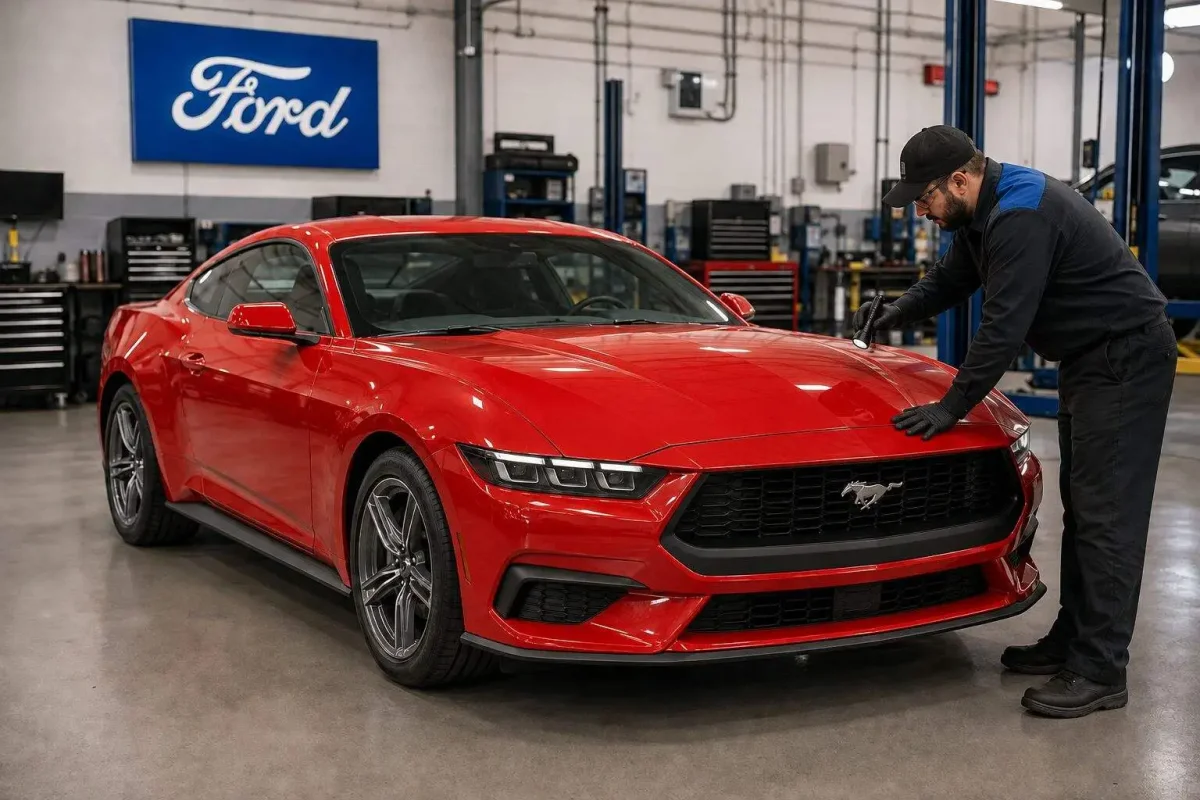
The recalls, disclosed in federal filings, cover a combined 158,664 vehicles — a figure that represents 93.0% of Ford’s U.S. sales for August. The larger action involves 148,663 Mustangs from the 2024-2026 model years, where a wiring-harness issue could lead to a loss of drive power. The National Highway Traffic Safety Administration (NHTSA) estimates a 1% defect rate for this campaign, with eight warranty claims reported as of August 4. No crashes or injuries have been linked to the defect, and dealers will replace four ground terminals at no cost to owners.
A second, smaller recall covers 10,001 vehicles across five nameplates for the 2026 model year, stemming from a supplier machining fault that could crack piston domes and cause engine failure. Regulators estimate a 0.5% defect rate for this issue, with remedies expected to begin with interim notices in September and full repair notifications by late December.
Despite the scale of the recalls, the market’s reaction suggests that investors view the financial impact as manageable. Ford’s warranty and field-service-action obligations stood at $17.57 billion as of June 30, with first-half payments totaling $3.03 billion. The company’s quarterly filing also notes up to $2 billion in reasonably possible costs beyond current accruals, but these figures are not specific to the two latest actions.
The recalls come at a time when Ford is emphasizing quality improvements as a key driver of its 2026 financial targets. Chief Financial Officer Sherry House reiterated the company’s goal to eliminate $1 billion in warranty and material costs this year, a target that was part of the automaker’s revised full-year guidance. Ford raised its adjusted EBIT forecast to $10 billion-$11 billion and lifted adjusted free-cash-flow guidance to $6 billion-$7 billion after second-quarter adjusted EBIT rose 17% to $2.5 billion.
However, the sales backdrop remains challenging. Ford’s U.S. volume fell 10.3% in August to 170,681 vehicles, though Mustang sales bucked the trend with a 12.7% increase to 3,647 units. The recalls’ combined population equals roughly one month of Ford and Lincoln sales, underscoring the operational scope of the actions.
Broader market sentiment for automakers was positive on Thursday, with General Motors (NYSE: GM) gaining 2.6% and Stellantis (NYSE: STLA) rising 4.6%. Ford has not yet disclosed the expected cost of the two recalls, and supplier recoveries could offset some expenses once terms are finalized. The Mustang wiring remedy is scheduled for completion by March 2027.
Analysts note that the defect rates are estimates, and actual repair costs could rise if more claims emerge or parts supply slows. For now, the market appears to be giving Ford the benefit of the doubt, focusing on the company’s improving earnings trajectory rather than the immediate recall overhang.