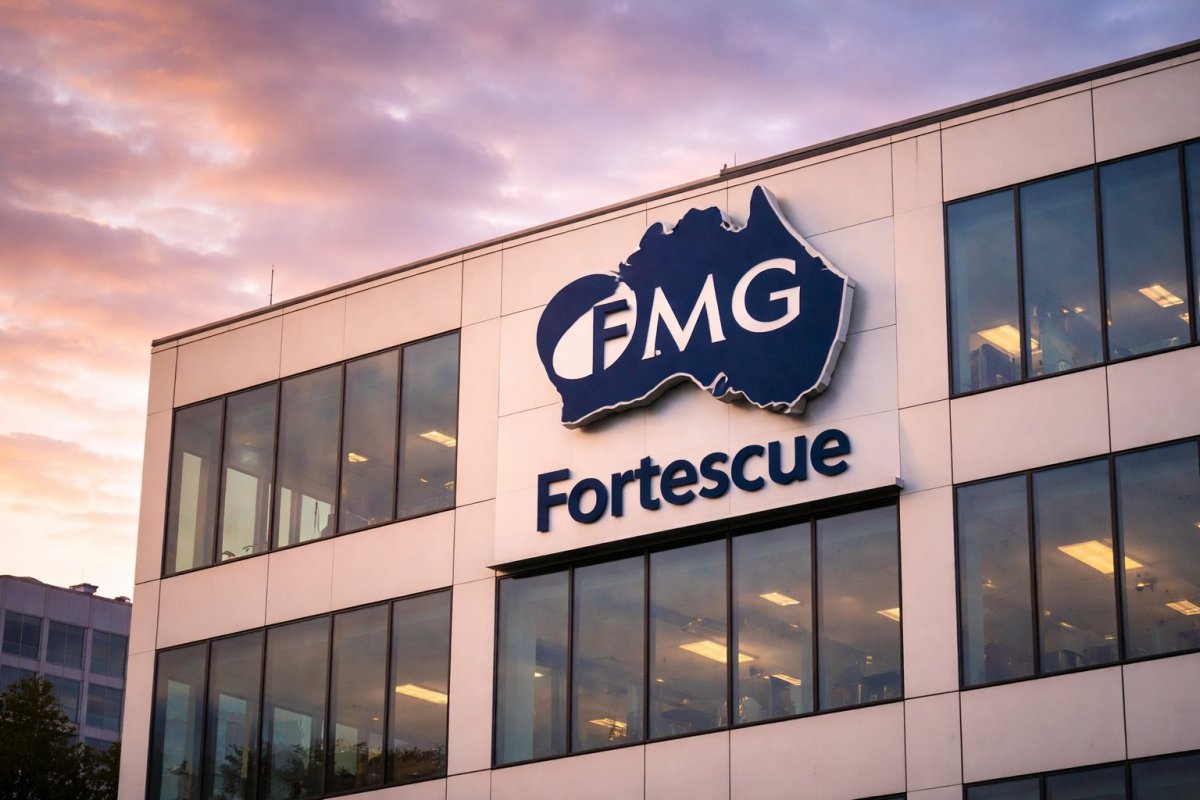
Shares of Fortescue Metals Group extended their decline in Tuesday's trading session, pressured by a continued slump in benchmark iron ore prices. The stock closed at A$20.10, marking a 0.5% decrease for the day. This follows a significant 4.7% drop recorded on Monday, reflecting growing investor concern over the commodity's market dynamics.
The primary driver behind the sell-off is the sustained weakness in iron ore, with prices for the key steelmaking ingredient falling below the psychologically significant threshold of US$100 per tonne. This price level exerts considerable pressure on the profitability of pure-play iron ore miners like Fortescue, whose financial performance is heavily tethered to the commodity's fortunes. The broader materials sector felt the strain, even as earnings season provided support for other segments of the equity market.
Broker Downgrade and Divergent Miner Performance
Adding to the negative sentiment, analysts at Jefferies issued a downward revision to their price target for Fortescue. Mitch Ryan of Jefferies lowered the firm's target to A$17.20 from A$18.40, maintaining an Underperform rating on the shares. The adjustment was attributed to revisions in the bank's longer-term commodity price forecasts, signaling a more cautious outlook on the iron ore market's recovery trajectory.
In a contrasting development, shares of mining giant BHP Group advanced on Tuesday. The rally was fueled by the company's release of a stronger-than-anticipated half-year profit report and a corresponding increase in its interim dividend payout. This positive performance occurred despite BHP itself cautioning investors about the softer iron ore price environment. "They smashed everyone's expectations from a dividend perspective," noted Andy Forster, a portfolio manager at Argo Investments, highlighting the market's favorable reaction to BHP's capital returns.
Market Context and Regional Trading Conditions
Trading activity across several major Asian financial hubs was subdued due to the ongoing Lunar New Year holidays. Exchanges in China, Hong Kong, Singapore, Taiwan, and South Korea were closed, resulting in thinner-than-usual volumes and a muted regional session. This holiday-induced quiet often dampens the typical flow of market cues that influence sentiment toward bulk commodities like iron ore.
Amid the commodity price focus, Fortescue continues to promote its strategic pivot toward green energy and decarbonization. The company's "Real Zero" initiative aims to eliminate operational emissions entirely, rather than relying on carbon offsets. "Real Zero is about... not offsetting emissions but eliminating them," stated Dino Otranto, Chief Executive of Fortescue's Metals and Operations division. The company recently deployed two battery-electric locomotives on its Pilbara rail network as part of this broader environmental strategy.
Key Swing Factors and Forthcoming Catalysts
Analysts and traders widely view Fortescue as a direct proxy for Chinese steel margins and construction sector demand. This macroeconomic linkage frequently overshadows company-specific news, making the stock particularly sensitive to shifts in Chinese industrial policy and economic data. The potential for a swift sentiment reversal exists if iron ore prices rebound or if Beijing announces fresh stimulus measures aimed at boosting infrastructure and steel consumption.
Conversely, a further decline in iron ore prices would likely intensify investor scrutiny on Fortescue's cost structure and the sustainability of its dividend payments. The company's upcoming financial results, scheduled for release on February 25, will be a critical event for the market. Investors will closely examine key metrics including shipment volumes, operational cost guidance, capital expenditure plans, and, most importantly, any signaling regarding the interim dividend for fiscal year 2026.
The current environment presents a clear dichotomy for Fortescue shareholders. The near-term headwinds from a weak iron ore market are palpable and are being reflected in the stock price and analyst actions. However, the company's long-term strategic shift toward decarbonization and its upcoming financial report provide alternative narratives that could reshape investor perception in the weeks ahead.