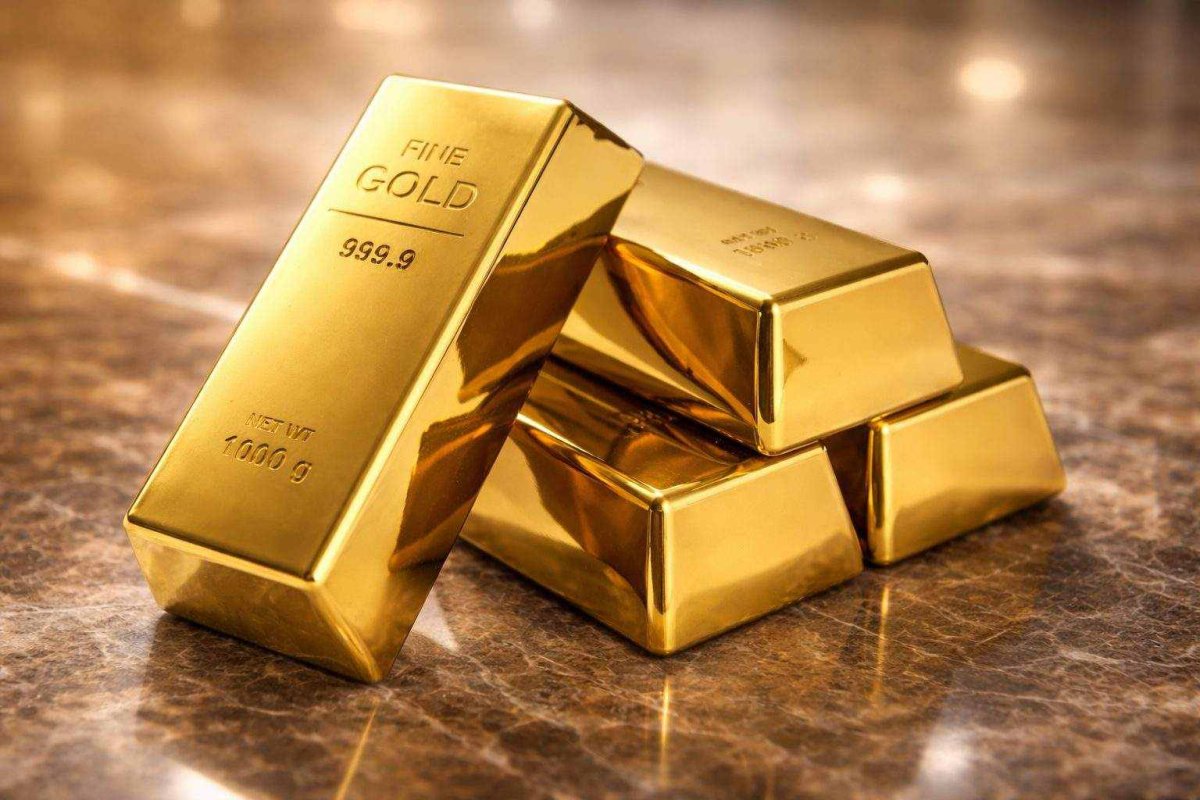
Gold prices edged lower on Tuesday, yet managed to hold above the psychologically significant $5,000 per ounce level. Spot gold was down 0.3% at $5,042.29, while silver fell to $81.60. The broader precious metals complex, including platinum and palladium, also traded softer.
Focus on U.S. Economic Calendar
Market attention is firmly fixed on a series of upcoming U.S. economic indicators. The data run includes retail sales figures on Tuesday, the January nonfarm payrolls report on Wednesday, and the consumer price index for inflation on Friday. These releases are expected to provide critical signals regarding the Federal Reserve's future interest rate path.
Current market pricing, as reported by Reuters, anticipates at least two 25-basis-point rate cuts in 2026, with the first likely in June. This outlook is pivotal for non-yielding assets like gold, which become more attractive when interest rates are expected to fall.
Volatility and Technical Factors
Analysts note that gold has entered a phase of elevated volatility following last week's sharp price swings, which included a retreat from a record high of $5,594.82 reached on January 29. Experts at Heraeus described the market as being in a "high-volatility regime," attributed in part to forced liquidations of leveraged positions and increased margin requirements on exchanges.
"$5,000 acts as a key support level for gold, while $80 is the equivalent for silver," stated Jigar Trivedi, a senior research analyst. He suggested both metals could trade in a range with a slight negative bias due to profit-taking activity.
Broader Market Influences
A resurgence in risk appetite, evidenced by rising global stock markets, has applied some pressure on safe-haven bullion. Furthermore, a firmer U.S. dollar has made gold more expensive for holders of other currencies. Additional uncertainty stems from the potential for a leadership change at the Federal Reserve, with President Trump's nominee, Kevin Warsh, viewed by some as potentially less dovish.
The immediate trajectory for gold hinges on the incoming economic data. Strong payrolls or inflation numbers could push back expectations for rate cuts, boosting the dollar and bond yields, and potentially testing gold's hold on the $5,000 level.