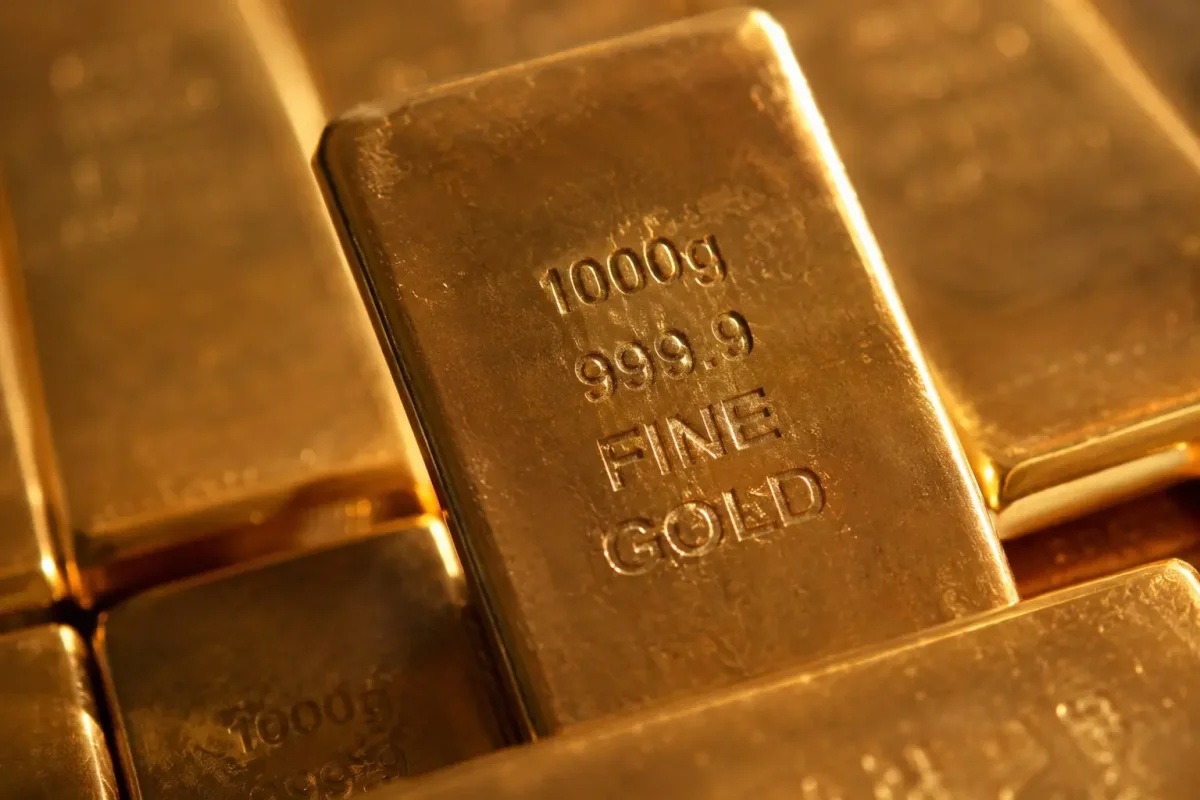
Gold prices stabilized around $4,344 per ounce on Monday, recovering from earlier losses as news of a potential ceasefire between Israel and Iran provided support, countering the impact of a robust U.S. jobs report that reinforced expectations of higher interest rates for longer.
Spot gold traded near $4,344 on Kitco, after dipping to $4,268.39 earlier, its weakest level since March 23. U.S. gold futures for August edged down 0.2% to $4,356.50 in late-morning New York trading, according to Reuters.
The precious metal remains caught between two opposing forces: geopolitical tensions in the Gulf, which boost safe-haven demand, and the headwinds of higher U.S. interest rates and a strong dollar. Since gold pays no interest and is priced in dollars, both factors weigh heavily on the metal.
Market sentiment shifted quickly on ceasefire headlines. President Donald Trump told reporters that Israel and Iran were willing to “do an immediate ceasefire,” and both sides subsequently announced a pause in attacks after their most direct clashes since the April ceasefire, Reuters reported. Gold fluctuated between small gains and losses in U.S. trading after a nearly 5% decline last week, according to Bloomberg.
The strong U.S. jobs report for May, which showed 172,000 new jobs and unemployment holding at 4.3%, dashed hopes for near-term Federal Reserve rate cuts. Gold slipped below its 200-day moving average, logging its steepest weekly drop since March. Goldman Sachs now projects the Fed will hold rates steady through 2026, with cuts potentially delayed until 2027, citing steady economic and jobs data.
Peter Grant, vice president and senior metals strategist at Zaner Metals, told Reuters that the ceasefire news had “taken a little bit of pressure off the downside.” Han Tan, chief market analyst at Bybit, noted that gold could test the $4,000 level if U.S. inflation data come in hot or the Federal Open Market Committee (FOMC) turns more hawkish next week.
Investors are now focused on two key U.S. inflation reports this week: the Consumer Price Index (CPI) on Wednesday and the Producer Price Index (PPI) on Thursday. Both could significantly influence rate expectations and gold's direction.
Oil prices also remain a key driver for gold. Brent crude trimmed gains after the ceasefire announcement, last trading up 1.8% at $94.85 a barrel, while WTI rose 1.7% to $92.07. Dennis Kissler of BOK Financial described crude as in a “nervous trade,” and Giovanni Staunovo at UBS flagged concerns that flows through the Strait of Hormuz may remain restricted. Before the conflict, about a fifth of global daily oil and LNG exports passed through the strait.
If the ceasefire holds and energy prices slide, some safe-haven flows could exit gold. Conversely, renewed fighting or sustained shipping restrictions could keep the Fed hawkish and gold supported. Among other precious metals, silver gained 1.1% to $68.59 an ounce, while platinum fell 1.7% to $1,746.88 and palladium dropped 2.1% to $1,200.50, reflecting mixed sentiment across the sector.