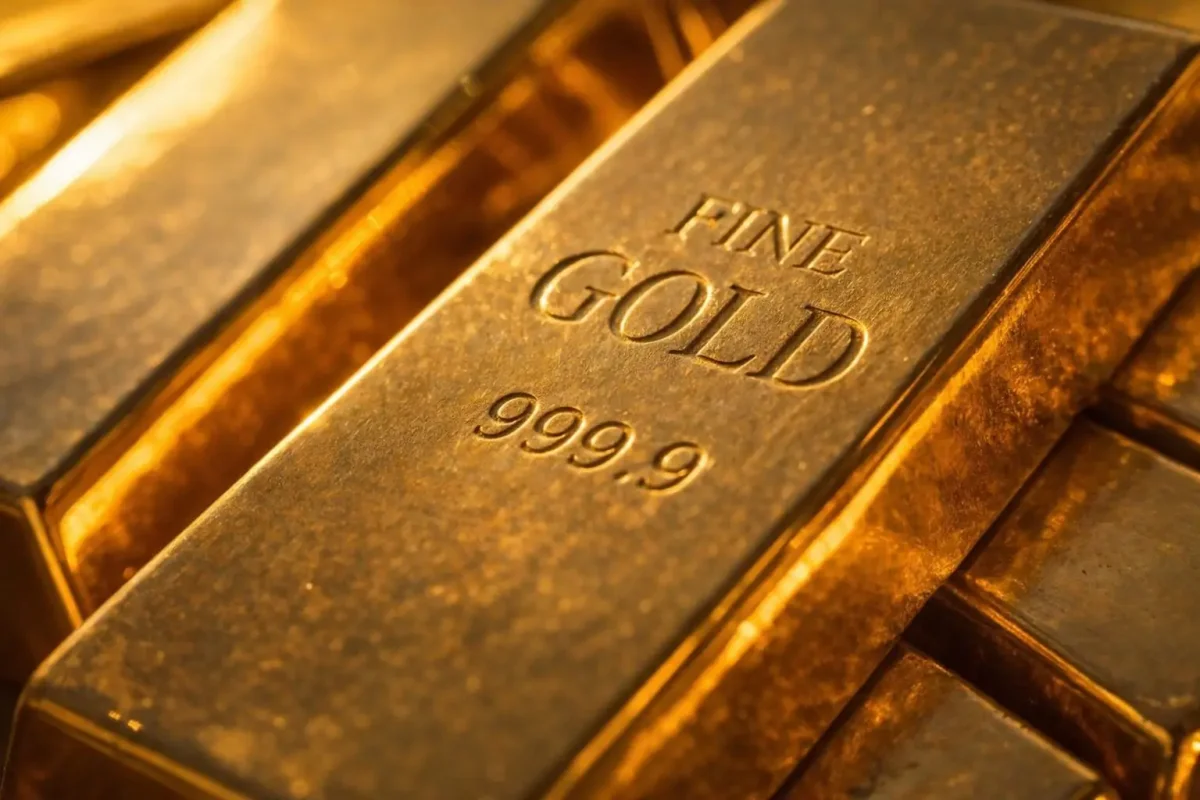
Gold prices retreated on Tuesday, February 10, 2026, as market participants reduced exposure ahead of pivotal U.S. economic reports. Spot bullion declined 1% to $5,014.19 per ounce during the regular session, while the actively traded April futures contract on U.S. exchanges eased 0.8% to $5,037.20. The move represented a consolidation following a two-day advance that had recently propelled the metal back above the $5,000 threshold.
Key Data Releases Loom
The market's focus is firmly fixed on upcoming U.S. labor and inflation figures, which are anticipated to provide critical guidance on the Federal Reserve's interest rate trajectory. The January employment report is scheduled for release on Wednesday, February 11, followed by the Consumer Price Index (CPI) data on Friday, February 13. Both reports are set for 8:30 a.m. Eastern Time, according to the Bureau of Labor Statistics calendar.
Economists surveyed by Reuters project that nonfarm payrolls increased by 70,000 for January, building on a gain of 50,000 in December. Commentary from White House economic adviser Kevin Hassett suggested investors should avoid overreacting if job figures come in softer than historical averages. Concurrently, recent data has hinted at a cooling economic pace, with December retail sales unexpectedly flat, feeding into market expectations for potential rate cuts in the coming months.
Broader Precious Metals Complex Under Pressure
The sell-off extended across the precious metals spectrum. Silver witnessed a sharp decline of 3.3% to $80.60 an ounce, giving back a portion of its substantial gains from the previous trading day. Platinum futures slipped 1.1% to $2,099.93, and palladium fell 1.3% to $1,717.33.
Market analysts characterized the session as a prudent pullback. "We're seeing a light pullback or consolidation," noted David Meger, director of metals trading at High Ridge Futures. The metal's proximity to the $5,000 level establishes a fresh psychological support zone, but its durability may be tested by the impending economic data.
Interest Rate Sensitivity and Dollar Dynamics
Gold, which offers no yield, is highly sensitive to shifts in interest rate expectations. When investors anticipate lower policy rates, the opportunity cost of holding non-interest-bearing bullion decreases, making it more attractive relative to cash or bonds. Consequently, even minor adjustments to the projected rate path can trigger swift price movements.
The inverse relationship with the U.S. dollar was on display just a day earlier. On Monday, a 0.8% decline in the dollar index helped fuel a 1.9% rally in spot gold to $5,056.21, with April futures settling 2% higher at $5,079.40. "The big mover today is the U.S. dollar," Bart Melek, global head of commodity strategy at TD Securities, observed during that session. A stronger-than-expected jobs number or a hotter CPI reading could prompt markets to scale back rate-cut bets, boosting Treasury yields and the dollar—a combination typically negative for dollar-denominated gold.
Structural Demand Provides Underlying Support
Beyond short-term macroeconomic fluctuations, structural demand factors continue to provide a foundation for the market. Exchange-traded fund (ETF) flows remain a closely watched indicator. Notably, industry data revealed robust investor appetite in India during January, where inflows into gold ETFs more than doubled to 240.4 billion rupees, narrowly surpassing inflows into equity-focused funds. "We saw extreme volatility in the markets in January," commented Venkat Chalasani, chief executive of the Association of Mutual Funds in India, highlighting the environment that drove safe-haven demand.
As the trading week progresses, market participants will scrutinize the payrolls and CPI data for any signals that alter the perceived path for U.S. monetary policy. Any significant surprise in the figures is likely to trigger an immediate reaction in currency and bond markets, with subsequent effects quickly transmitted to gold prices, testing the metal's newfound footing near the $5,000 mark.