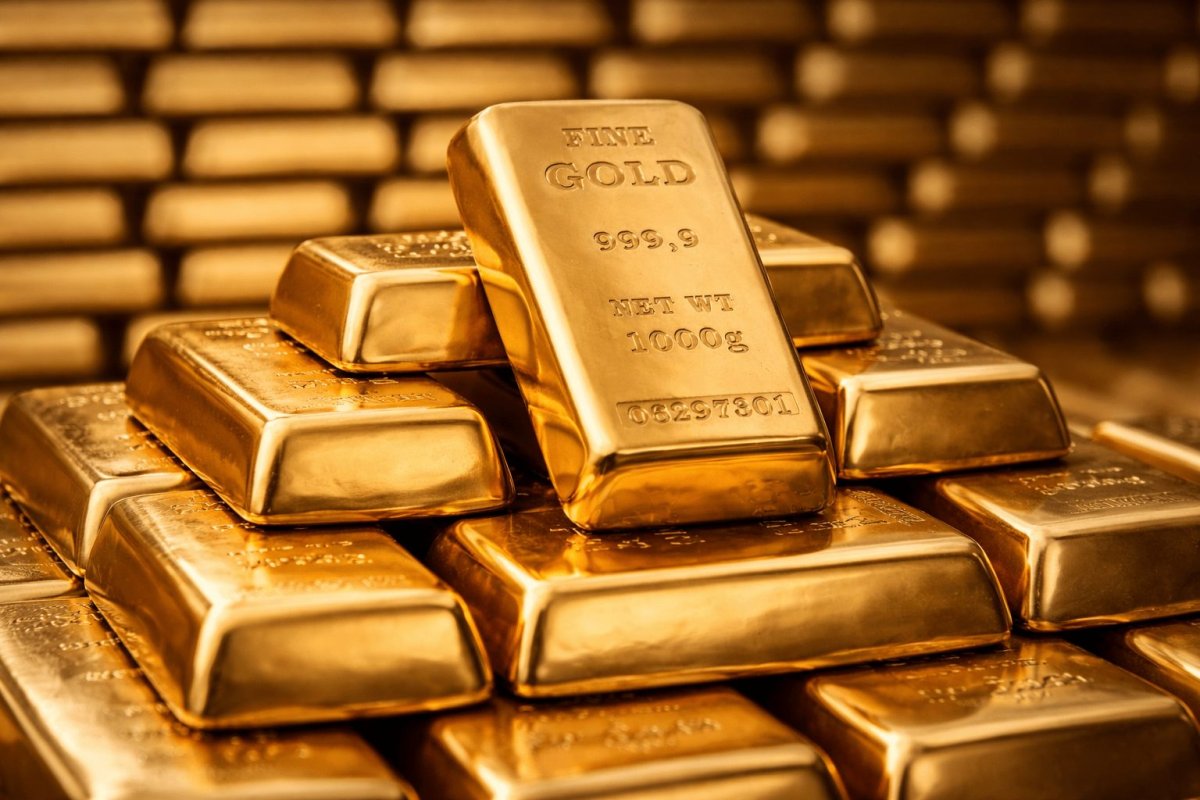
Gold prices retreated on Monday, with the precious metal losing more than one percent and falling below the psychologically significant $5,000 per ounce threshold. The decline was primarily driven by a strengthening U.S. dollar and exceptionally thin trading conditions, as major financial centers observed holiday closures.
Spot bullion dropped 1.3% to settle at $4,976.37 an ounce by late afternoon trading. The April delivery contract for gold futures on the COMEX exchange also softened, declining 1% to $4,996.60. Market analysts pointed to a combination of profit-taking following recent gains and a notable absence of fresh catalysts to propel prices higher.
Trading activity was severely constrained by the Presidents Day holiday in the United States, which shuttered domestic stock markets and banks. Simultaneously, the Shanghai Futures Exchange, a crucial hub for gold and silver trading in Asia, remained closed for the Spring Festival. The exchange began its holiday pause on February 15 and is scheduled to reopen on February 24, removing a key source of onshore demand from the global market.
"Gold is essentially range-trading around the $5,000 mark during a week characterized by lower liquidity due to consecutive holidays," noted Giovanni Staunovo, an analyst at UBS. The subdued activity often leads to exaggerated price moves that may not reflect broader market sentiment. Other precious metals followed a similar pattern, with spot silver slipping 0.6% to $76.92 an ounce. Platinum edged down 0.4%, while palladium managed a modest 0.4% gain.
Market participants are now looking ahead to the release of the Federal Reserve's minutes from its late-January policy meeting, scheduled for February 18. According to data from LSEG, traders are currently pricing in approximately 75 basis points of interest rate cuts from the Fed for the current year, with the first reduction anticipated as early as July. The minutes could provide critical insight into the central bank's thinking on inflation and the timing of potential policy easing, which heavily influences non-yielding assets like gold.
"Gold has surrendered a portion of the gains it made last Friday following the consumer price index data," explained Tim Waterer, chief analyst at KCM. "Today's move is largely a function of thinner trading conditions and a lack of new upside drivers." Waterer added that for gold to mount a sustained push toward $6,000 by year-end, it would likely require a renewed weakening of the U.S. dollar.
The trading lull also prompted adjustments to near-term forecasts. Zain Vawda, a market analyst at OANDA, revised his medium-term price target for gold downward, now anticipating a range of $5,100 to $5,200, compared to a previous outlook of $5,500. The immediate technical picture suggests limited upside potential in the near term, especially while Chinese markets remain offline.
Beyond monetary policy, geopolitical developments remain a background support for safe-haven assets. Iran and the United States are set to hold another round of talks in Geneva on Tuesday. Reuters reported that U.S. officials are preparing for a potentially extended military campaign should the diplomatic negotiations fail to yield progress.
Looking forward, market conditions are expected to normalize as trading desks return to full capacity on Tuesday. A rebound in liquidity coupled with any pullback in the dollar could facilitate a rapid recovery for gold prices. Conversely, stronger-than-expected U.S. economic data or a hawkish tone in the upcoming Fed minutes could delay rate-cut expectations, placing renewed downward pressure on bullion. The Fed's next policy meeting is scheduled for March 17-18.