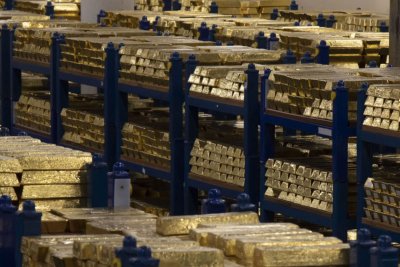
Gold prices edged higher on Tuesday, with spot gold rising 1.1% to $4,559.46 per ounce. Despite this modest gain, the precious metal remains on track for a punishing month, down over 13% in March. This represents the most severe monthly decline for gold since the financial crisis of 2008, a period marked by extreme market volatility.
Diverging Bank Forecasts Amid Market Stress
In the face of this significant downturn, Goldman Sachs is standing by its bullish long-term outlook. The investment bank has reiterated its forecast for gold to reach $5,400 an ounce by the conclusion of 2026. This target, initially set in January when it was raised from $4,900, is predicated on several key factors. Goldman analysts, including senior commodities strategist Lina Thomas, anticipate that future interest rate cuts by the Federal Reserve, sustained purchasing by central banks, and a repositioning of speculative market players will ultimately drive prices higher. Thomas clarified that while the firm remains "bullish on gold," they are not forecasting a broader "super cycle" across the commodities complex.
This optimistic stance sets Goldman apart from other major financial institutions. HSBC has observed that gold's trading behavior in 2026 has begun to resemble that of a risk asset more closely, though it acknowledges that long-term structural support from de-dollarization trends—where central banks diversify reserves away from the U.S. dollar—remains intact. Meanwhile, analysts at Commerzbank project a more conservative year-end target of $5,000 per ounce, contingent on anticipated rate cuts in the latter half of the year.
Pressures Weighing on the Market
The sharp retreat in March has been attributed to a confluence of challenging macroeconomic conditions. Persistently high oil prices, a robust U.S. dollar, and diminishing market expectations for imminent Federal Reserve rate cuts have collectively created a hostile environment for non-yielding assets like gold. These headwinds have overshadowed traditional supportive factors, such as escalating geopolitical tensions in the Middle East, which would typically boost safe-haven demand.
Further complicating the bullish narrative is a reported slowdown in official sector buying. Data from the World Gold Council indicated that central banks globally added a net of just 5 tonnes of gold to their reserves in January. This figure is markedly below the 12-month average of 27 tonnes per month, suggesting some hesitation among monetary authorities amid price volatility. However, the Council notes that geopolitical pressures could sustain purchasing activity through 2026.
Some market observers are skeptical that the recent price weakness has run its course. Independent analyst Ross Norman characterized Tuesday's uptick as a potential "dead cat bounce," a temporary recovery in a continuing downtrend. He also suggested that a peaceful resolution to Middle East conflicts could depress oil prices and the dollar, potentially offering relief to gold further ahead.
Risks to the Outlook
Goldman Sachs has acknowledged clear threats to its forecast. The very factors that catalyzed March's sell-off—sticky oil prices, dollar strength, and receding rate-cut bets—could persist, maintaining downward pressure. The bank had previously flagged an additional risk in January: a sharp fading of global policy threats could lead to an unwinding of macroeconomic hedge positions, potentially pushing gold prices lower.
Despite the near-term turbulence, the longer-term trajectory for gold is not entirely bleak. Prices are still up more than 5% for the quarter, following a record peak of $5,594.82 reached on January 29. The market currently finds itself caught between a pronounced short-term correction and a longer-term demand story backed by several financial institutions. The path forward will likely hinge on the evolving stance of the Federal Reserve, the pace of central bank activity, and the persistence of geopolitical and inflationary risks.