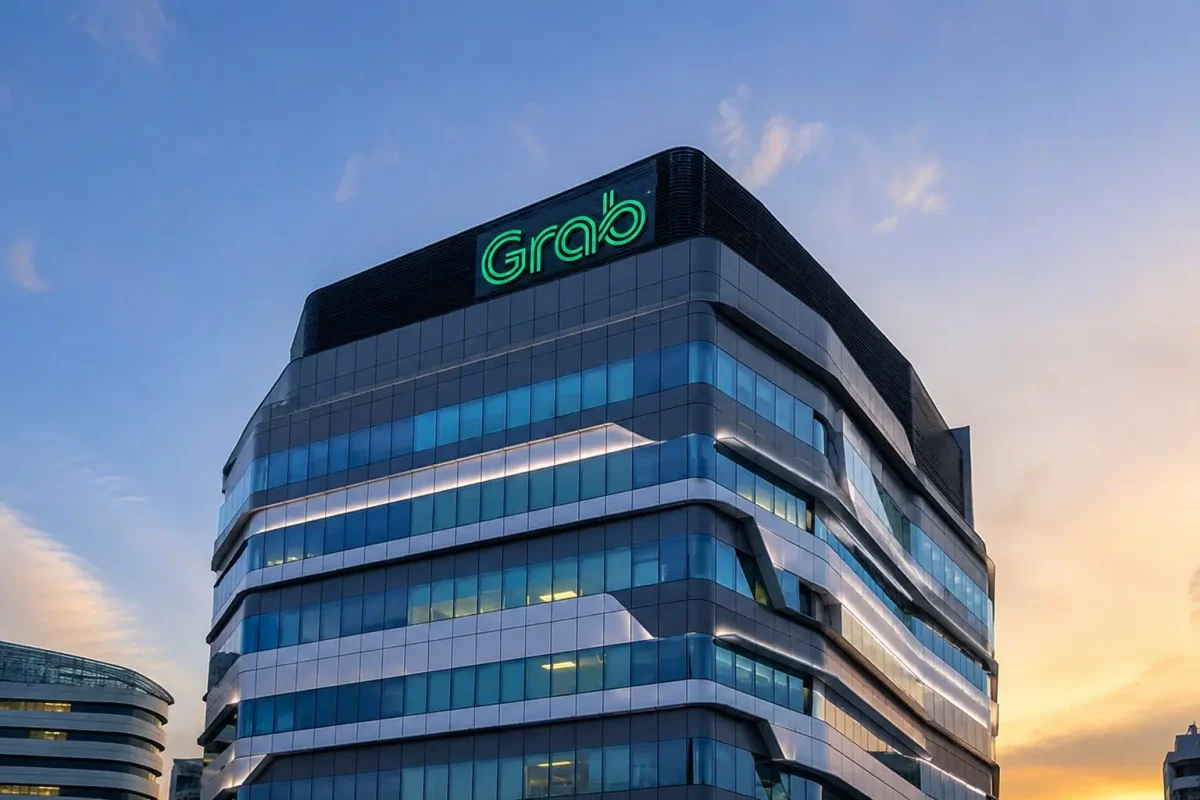
Grab Holdings (GRAB) shares remain under pressure, trading just above their 52-week low on the Nasdaq as the company navigates regulatory hurdles for its planned $600 million acquisition of foodpanda's Taiwan operations. The stock closed Wednesday at $3.27, down 0.91% from the previous session, and held near that level in pre-market trading Thursday.
The current price sits just one cent above the 52-week low of $3.26 and well below the 52-week high of $6.62, reflecting investor caution despite strong first-quarter results. The market is closely watching the Taiwan deal, which represents Grab's first expansion outside Southeast Asia and a key test of its growth strategy.
Taiwan Deal Details and Risks
In March, Grab announced plans to acquire Delivery Hero's foodpanda business in Taiwan for $600 million in cash. The company expects the deal to close in the second half of 2026 and projects it will contribute at least $60 million in incremental adjusted EBITDA by 2028. However, the acquisition still requires regulatory approval, and the path forward is uncertain after Taiwan's Fair Trade Commission previously blocked Uber's $950 million bid for the same asset, citing concerns over market concentration.
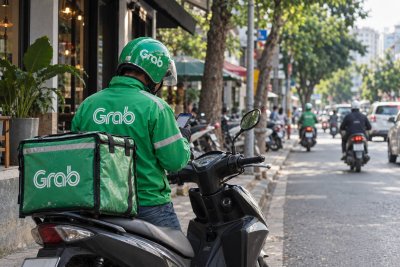
Grab has outlined a partner-commitments package to address regulatory and labor concerns, including free kit and delivery bags for current foodpanda riders, fast paperwork turnaround, a dedicated hotline, weekly cash-out options, and technology to reduce wait times. The company has also hired an independent Taiwanese cybersecurity adviser and is engaging with regulators and unions. Yee Wee Tang, Grab's group managing director of operations, emphasized the company's respect for the market: "We approach Taiwan with deep respect and humility."
Q1 Performance and Investor Concerns
Grab's first-quarter results showed strong momentum, with revenue climbing 24% year-over-year to $955 million and On-Demand GMV rising 24% to $6.1 billion. Net profit reached $120 million, while adjusted EBITDA grew 46% to $154 million. However, investor focus remains on margins and execution risks. The company spent $650 million on incentives during the quarter, with partner incentives up 42% from a year ago, driven by festive demand and higher fuel costs.
Management continues to emphasize disciplined capital allocation. CFO Peter Oey stated that Grab is committed to "disciplined capital allocation to drive profitable growth." The company reported trailing-12-month adjusted free cash flow of $489 million, a key metric for potential buybacks, acquisitions, and balance sheet flexibility.
Superbank Consolidation Adds Another Dimension
Beyond the Taiwan deal, Grab's consolidation of Superbank in Indonesia is another factor for investors to watch. Following Singtel's plan to transfer its interest in the digital bank to GXS Bank—the joint venture between Grab and Singtel—Grab moved to consolidate Superbank in May. As of April 2026, Superbank served over 6 million customers and achieved its first full-year profit in FY2025, with assets jumping 72% and net interest income rising 84% year-over-year.
Analyst Outlook and Risks
Wall Street remains bullish on Grab despite the stock's lagging performance. According to Google Finance, 14 analysts have Buy ratings on GRAB in the last three months, with an average 12-month price target of $6.12—well above the current $3.27 level. The gap reflects expectations that operating leverage will eventually materialize, while the market prices in execution risk.
Key risks include potential regulatory rejection or delays for the Taiwan foodpanda deal, higher-than-expected costs from partner protections, margin pressure from fuel and incentive expenses, and integration challenges from the Superbank consolidation. Grab has flagged macro, industry, business, and regulatory risks, including competition and Superbank integration, as possible factors that could cause actual results to diverge from guidance.
The next major catalyst will be the August Q2 results call, where investors will look for updates on Taiwan deal progress and guidance that incorporates Superbank's financial services results.