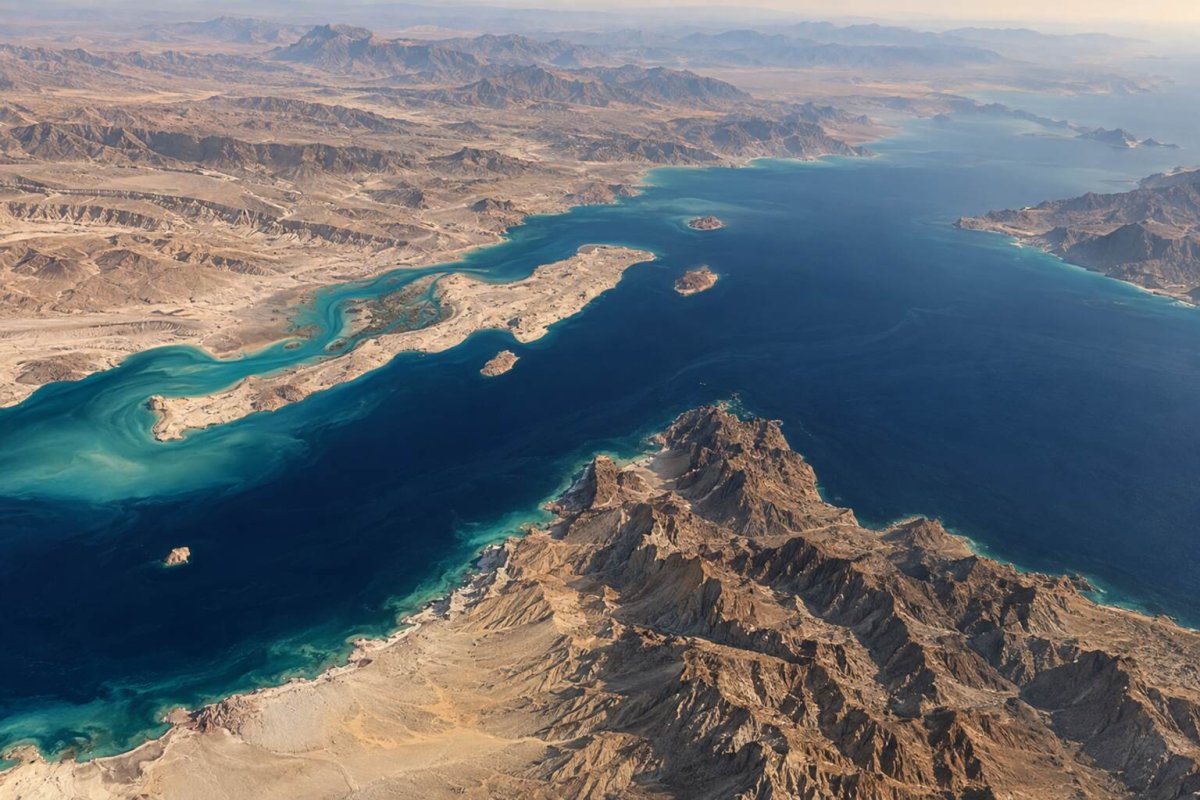
The Strait of Hormuz witnessed a sharp decline in visible commodity vessel traffic on Thursday, with only four crossings recorded—a quarter of the recent daily average. This drop in maritime activity coincided with a fall in oil prices on Friday, as Brent crude traded below $99 per barrel. These contrasting signals paint a picture of a market that has already factored in significant disruption but retains little buffer against further shocks.
According to preliminary data from Kpler, as reported by Reuters, only four commodity ships traversed the strait on September 17, down from six the previous day and well below the 10-day average of approximately 16. The vessels comprised two Panamax tankers, a Supramax, and a Kamsarmax, with three entering the Persian Gulf and one departing. Notably, no very large crude carriers (VLCCs) or LNG carriers were among them.
By 3:20 p.m. ET on September 18, front-month Brent futures had fallen to $98.68 per barrel, down $1.25 (1.3%) from Thursday's settlement. West Texas Intermediate (WTI) slipped to $95.56, a decline of $1.67 (1.7%), according to Yahoo Finance data. This price movement serves as a cautionary reminder that a single day's ship count does not directly translate into oil price signals.
Despite the low transit numbers, some gas cargoes are still moving. Shipping data reported by Baird Maritime indicated that three LNG vessels reappeared outside Hormuz on Thursday after loading in Qatar or the UAE. Two Qatari cargoes had last been visible inside the strait on September 13 and 14. A fourth vessel linked to QatarEnergy conducted a ship-to-ship transfer off Oman with its tracking signal disabled.
However, this activity is far from a return to normal. The U.S. Energy Information Administration (EIA) estimates that oil flows through Hormuz averaged 4.9 million barrels per day in the second quarter, a staggering 77% decline from the 21.6 million barrels per day recorded in the fourth quarter of 2025. LNG flows have plummeted even more sharply, dropping from 10.5 billion cubic feet per day to just 0.8 billion. The EIA's figures incorporate origin, destination, and route analysis because automatic identification signals in the conflict zone have become unusually unreliable.
The buffer outside the strait has also eroded. Saudi Arabia and the UAE had increased exports via Red Sea and Gulf of Oman bypasses from 4.1 million barrels per day in February to 7.8 million in June. However, these flows fell to 5.5 million in August following attacks in the Red Sea, and strikes on Saudi Arabia's East-West pipeline shut that route in early September, as reported by the International Energy Agency (IEA) on Friday.
So why is Brent trading below $99? Supply from outside the Gulf has absorbed part of the loss. The IEA calculates that producers elsewhere added an average of 2.3 million barrels per day between February and August, led by the United States, Brazil, Kazakhstan, Venezuela, and Nigeria. High prices have also dampened demand, while inventories built up before the conflict provided an initial cushion. Friday's decline suggests that traders are not pricing in a complete loss of Gulf exports.
The strongest argument against a fresh oil spike is that the visible vessel count understates actual traffic. Ships can turn off their transponders, and the LNG reappearances prove that cargoes may emerge after dark passages or offshore transfers. A count of four, therefore, does not equal four total crossings, nor is it a precise measure of barrels moved.
The risk lies in the loss of redundancy. The International Maritime Organization had verified 80 attacks on merchant vessels in and around Hormuz by September 16, with at least 22 seafarers killed. This incident tally makes sustained traffic recovery, not a single successful LNG passage, the more meaningful test.
Investors can now watch two concrete signals. A multi-day rise in Hormuz transits toward the recent 16-vessel average, combined with a restart of the East-West pipeline, would restore some spare routing capacity and challenge the geopolitical premium in crude. Conversely, continued single-digit crossings while the Saudi bypass remains shut would leave oil, fuel margins, inflation expectations, and transport costs exposed to the next vessel incident.