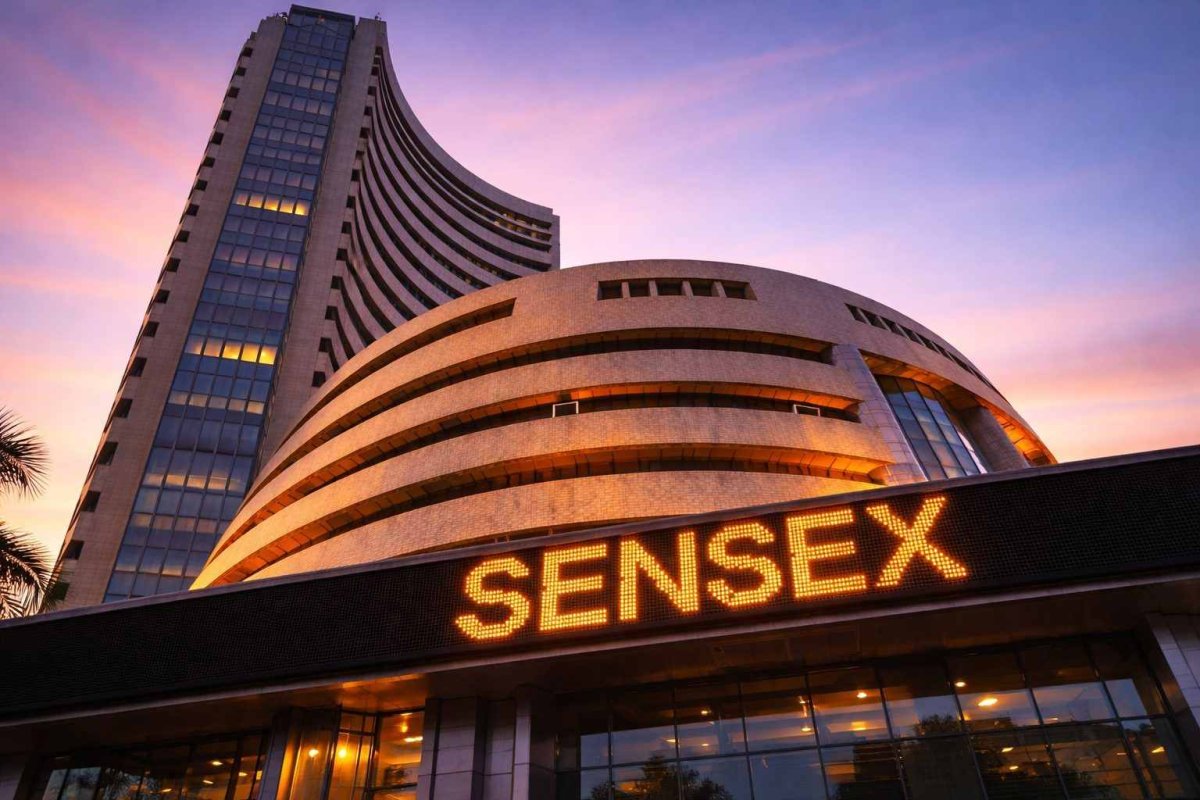
Indian equity markets closed higher on Monday, February 16, 2026, with banking and real estate shares leading the advance. The benchmark Nifty 50 index rose 0.8% to settle at 25,662.55, while the Sensex gained 0.71% to finish at 83,212.63. The rally marked a partial recovery from last week's losses, which were driven by weakness in information technology stocks.
Sector Performance Diverges
Financial and realty stocks provided the primary thrust for the day's gains. In contrast, sectors such as information technology and automobiles underperformed, struggling to maintain momentum. Market analysts noted that investor sentiment is shifting toward sectors with more transparent earnings visibility, away from the recent pressure in tech names.
"The sell-off in IT shares is likely to continue weighing on market sentiment in the near term," commented VK Vijayakumar, Chief Investment Strategist at Geojit Financial Services. He indicated that capital is rotating into industries with clearer profit outlooks.
Regulatory Shock Hits Exchanges and Brokers
The trading session was notably impacted by regulatory action from the Reserve Bank of India. The central bank introduced stricter guidelines governing bank lending to stock brokers and other market intermediaries. The new framework prohibits banks from financing proprietary trading positions and mandates that all broker funding be fully secured, moving away from reliance on personal or corporate guarantees.
The announcement triggered a sharp sell-off in related stocks. Shares of BSE, the operator of the Bombay Stock Exchange, plummeted as much as 9.9%. Brokerage firm Angel One faced immediate pressure, with analysts highlighting its urgent need to reconfigure the financing for its margin trading facility. Multi Commodity Exchange of India (MCX) also saw its stock decline over 7% in morning trade. Financial institution Citi noted that the proposed rules would require brokerages to maintain higher capital reserves.
Pharma and Macro Data in Focus
On the positive side, pharmaceutical stocks attracted strong buying interest. Natco Pharma surged 11.6% after receiving clearance from the Central Drugs Standard Control Organization to manufacture and sell generic versions of semaglutide injection in India, with a planned launch in March. Torrent Pharmaceuticals rallied more than 6% following a reported 26% jump in its quarterly profit and the declaration of an interim dividend.
Economic data released Monday showed India's wholesale price index (WPI) inflation accelerated to 1.81% year-on-year in January, its fastest pace in ten months. Government figures attributed the rise to increasing prices for vegetables and basic metals. Madan Sabnavis, Chief Economist at Bank of Baroda, observed that a global uptick in metal prices is elevating manufacturing costs but suggested this development "will not have a bearing" on monetary policy direction.
Market Nuances and Technical Outlook
The Indian rupee traded within a narrow range, softening slightly in early deals as focus returned to capital flows following the fading enthusiasm around a recent U.S.-India trade agreement. Foreign institutional investors, after being net buyers earlier in the month, withdrew over $800 million from Indian equities on Friday, highlighting the volatility of their positioning.
Technically, market participants are watching the Nifty's support zone between 25,300 and 25,100. A sustained rebound could see the index test resistance in the 25,700 to 26,000 range. The upcoming release of minutes from the U.S. Federal Reserve's latest meeting, scheduled for February 18, is anticipated to influence the market's next directional move.
Meanwhile, the primary market witnessed a tepid debut for Fractal Analytics, whose shares traded approximately 5% below their initial public offering price at 861.25 rupees, giving the company a market valuation of about 148.11 billion rupees ($1.63 billion). Analysts noted that the premium seen in unlisted markets evaporated quickly as investors assessed risks associated with potential artificial intelligence disruption.