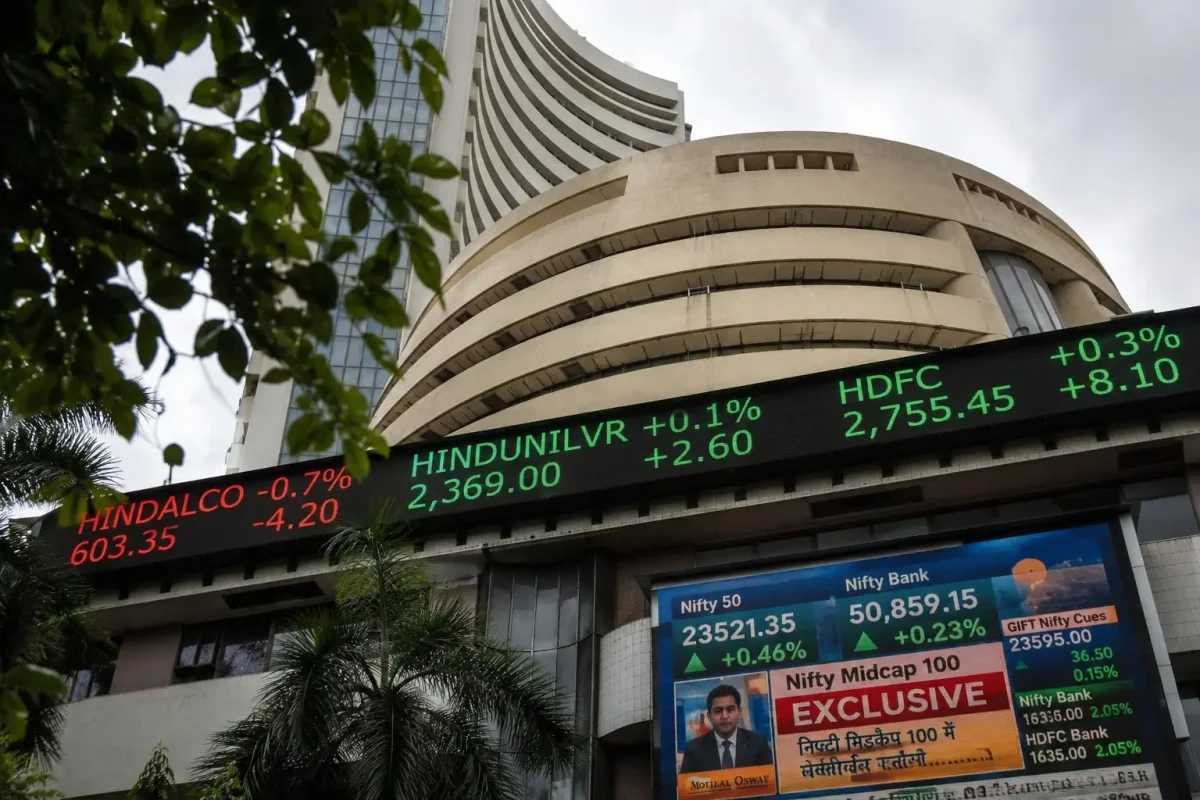
Indian equity markets lost their early momentum on Tuesday as renewed U.S. military strikes in Iran tempered optimism surrounding a potential Middle East peace deal. The Nifty 50 index traded nearly unchanged at 24,021.95 by 12:40 p.m. in Mumbai, after having surged 1.3% in the previous session. The Sensex also oscillated between modest gains and losses, reflecting heightened uncertainty among investors.
The benchmark indices had rallied on Monday to two-week highs, fueled by a sharp drop in crude oil prices amid hopes of a U.S.-Iran agreement. However, the latest U.S. strikes reversed that sentiment, pushing Brent crude futures up by more than 2% in Asian trading. This development poses a significant challenge for India, one of the world's largest oil importers, as rising crude prices can stoke inflation, weaken the rupee, and reduce the scope for further monetary policy easing.
The Indian rupee weakened 0.2% to 95.4325 against the U.S. dollar, according to Reuters. State-run banks were seen selling dollars to curb the currency's losses, market sources said. The currency market remained tight, with some analysts now pricing in a potential 25-basis-point rate hike by the Reserve Bank of India at its June policy meeting. ANZ noted in a research report that such a pre-emptive move would signal the central bank's focus on future inflation risks.
Despite the headline index's lackluster performance, market breadth remained positive. Of the 16 major sectoral indices, 11 traded in the green, according to Reuters. Small-cap stocks outperformed, gaining 0.9%, while mid-caps added 0.3%. Sectors such as metals, chemicals, media, and state-run banks led the advance, while FMCG, pharma, consumption, and cement stocks faced mild profit booking, as reported by the Economic Times.
Technology shares provided early support, with Infosys, Tech Mahindra, and Tata Consultancy Services trading higher. However, blue-chip stocks like InterGlobe Aviation (IndiGo), Bharti Airtel, Sun Pharmaceutical Industries, Trent, Titan, and UltraTech Cement lagged, making the market a stock-picker's game rather than a broad risk-on rally.
In corporate news, Rail Vikas Nigam Ltd (RVNL) slipped after reporting a nearly 60% year-on-year decline in consolidated net profit to 1.87 billion rupees for the March quarter, despite a 4% rise in revenue to 66.96 billion rupees, as per Business Standard. Container Corporation of India also lost ground after its fourth-quarter profit came in below expectations, Reuters reported.
Pine Labs shares climbed up to 4.5% after the company posted a net profit of 590 million rupees for the March quarter, reversing a loss of 290 million rupees in the same period last year, according to the Times of India. Quarterly revenue rose 17% year-on-year.
On the global front, Taiwan has overtaken India to become the world's fifth-largest stock market by market capitalization. Bloomberg data showed Taiwan's market value stood at $4.95 trillion as of Monday, marginally ahead of India's $4.92 trillion, driven by the surge in Taiwan Semiconductor Manufacturing Company (TSMC) and the global AI chip trade.
Looking ahead, market participants expect choppy trading sessions due to the upcoming derivatives expiry and the Bakri Id holiday on Thursday, May 28, when the National Stock Exchange will remain closed. The direction of crude oil prices and the rupee will remain key catalysts. A sustained decline in oil prices on a genuine U.S.-Iran peace deal could reignite the relief rally, while a further rise in crude and a weaker rupee may shift focus back to inflation, foreign capital outflows, and the RBI's June policy decision.