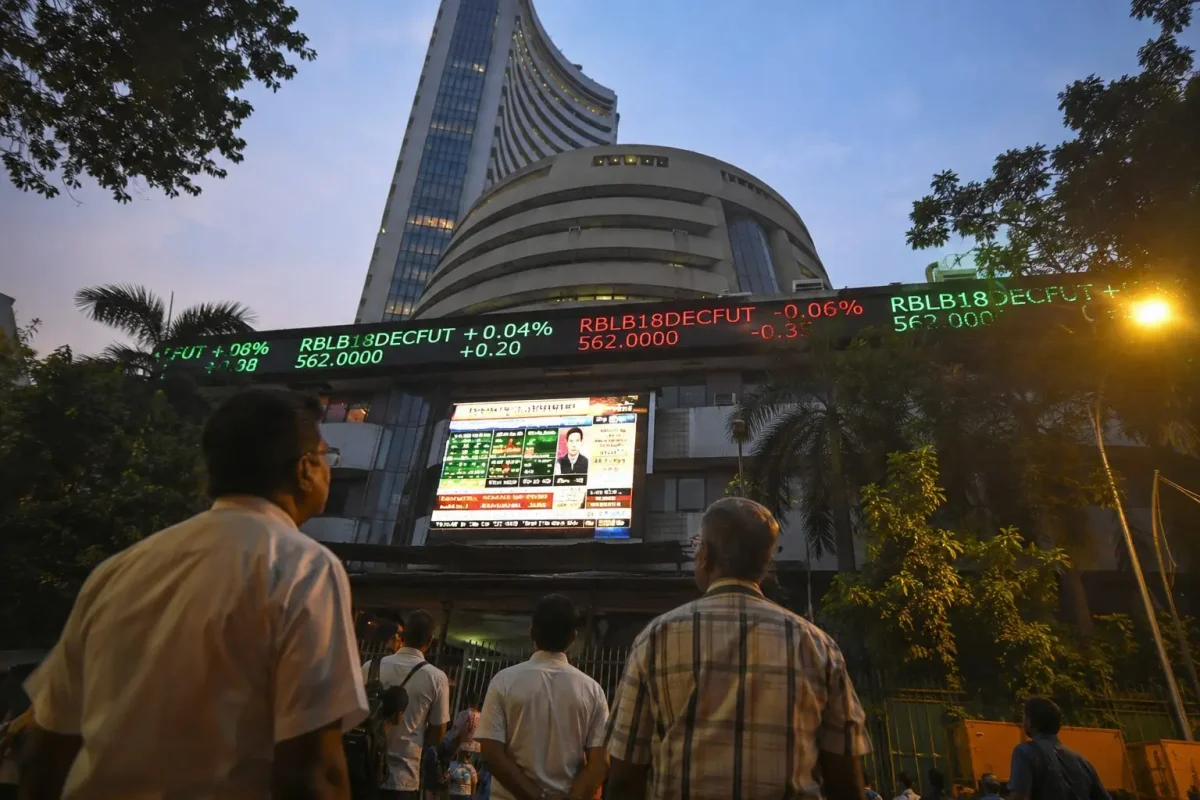
Indian stock markets began a holiday-shortened trading week on Monday, contending with elevated crude oil prices, a depreciating rupee, and persistent foreign portfolio outflows. The Nifty 50 and BSE Sensex managed modest gains last week, but both benchmarks remain significantly lower since the onset of the Iran war.
The Nifty 50 edged up 0.27% to close at 23,719.3 on Friday, while the BSE Sensex gained 0.31% to finish at 75,415.35. For the week, both indices rose roughly 0.3%. However, according to Reuters, the benchmarks have lost 5.8% and 7.2% respectively since the war began. IT and financial stocks led the weekly gains, but analysts caution that the rally may be short-lived unless crude oil prices fall decisively below $100 per barrel.
India, a major crude oil importer, is particularly vulnerable to high oil prices, which exacerbate the trade deficit, fuel inflation, and put downward pressure on the rupee. A weaker rupee erodes returns for foreign investors and increases costs for companies that import fuel, metals, or electronics. The Reserve Bank of India (RBI) has been actively intervening in the currency market, selling an estimated $2 billion to $3 billion on Thursday and continuing operations on Friday, after the rupee hit a series of record lows. The rupee has depreciated 6% this year, making it one of the hardest-hit Asian currencies following the Iran conflict.
Foreign portfolio investors remain cautious, having pulled out $23 billion from Indian equities in 2026, surpassing last year's record outflow. Market participants are closely watching oil price movements and the outcome of potential ceasefire talks between the U.S. and Iran. Reports on Sunday suggested a possible 60-day ceasefire extension and reopening of the Strait of Hormuz, but the White House has yet to comment. If confirmed, this could ease some pressure on India; if not, oil importers, bonds, and rate-sensitive stocks are likely to feel the impact first.
On the earnings front, March-quarter results have been largely solid, with Apollo Hospitals and Grasim Industries hitting new highs after their reports. ICICI Bank gained, while Reliance Industries declined. However, the negative impact of the energy crisis may begin to show in the first quarter of fiscal 2027 if crude prices remain elevated, according to VK Vijayakumar, chief investment strategist at Geojit Investments. Bond yields also posed a concern, with the benchmark 10-year yield rising to 7.1% after the RBI announced a record dividend transfer of 2.87 trillion rupees to the government, which fell short of market expectations.
Fuel retailers BPCL, Indian Oil, and Hindustan Petroleum raised petrol and diesel prices for the third time this month. Petrol in New Delhi now costs 99.51 rupees per litre, and diesel 92.49 rupees per litre. Despite the hikes, state-owned refiners continue to face losses on these sales. Brent crude closed at $103.54 a barrel on Friday, down 5.48% for the week, as volatile headlines from the U.S.-Iran situation kept the market on edge.
With markets closed on Thursday for Bakri Id, traders have only four sessions this week to react to oil price moves, currency intervention, and the tail end of corporate earnings. While IT stocks have rebounded from recent lows and private banks have seen defensive buying, a broad-based rally appears unlikely unless crude prices retreat and the rupee stabilizes. The key question for investors is how much bad news is already priced into Indian equities.
