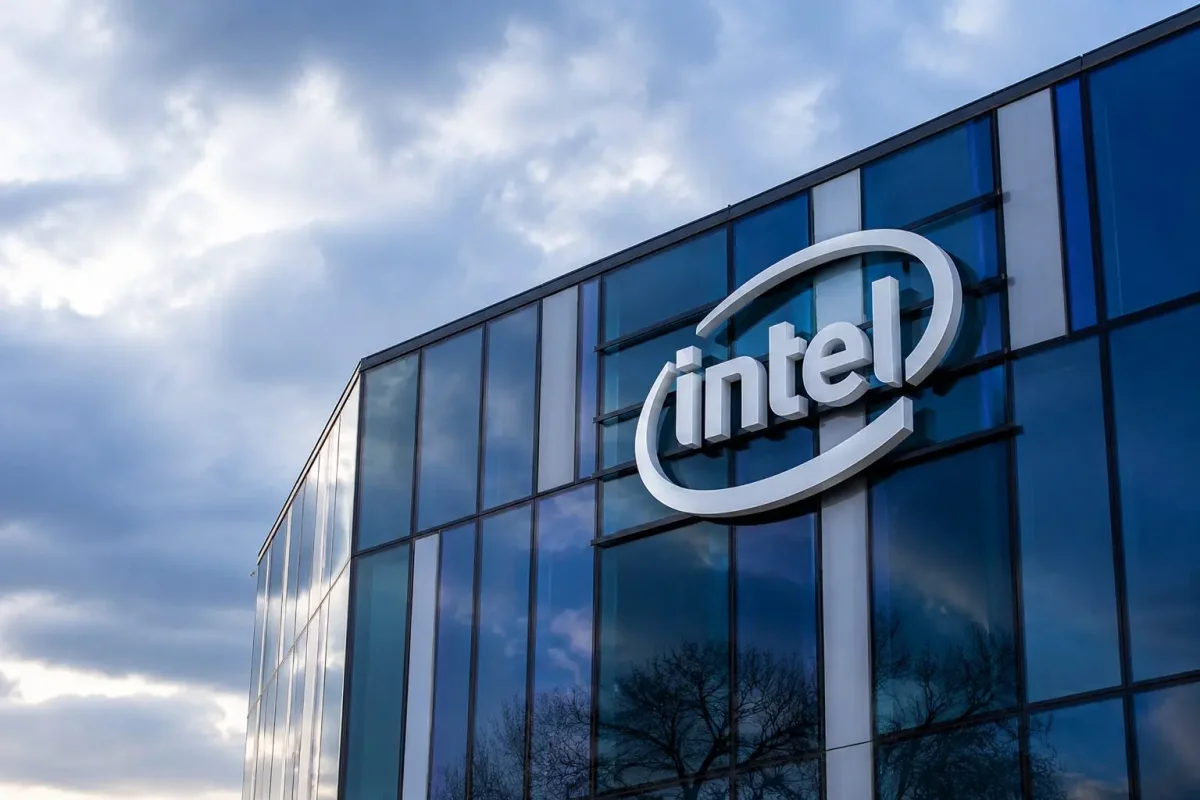
Intel Corporation (NASDAQ:INTC) shares declined in premarket trading Tuesday, falling 4.69% to $116.47 as of 5:44 a.m. EDT. The drop comes despite a significant upward revision in earnings expectations for the second quarter, with analysts boosting their EPS forecast to $0.21 from $0.08 at the end of March—a 162.5% increase. The stock had closed Monday at $122.20, up 1.54%, but the premarket slide erased those gains and more.
The sharp contrast between improved earnings estimates and falling share prices highlights a growing tension in the market. According to FactSet, the information-technology sector’s bottom-up EPS estimate rose only 8.7% over the same period, meaning Intel’s revision rate far exceeds the broader tech trend. Yet investors appear to have already priced in these improvements, leaving little room for upside if the July 23 earnings report falls short.
Intel’s own guidance for Q2 non-GAAP EPS stands at $0.20, just below the consensus estimate of $0.21. Revenue is expected to range between $13.8 billion and $14.8 billion. The company is scheduled to report results after the bell on July 23, and the market will be watching closely to see if the chipmaker can deliver on elevated expectations.
Analyst Targets and Ratings
Wall Street’s outlook on Intel remains mixed. Barron’s data lists 14 buy ratings, 5 overweight, 31 hold, 1 underweight, and 3 sell recommendations. However, the average price target of $107.40 sits below Monday’s close of $122.20, suggesting limited upside potential. The highest target is $200.00, while the lowest is $45.00. This dispersion reflects uncertainty about Intel’s ability to sustain its earnings momentum amid heavy AI-related investments.
The broader semiconductor sector also faced pressure in premarket trading. Nasdaq 100 futures slipped 0.9%, with Micron Technology (NASDAQ:MU) down 5.6%, Western Digital (NASDAQ:WDC) losing 6.2%, and Sandisk (NASDAQ:SNDK) dropping 5.2%. Even Samsung Electronics (OTC:SSNLF) traded lower in Seoul despite reporting a 19-fold surge in Q2 operating profit.
Market Context and AI Investment
Richard Hunter, head of markets at interactive investor, noted that the key question for Intel is “whether the level of earnings can be maintained” after substantial AI-related capital expenditures. Morgan Stanley added Monday that the recent decline in U.S. semiconductor shares could indicate a rotation toward AI hyperscalers. The Philadelphia Semiconductor Index jumped 11% in June but has fallen more than 11% in the past two weeks, reflecting sector volatility.
Intel’s first-quarter results provided some optimism. Revenue rose 7% to $13.6 billion, with Data Center and AI revenue up 22% and Intel Foundry revenue up 16%. CEO Lip-Bu Tan stated that “the next wave of AI” will push intelligence closer to users, boosting demand for Intel CPUs, wafer supply, and packaging. The broader market had rallied Monday, with the Nasdaq Composite adding 1.12% to 26,121.16, the S&P 500 gaining 0.72%, and the Dow Jones Industrial Average rising 0.29% to 53,055.91.
As Intel approaches its earnings report, the stock’s premarket decline suggests that even strong estimate revisions may not be enough to sustain its valuation without solid execution. Investors will be watching for signs that the company can translate AI-driven demand into consistent profitability.