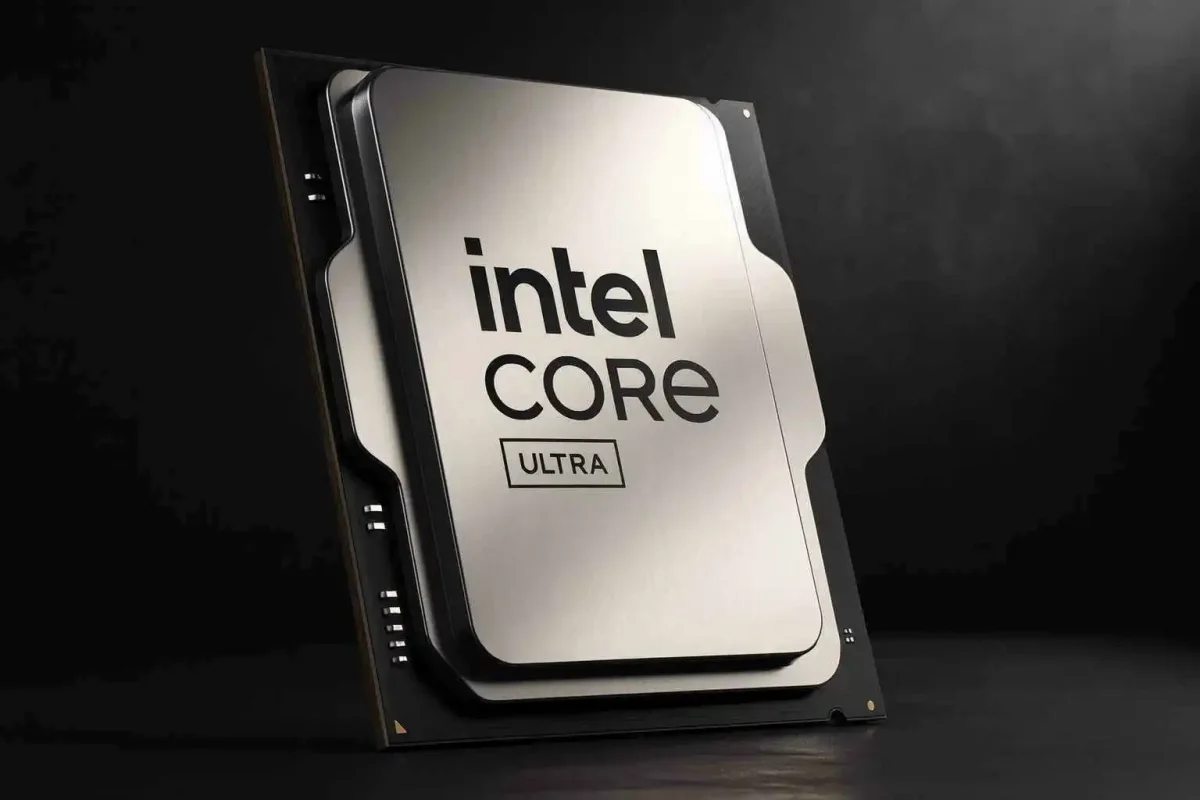
U.S. equity markets were closed on Monday, May 25, 2026, in observance of Memorial Day, providing a pause for traders to assess the recent volatility in chip stocks. Intel Corporation (INTC) last traded on Friday, closing at $119.84, a gain of 1.13% on the day, according to Reuters data. The stock had experienced a turbulent week, with five consecutive days of decline, including a 0.6% drop to $108.17 on the prior Monday, despite upward price target revisions from analysts Atif Malik of Citi and Cody Acree of Benchmark.
The central question for investors is whether the surging demand for AI server chips and the capacity of Intel's factories can sustain the stock's impressive rally into 2026. Intel reported first-quarter revenue of $13.6 billion, up 7% year-over-year, and guided second-quarter revenue between $13.8 billion and $14.8 billion. However, the company posted a GAAP loss of $0.73 per share, while its non-GAAP earnings—the adjusted figure Intel emphasizes—came in at $0.29 per share.
CEO Lip-Bu Tan highlighted increased demand for Intel's CPUs, wafer services, and advanced packaging products, attributing growth to a shift in customer focus toward inference tasks and "agentic" AI. This pivot comes as Nvidia (NVDA) deepens its push into the CPU market, a domain long dominated by Intel. Nvidia CEO Jensen Huang estimated the CPU market at $200 billion, including China, signaling intensifying competition.
Nvidia last week projected second-quarter revenue of $91 billion, surpassing Wall Street estimates, and announced an $80 billion stock buyback. Yet, eMarketer analyst Jacob Bourne noted the "lingering question" of whether AI spending can sustain its pace as inference workloads expand and rivals like Google, Amazon, AMD, and Intel introduce new chips.
On the supply side, ASML (ASML) CEO Christophe Fouquet told Reuters that chip supply will remain tight for an extended period, driven by demand from AI, satellites, and robotics. ASML's advanced lithography tools are critical for producing cutting-edge chips, and Intel aims to be an early adopter of the company's High NA EUV machines. Intel's foundry business is attempting to ramp up production for external clients, but execution risks persist. "TSMC is the real bottleneck," said SemiAnalysis President Doug O'Loughlin in an interview with Reuters, while Jay Goldberg of Seaport Research remarked that "no company in history" has fallen behind Moore's law and successfully caught up.
U.S. stocks closed higher on Friday, with the Dow Jones Industrial Average reaching a new high and the S&P 500 notching its eighth consecutive weekly gain. The Philadelphia Semiconductor Index also rose, though Nvidia fell 1.9%. "Earnings have been solid," said James St. Aubin of Ocean Park Asset Management, who also noted encouraging headlines from the Middle East.
Intel faces substantial risks. If AI server demand softens, foundry clients withdraw, or the company encounters further manufacturing delays, investors could be left with a firm still posting losses and burning cash. "Intel is making a 'high-stakes gamble' trying to take on TSMC by 2030," warned Michael Schulman of Cerity Partners. This week, traders will monitor key U.S. economic data, including GDP, jobless claims, and PCE inflation, which could influence Intel's next moves.