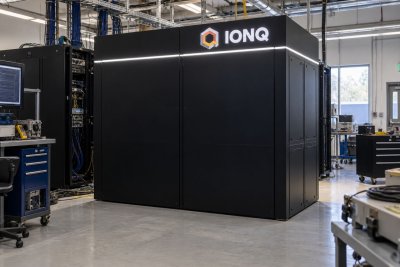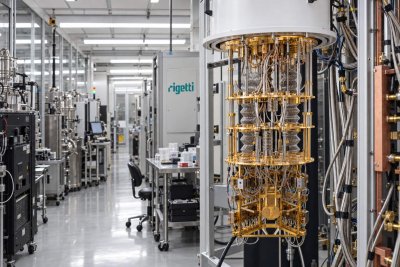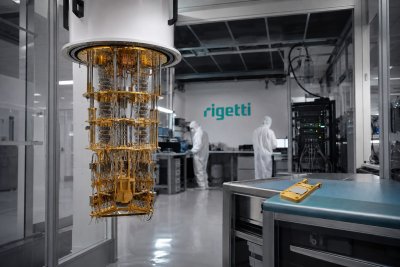
The quantum computing sector enters a pivotal holiday-shortened trading week with fresh investor scrutiny following significant developments for two key players. IonQ, a leader in trapped-ion quantum systems, faces a shift in its shareholder base, while Rigetti Computing contends with a revised analyst outlook that raises questions about its financial runway.
Major Stakeholder Adjusts Position in IonQ
In a regulatory filing submitted Thursday, financial giant Morgan Stanley, alongside its investment management division, disclosed that its collective beneficial ownership in IonQ has fallen below the critical 5% threshold. The filing, a Schedule 13G/A with the Securities and Exchange Commission (SEC), indicates the firm's stake now stands at approximately 4.8%, with its investment arm holding 4.7%. This move signifies Morgan Stanley is no longer a 5%+ beneficial owner of IonQ's common stock, a change that market participants often monitor for signals about institutional conviction, though the reasons for the reduction were not specified.
Rigetti Downgraded on Valuation and Funding Concerns
Separately, Rigetti Computing received a rating downgrade from TD Cowen analyst Krish Sankar. The firm's rating was moved from 'buy' to 'hold,' with Sankar pointing to a 'premium valuation' relative to peers as a primary concern. More notably, the analyst highlighted funding risks associated with the company's roadmap, specifically the capital required for its planned 200-millimeter chip fabrication plant. Sankar cautioned that raising the necessary funds could lead to shareholder dilution if accomplished through a secondary equity offering, a prospect that introduces uncertainty for current investors.
The quantum computing industry remains characterized by its pre-revenue or early-revenue stage, with companies investing heavily in research, development, and hardware deployment. In this environment, investor focus intensively tracks metrics like bookings, cash burn rates, and customer retention. Any indication of slower-than-expected commercial adoption or increased capital expenditure needs can swiftly pressure stock valuations, as the market prices in the heightened risk of future capital raises.
Earnings Season Looms for Sector Leaders
The immediate catalyst for the sector arrives with a cluster of earnings reports scheduled for the final week of February. IonQ is set to announce its fourth-quarter and full-year 2025 financial results after the market closes on Tuesday, February 25, followed by a conference call at 4:30 p.m. Eastern Time. D-Wave Quantum Inc. will report its Q4 and full-year 2025 figures before the market opens on Wednesday, February 26, with a call scheduled for 8:00 a.m. Eastern.
These reports, and more importantly the accompanying guidance for 2026, are anticipated to be the primary drivers of near-term trading direction. The sector has demonstrated sensitivity to even minor adjustments in forward-looking statements, as traders assess the pace of commercialization against lofty long-term revenue projections. A cautious outlook from either company regarding customer ramp-up timelines or an increase in projected spending could reignite dilution worries and negatively impact not just the reporting firm but sentiment across the quantum computing basket.
Trading dynamics will be compressed due to the U.S. market holiday on Monday, February 16, for Washington's Birthday. With exchanges closed, the full focus will shift to the truncated Tuesday-Friday session. This provides only a handful of trading days for positions to be adjusted ahead of the late-February earnings deluge, potentially amplifying volatility.
In Friday's session, quantum stocks closed broadly higher despite the emerging headlines. IonQ shares gained 8.8% to finish at $34.11. Rigetti Computing rose 7.2% to $16.09. D-Wave advanced 4.6% to $19.67, while Quantum Computing Inc. added 3.6%, closing at $8.47. This positive momentum sets the stage for a week where fundamental news may challenge recent price action.