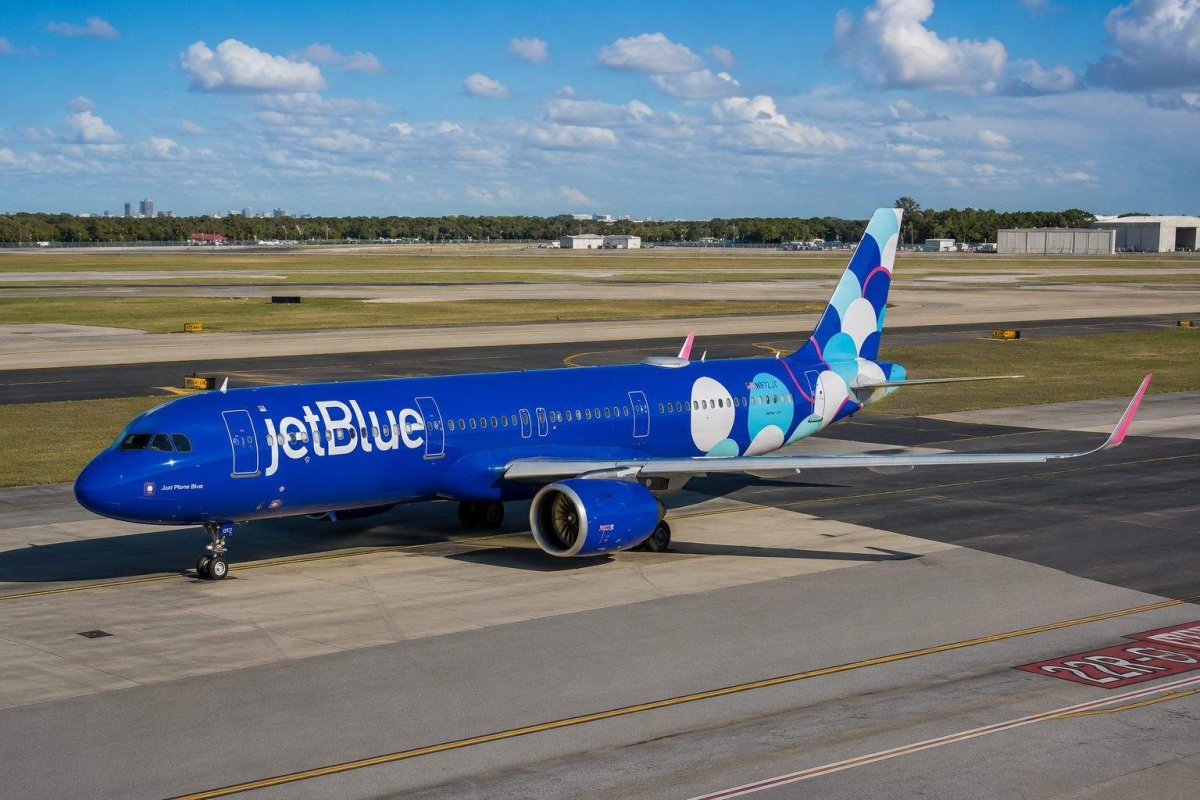
JetBlue Airways is making significant cuts to its East Coast network, dropping 12 routes and ending all service at Manchester-Boston Regional Airport, as it doubles down on its Fort Lauderdale hub. The airline announced that the last flight from Manchester will depart on July 8, and seasonal routes to Fort Myers and Fort Lauderdale that were expected to resume next year are also being scrapped.
The move comes in the wake of Spirit Airlines' shutdown on May 2, which has reshaped the competitive landscape in South Florida. With Spirit's departure, JetBlue and other carriers are vying for passengers, gates, and routes in a market that has become both more contested and more promising. JetBlue earlier this month outlined plans to add 11 new destinations and increase flight frequencies from Fort Lauderdale, and Reuters noted that the fallout from Spirit's exit is expected to benefit rivals like JetBlue and Frontier Airlines.
JetBlue's President Marty St. George told investors that the carrier's second-quarter capacity growth is entirely driven by Fort Lauderdale, where revenue per available seat mile rose 5% year-over-year in the first quarter, despite a 23% increase in capacity. The airline characterized the route cuts as a strategic move to "better align flying with customer demand" and to support its focus-city strategy in South Florida. Customers affected by the cancellations can receive refunds or rebook on alternative JetBlue flights where available.
The decision marks a sharp reversal for JetBlue's New England expansion. In July 2024, the airline had announced new service from Manchester to Orlando, Fort Myers, and Fort Lauderdale, positioning Manchester as its 10th New England airport. However, Manchester-Boston officials expressed disappointment, noting that JetBlue accounted for no more than 5% of the airport's traffic despite incentives and marketing support. Southwest remains the dominant carrier at the airport.
Beyond Manchester, JetBlue is also dropping routes from Hartford to Tampa; from Newark to Aruba, Cancun, Punta Cana, Santo Domingo, and Tampa; and from Orlando to San Jose (Costa Rica) and San Juan. The Providence-to-San Juan route is being paused for the season. JetBlue emphasized that it continues to operate flights to many of these Caribbean and Central American destinations from other East Coast airports.
The Fort Lauderdale buildup had been underway before Spirit's shutdown, but it has accelerated. In March, JetBlue announced new service to Cleveland and additional routes from Fort Lauderdale to Atlanta, Aruba, Newark, Jacksonville, Las Vegas, Norfolk, Philadelphia, Santo Domingo, and St. Maarten. JetBlue's network chief Daniel Shurz described the plan as building "an undeniably strong" Fort Lauderdale network.
However, the strategy carries risks. JetBlue still faces high fuel costs, with CFO Ursula Hurley flagging volatility in the operating environment last month. The airline is guiding for second-quarter fuel prices between $4.13 and $4.28 per gallon, and expects to recover only 30% to 40% of those costs through fare increases this quarter. Analysts warn that JetBlue has limited margin for error. Fitch's Joseph Rohlena told Reuters that the carrier may need to tap capital markets again "if either fuel stays very high" or demand weakens. Daniel McKenzie of Seaport Research projects JetBlue will post a pretax loss of approximately $1.1 billion in 2026.
The broader budget airline sector is in flux. Shye Gilad, a former airline captain now teaching at Georgetown University, told the Associated Press that low-cost carriers "can't just be the cheapest airline anymore." He noted that larger carriers are using pricing strategies, loyalty programs, and premium seating to manage fuel costs and attract price-sensitive travelers.