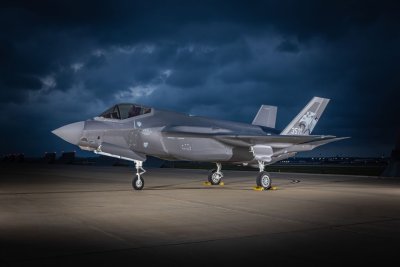
Lockheed Martin (NYSE: LMT) broke ground on an 87,000-square-foot munitions facility in Troy, Alabama, on Thursday, marking a key milestone in the company's broader $9 billion plan to dramatically scale up missile production. The new building, designated Building 47, will support the manufacture of Terminal High Altitude Area Defense (THAAD) interceptors and lay the groundwork for the Next Generation Interceptor (NGI), a next-generation system designed to counter long-range ballistic threats.
The expansion comes as the Pentagon intensifies pressure on defense contractors to rebuild U.S. missile inventories following significant drawdowns from recent conflicts and fresh framework agreements across the weapons industry. In March, Reuters reported that the Department of Defense had reached framework agreements with Lockheed, BAE Systems, and Honeywell to boost munitions output as it pushed the U.S. military toward what officials termed a 'wartime footing.'
Lockheed's investment, which totals over $9 billion through 2030, includes upgrading or building more than 20 facilities across the U.S. The company said the Alabama expansion will nearly double its production space at the Troy campus and add jobs over the next three years, building on the nearly 4,000 Lockheed employees already in the state. CEO Jim Taiclet stated, 'Lockheed Martin is ready now,' adding that the company has already invested 'well over a billion dollars' into the expansion.
Michael Duffey, Under Secretary of War for Acquisition and Sustainment, who attended the groundbreaking, described the partnership as 'critical to surging' munitions capacity. He noted that multiyear procurement deals give companies more certainty to invest, adding, 'talk becomes action.' Reuters separately reported that approximately $1.25 billion had already been spent ahead of contract finalization.
The ramp-up extends well beyond THAAD. Lockheed has agreed to increase annual THAAD interceptor production from 96 to 400 units, more than triple Patriot PAC-3 output to 2,000 interceptors per year, and quadruple production of the Precision Strike Missile. The company also launched a supplier conference series this month, with over 150 suppliers meeting in Dallas to discuss faster production of PAC-3 MSE, THAAD, and Precision Strike Missile systems. Defence Industry Europe reported that these meetings are expected to continue monthly, both in person and online.
THAAD is designed to intercept ballistic missiles in their terminal phase, either inside or outside the atmosphere. The system is currently operated by the United States, the United Arab Emirates, and Saudi Arabia, and is integrated with the PAC-3 Missile Segment Enhancement interceptor used in the Patriot air-defense system. The competitive landscape remains tight: BAE Systems produces THAAD seekers, while Northrop Grumman and RTX had previously competed against Lockheed on the NGI program before the Missile Defense Agency selected Lockheed to continue development in 2024.
The risk, however, lies in timing. New factories do not produce missiles overnight, and Lockheed's own schedule points to jobs and added capacity over several years. Contract awards, congressional funding, and supplier output still need to align. A recent Washington Post report, citing Defense Department assessments, noted that U.S. use of high-end interceptors in the Israel-Iran conflict had sharpened concerns about missile-defense stocks, with Stimson Center analyst Kelly Grieco calling the numbers 'striking.'
Lockheed shares were little changed in late trading on Thursday at $522.79, while RTX rose and Northrop Grumman slipped slightly. The muted move suggested investors had largely priced in the direction of travel: more demand for missiles, but a production race that will take time to materialize.