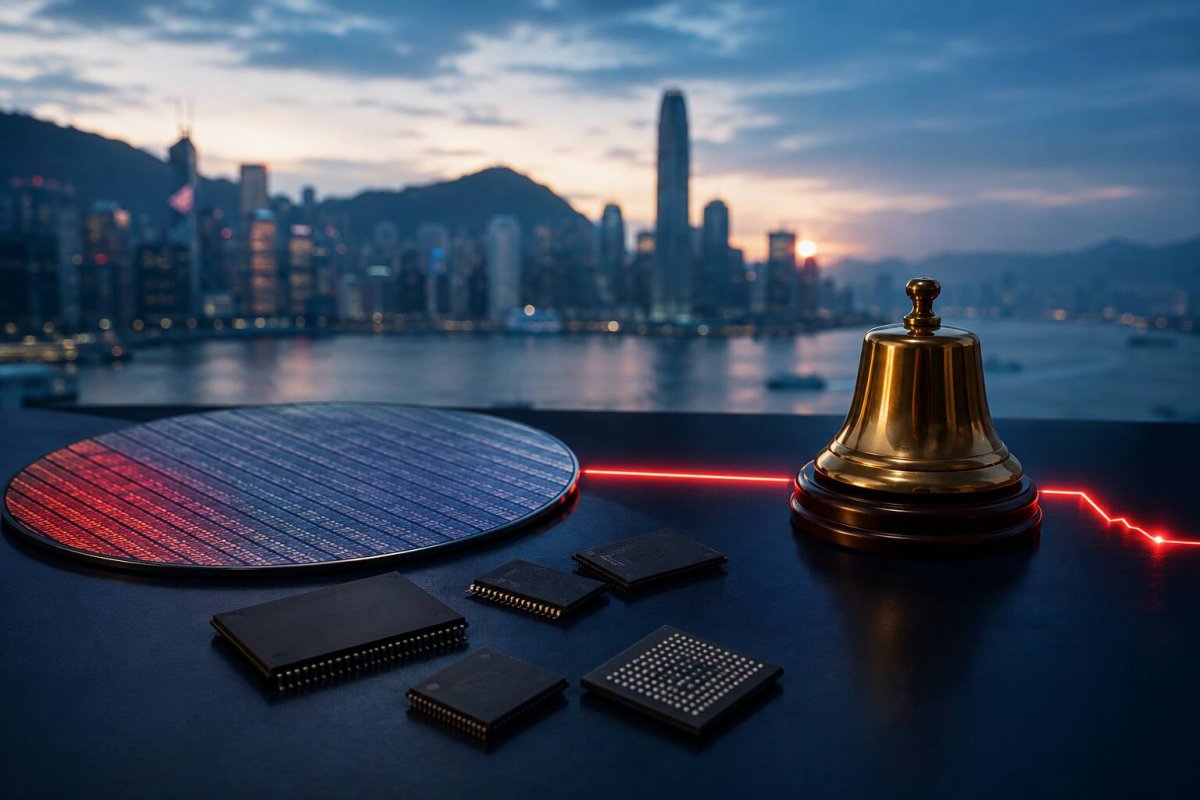
Shenzhen Longsys Electronics Co., Ltd. (HKEX: 9976) made a lackluster market debut in Hong Kong on Tuesday, with shares slipping below their initial public offering (IPO) price shortly after opening. The stock opened flat and traded as low as HK$235, compared to the offer price of HK$236, before recovering slightly to HK$235.60 by mid-morning. The Hang Seng Index and Hang Seng Tech Index both declined during the session, reflecting broader market weakness.
Oversubscription vs. Market Reality
The IPO had generated significant buzz, with retail investors subscribing for 40.32 times the shares initially allocated to them. However, the retail tranche represented only 8.7% of the enlarged offering, totaling 2.61 million shares. The international tranche, which accounted for the bulk of the deal, was 3.88 times subscribed. This disparity highlights that the headline subscription figure does not fully capture the pricing dynamics set by institutional investors.
Longsys sold 29.99 million H-shares, exercising the full 15% offer-size adjustment, raising gross proceeds of HK$7.08 billion (approximately US$900 million). After expenses, net proceeds are estimated at HK$6.80 billion, according to the company's allotment announcement.
Stabilization and Greenshoe Mechanics
The offering included an over-allocation of 4,498,400 shares, valued at roughly HK$1.06 billion at the offer price. This greenshoe option allows the underwriters to stabilize the stock by purchasing shares in the market at or below the offer price, or through deferred delivery, until October 3. However, the deal documents explicitly state that stabilization is not obligatory, and investors should not interpret this capacity as a guarantee of price support.
Memory Cycle at a Peak?
Longsys, which owns the Lexar, FORESEE, and Zilia storage brands, is riding a wave of strong demand for AI infrastructure and tighter DRAM and NAND supply. In the first half of 2026, revenue surged 136.3% year-over-year to RMB24.09 billion, with gross margin expanding from 11.0% to 58.2%. Net profit jumped to RMB10.72 billion from RMB41 million in the prior-year period.
However, the company's own prospectus describes the four months through April as an "unprecedented up-cycle," a warning that memory prices are cyclical and can reverse quickly. Notably, Longsys does not manufacture its own wafers; wafers account for over 75% of its bill of materials, and its five largest suppliers represent 63.3% of purchases in the first four months of 2026. This dependency exposes the company to supply-chain risks and price volatility.
Cash Flow Concerns
Despite record profitability, Longsys reported negative operating cash flow of RMB3.15 billion in the first half, primarily due to a RMB14.23 billion increase in inventory. The company attributes this to higher raw-material procurement costs. Inventory turnover stretched to 317 days in the four months through April, up from 191 days in 2025, indicating a growing working-capital burden.
What to Watch Going Forward
The company plans to allocate 78.3% of net proceeds to research and development, 11.7% to investments or acquisitions, and 10% to working capital and general corporate purposes. The bull case rests on sustained AI-driven demand keeping memory prices elevated. However, the bear case is that investors are buying at peak margins while working-capital needs escalate.
If wafer prices soften, inventory accumulated at higher costs could compress margins. Conversely, if prices keep rising, customers may delay purchases or downgrade specifications. Longsys already noted that sales volume declined in the first half despite higher revenue, as elevated prices dampened demand and tight supply limited procurement.
Investors should focus on three key indicators: whether the H-shares can hold the HK$236 offer price after stabilization ends, whether inventory growth slows relative to sales, and whether the extraordinary first-half margin is sustainable. Tuesday's muted debut does not settle the Longsys thesis, but it underscores that the market demands proof that the earnings boom can translate into cash before rewarding an IPO premium.
