Shares of MARA Holdings declined sharply in early trading on Friday, March 6, 2026, reflecting broader pressure on the cryptocurrency mining sector. The stock dropped 5.4% to $8.77 in premarket activity, a move that coincided with a roughly 4% decline in the price of Bitcoin, which was hovering near the $70,001 level.
Strategic Pivot and Treasury Policy Shift
The downturn arrives at a critical juncture for the company as it executes a significant strategic transition. In its annual report filed on March 2, MARA disclosed an update to its treasury management policy for 2026. The revised policy now permits the company to sell Bitcoin held on its balance sheet beyond just the coins generated from ongoing mining operations. This change provides MARA with enhanced flexibility to raise capital, which is deemed essential for funding its expansion into artificial intelligence and high-performance computing data centers.
By the conclusion of 2025, MARA's treasury held 53,822 Bitcoin alongside $547.1 million in unrestricted cash. The company confirmed it had already begun selling portions of its Bitcoin holdings in the latter half of the previous year to cover operational expenses. Notably, during the fourth quarter, MARA opted to utilize these cryptocurrency sales rather than issue new equity, resulting in a combined year-end reserve of cash and Bitcoin valued at approximately $5.3 billion.
Data Center Ambitions and Key Partnership
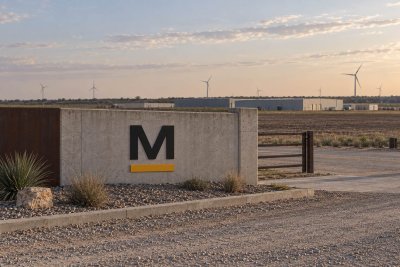
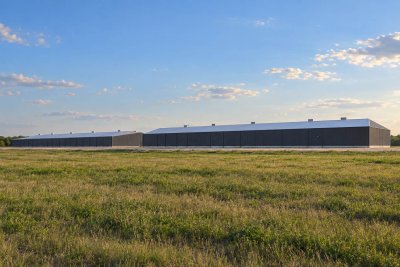
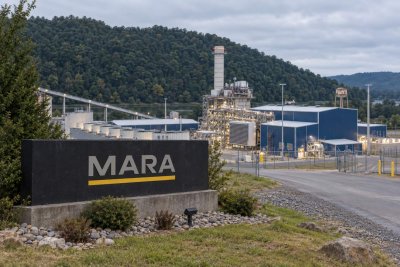
This financial maneuvering supports a broader corporate initiative to repurpose some of its energy-intensive mining sites into data centers catering to enterprise, hyperscale, and AI clients. A cornerstone of this strategy is a recently announced partnership with Starwood Digital Ventures, unveiled on February 26. The collaboration is projected to support nearly 1 gigawatt of information technology capacity in the near term, with potential for expansion exceeding 2.5 gigawatts.
MARA's Chairman and CEO, Fred Thiel, emphasized the strategic value of the company's assets when the deal was announced, stating, "MARA's power-rich sites give customers what they need most: predictable access to energy at scale." Barry Sternlicht, Chairman and CEO of Starwood Capital, echoed the significance, calling data centers "the infrastructure responsible for driving the modern economy."
Financial Performance and Mining Metrics
Investors are evaluating this ambitious pivot against a backdrop of challenging operating conditions. The company reported a 6% decrease in fourth-quarter revenue to $202.3 million and recorded a substantial net loss of $1.7 billion. This loss was largely attributed to non-cash impairments linked to declining digital asset valuations. For the full year 2025, Bitcoin production declined by 7% to 8,799 coins, despite a 25% increase in energized hashrate—a key measure of mining computational power.
Divided Wall Street Sentiment
Analyst perspectives on MARA's path forward remain mixed. On March 5, Paul Golding of Macquarie maintained an Outperform rating but reduced his price target to $26 from $30. Earlier in the week, Brian Dobson of Clear Street also lowered his target, cutting it to $9 from $16 while keeping a Hold rating. Brett Knoblauch of Cantor Fitzgerald, commenting last week, described the Starwood partnership as MARA's "most meaningful step" toward its AI ambitions. Conversely, Jonathan Lee of Guggenheim expressed a desire for "more clarity" regarding tenant contracts and the project's implementation timeline.
The sell-off extended across the mining sector, with peers Riot Platforms and Hut 8 falling 5.6% and 5.4%, respectively, in premarket trading. Industry observers have noted that miners like MARA and Riot face mounting pressures from debt obligations, rising capital requirements, and the significant costs associated with transitioning toward AI data center operations.
Future Risks and Capital Considerations
The success of MARA's strategic shift is not assured. Several risk factors loom, including the potential for sustained softness in Bitcoin's price, a continued increase in network mining difficulty following April's halving event—which cut mining rewards in half—or potential delays in securing AI tenant commitments. Should these challenges materialize, MARA may need to draw more aggressively on its Bitcoin treasury or return to capital markets for funding. Regulatory filings as of December 31 indicated the company had drawn $350 million on its credit line and faces anticipated hosting and service expenditures of at least $510.8 million from 2026 through 2028.
MARA's leadership has framed 2026 as a pivotal inflection point. In his communication to shareholders, CEO Fred Thiel pointed to the Starwood partnership and the acquisition of Exaion as key catalysts for the company's AI infrastructure strategy. The firm intends to dynamically allocate power to its most profitable applications, maintaining Bitcoin mining as a foundational revenue stream while aggressively pursuing new computing ventures.