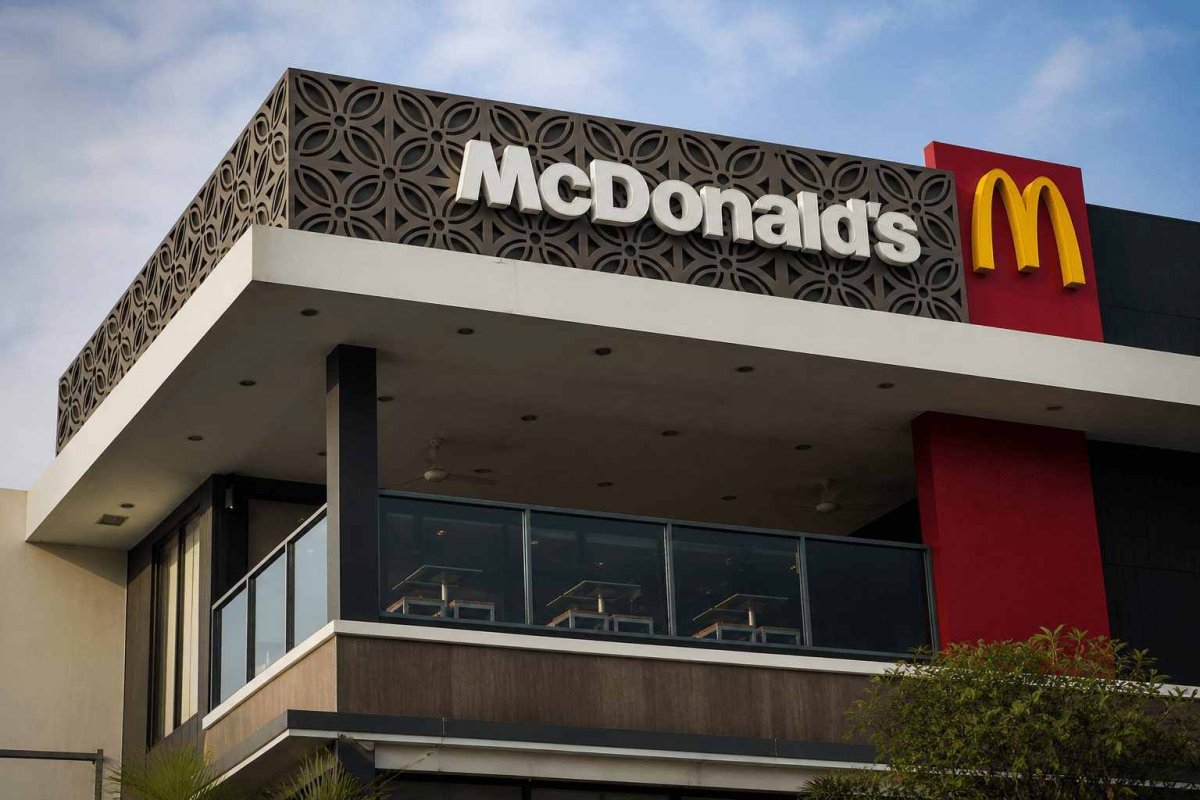
McDonald's Corporation (MCD) reported first-quarter earnings that surpassed analyst expectations, but the results revealed a persistent challenge: uneven U.S. foot traffic despite aggressive value promotions. The fast-food giant's performance underscores the intensifying battle for budget-conscious consumers amid elevated inflation and rising gas prices.
For the quarter ended March 31, 2026, McDonald's posted revenue of $6.517 billion, a 9% increase year-over-year, beating the LSEG consensus estimate of $6.47 billion. Net income rose 6% to $1.983 billion, with diluted earnings per share (EPS) of $2.78. Adjusted EPS, excluding $0.05 per share in charges, came in at $2.83, topping the $2.74 expected by analysts.
Global comparable sales climbed 3.8%, narrowly missing some forecasts. In the U.S., same-store sales grew 3.9%, driven by higher average checks as customers added premium items and loyalty rewards. However, this growth was below Wall Street targets, and traffic data from Placer.ai cited by Reuters showed a choppy pattern: visits declined in January, rebounded in February, then tapered off in March.
Systemwide sales, which include both company-operated and franchised restaurants, surged 11% (6% on a constant-currency basis) to exceed $34 billion. Loyalty-member sales across 70 markets topped $9 billion for the quarter, pushing the trailing 12-month total past $38 billion. McDonald's credited its loyalty program, digital rewards, and menu innovation—such as the limited-time Big Arch burger and new beverage offerings—for boosting average order values.
CEO Chris Kempczinski highlighted the company's "value leadership, breakthrough marketing, and menu innovation" as key drivers, adding that McDonald's executed "with discipline" in a "challenging environment." However, the reliance on value deals raises questions about sustainability. While discounts help retain market share, they may not be sufficient to draw back diners facing persistent pressure from higher fuel and grocery costs.
Competitive pressures are mounting. Restaurant Brands International's (QSR) Burger King reported U.S. same-store sales growth of 5.8% in the first quarter, well above the anticipated 3%, fueled by $4.99, $5, and $7 meal deals. RBC Capital Markets analyst Logan Reich called Burger King "the bright spot on the quarter." UBS analyst Dennis Geiger noted before the results that rising gas prices and softer consumer sentiment likely weighed on McDonald's momentum late in the quarter, though he described the brand as "well positioned globally."
Looking ahead, McDonald's expanded its McValue lineup in April, introducing lower-priced tiers and offering 10 menu items for $3 or less at select U.S. locations. Investors are now focused on the second quarter to see if these changes can drive increased foot traffic rather than merely inflating ticket sizes. The company's investor call, scheduled for 7:30 a.m. Central time, is expected to address traffic patterns, the impact of value menus on margins, and early signals from Q2 demand.
The broader context suggests that value pricing may become a cost of doing business rather than a growth catalyst. With lower-income consumers remaining cautious and competitive pressure from rivals like Burger King, McDonald's faces a critical test in the coming months. The company's ability to balance affordability with profitability will be key to sustaining its market leadership.