Micron Technology (MU) shares advanced in premarket trading on Tuesday, rising 3.7% to $779.05 as of 4:03 a.m. EDT, recovering from a slight dip on Friday. The move comes as U.S. cash trading resumes following the Memorial Day holiday, with investors refocusing on the memory-chip maker's role in the AI-driven semiconductor market.
The stock closed at $751.00 on Friday, down 1.5% after trading between $747.20 and $780.20 on volume of approximately 35.3 million shares. This volatility follows a week that saw shares climb from $681.54 on May 18 to $762.10 by May 21, before Friday's pullback. Market participants are now watching to see if the dip is a temporary pause or the start of a new trend.
Expansion and Production Milestone
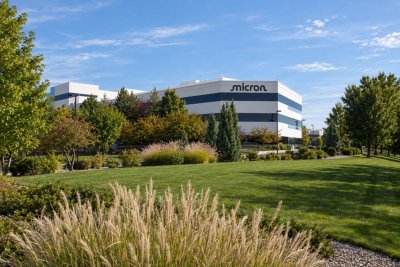
Micron announced on Friday that it has commenced production of 1-alpha (1α) DRAM at its expanded Manassas, Virginia facility. The company is calling this the most advanced memory technology manufactured in the United States. The expansion, which involved an investment of more than $2 billion, is expected to quadruple DDR4 wafer output at the site. This additional capacity will be allocated to customers in automotive, defense, aerospace, industrial, networking, and medical device sectors.
CEO Sanjay Mehrotra stated, "Today's achievement is an important step in Micron's $200 billion investment plan to expand memory manufacturing and R&D in the U.S." He emphasized the company's pride in bringing advanced 1α DRAM manufacturing to American soil. Micron expects the Manassas plant to qualify 1α DRAM production by the end of calendar 2026.
AI Memory Demand and Market Context
Micron is widely viewed as one of the purest plays on a potential shortage of memory chips in AI data centers. DRAM serves as short-term memory for servers and PCs, while high-bandwidth memory (HBM) places memory chips directly next to processors to accelerate AI data processing. The company's strategic focus on these technologies has positioned it at the center of the AI memory trade.
Analyst sentiment remains bullish. Mizuho's Vijay Rakesh maintains a Buy rating with an $800 price target as of May 25. Citi's Atif Malik has an $840 target from May 18, while Melius Research's Ben Reitzes holds a $1,100 target from the same date. Malik noted in a report that memory makers are discussing "3-5 year strategic or long-term agreements" with major cloud clients, which include base volumes and prepayments that could stabilize contract prices even if spot prices fluctuate.
Risks and Competitive Landscape
Despite the optimism, risks remain. Samsung Electronics (SSNLF) and SK Hynix continue to drive HBM capacity, and any faster production ramp by either competitor could shift the supply dynamics that have supported Micron's rally. Citi's base case, as reported by TheStreet, sees the DRAM upcycle lasting through 2027, assuming supply discipline from all three major players.
Memory markets are inherently cyclical. If AI demand cools, customers resist price increases, or Samsung and SK Hynix boost supply more quickly than anticipated, the tight market conditions benefiting Micron could reverse. Citi noted some softness in DDR5 16GB DRAM spot prices, with Malik estimating prices are down about 6% since Micron's last earnings report.
Investors should note that premarket trading can differ from regular session activity. NYSE Arca opens for early trading at 4:00 a.m. ET, but the core market begins at 9:30 a.m. ET, when liquidity typically increases and provides a clearer picture of demand.