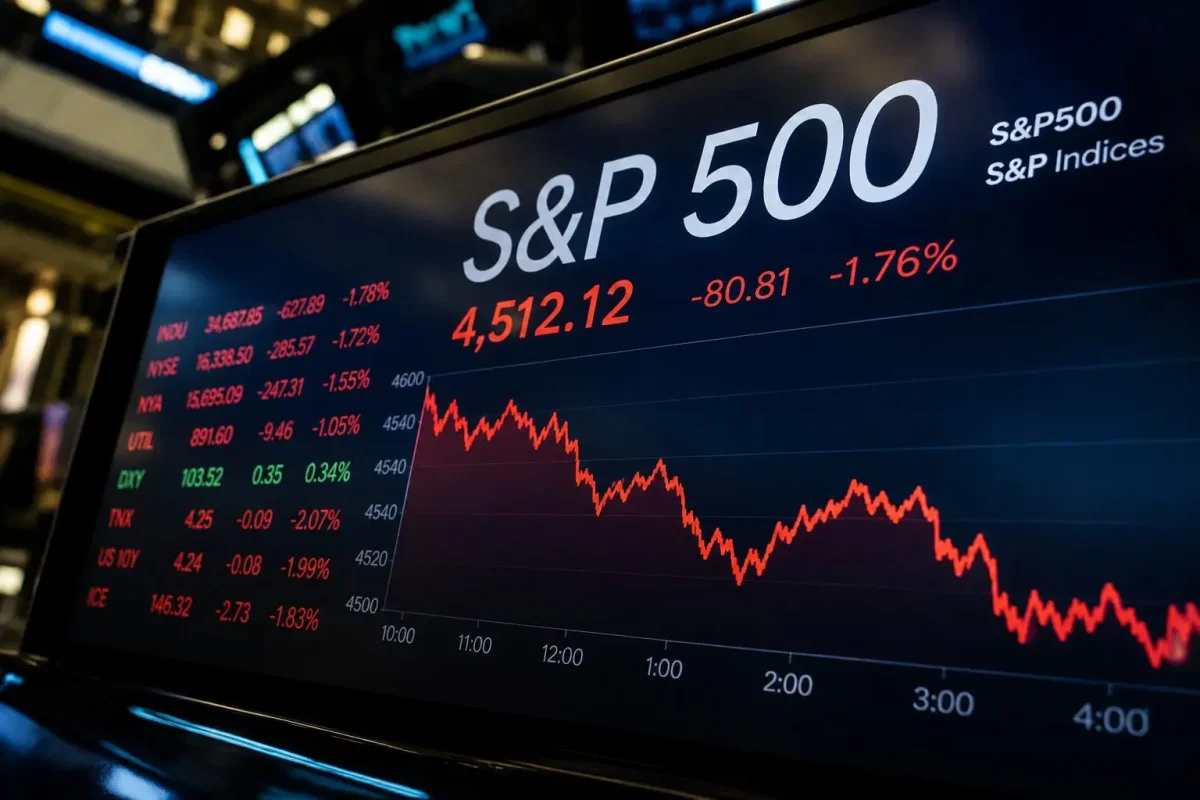
U.S. stock markets opened lower on Thursday as the latest retail sales data painted a mixed picture of consumer spending, failing to alter market expectations for a Federal Reserve rate hike in September. The S&P 500 slipped roughly 0.5% in late session trading, while the Nasdaq Composite fell 1.2%, dragged down by weakness in semiconductor stocks. The Dow Jones Industrial Average also declined, losing about 0.35%.
According to data released by the U.S. Census Bureau, total retail and food service sales rose 0.2% month-over-month in June, a notable deceleration from the revised 1.0% gain in May. However, when gasoline station sales are excluded, the picture brightened considerably: sales excluding gasoline jumped 0.7%, outpacing the headline figure by more than three times. This divergence—the largest since August 2022—underscores the impact of lower fuel prices on the top-line number.
The control group, a subset of retail sales that feeds directly into the calculation of gross domestic product, increased 0.5% in June, down from a revised 0.8% in May but still indicative of resilient consumer demand. Gasoline station receipts plunged 5.3% during the month, following a 2.6% rise in May, reflecting lower prices at the pump rather than a drop in consumption volumes.
For investors, the composition of the report was key. While the headline growth was tepid, the strength in core categories suggested that the economy is not experiencing a sudden collapse in demand. This left the Federal Reserve with room to maintain its cautious stance on monetary policy. CME Group (NASDAQ: CME) FedWatch futures currently imply a 12% probability of a rate hike at the July 28-29 Federal Open Market Committee meeting, down sharply from 45% at the start of the week. For the September meeting, the implied probability stands at 53%.
The repricing of short-term rate expectations this week was largely driven by softer-than-expected inflation data for June. The retail sales figures, while mixed, did not fundamentally alter the outlook. The two-year Treasury yield, which is highly sensitive to Fed policy expectations, hovered around 4.17%, up roughly two basis points on the day. The benchmark 10-year yield stayed near 4.58%.
“This kind of data is unlikely to influence the Fed’s decision,” said Ellen Zentner, chief economic strategist at Morgan Stanley (NYSE: MS) Wealth Management. She noted that the report continued to reflect underlying economic strength. Dallas Federal Reserve President Lorie Logan also weighed in, supporting the case for “modestly higher” interest rates, pointing to steady consumer spending and ongoing inflation pressures.
Risks to the outlook remain balanced. A resurgence in fuel inflation could increase pressure on the Fed to tighten further. Conversely, early online sales promotions might have pulled some consumer spending forward from July into June, potentially softening July’s retail sales numbers. The next major data point will be the advance reading on second-quarter GDP, scheduled for release on July 30, just after the Fed’s July meeting.
Equities sent mixed signals across sectors. The S&P 500’s decline was broad-based, while the Nasdaq’s larger drop reflected weakness in chip stocks. The Dow’s more modest decline suggested some resilience in industrial and consumer names. For now, the weak headline retail sales figure appears to be deceptive, masking a consumer that continues to spend at a solid pace in most categories.