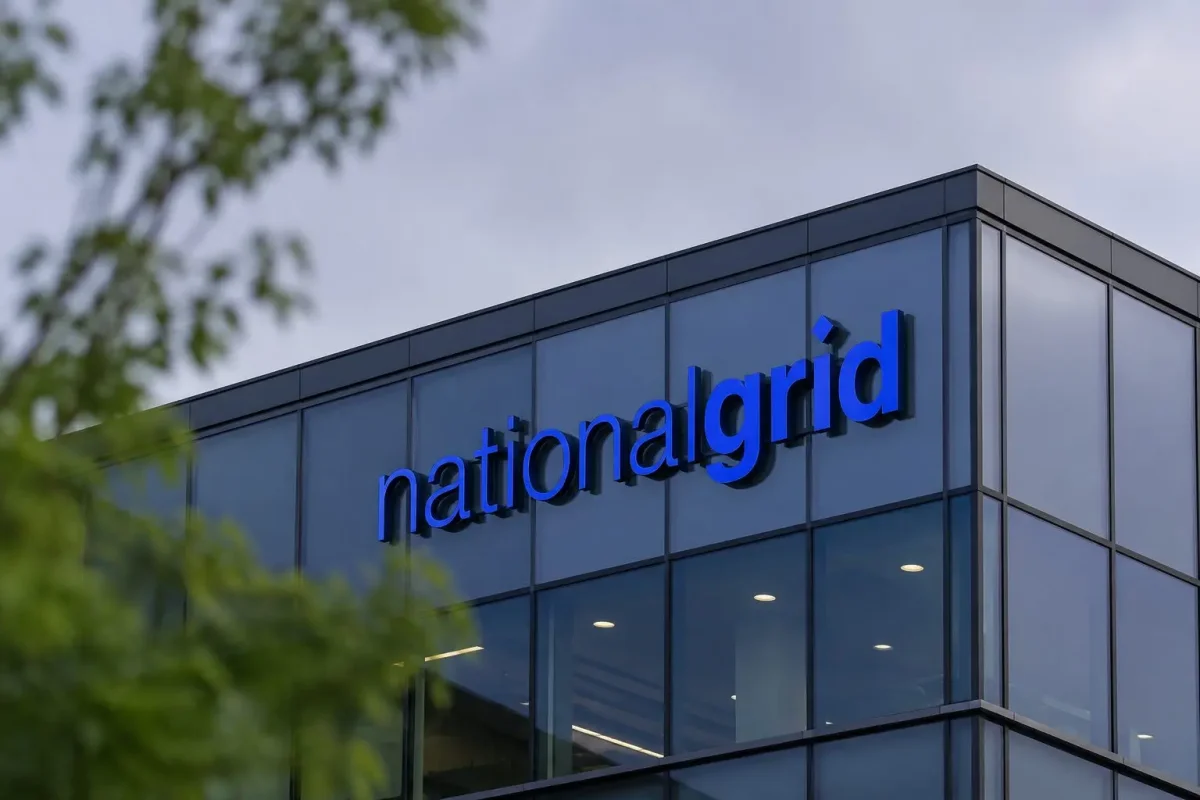
Shares of National Grid plc (LON:NG) were trading near 1,242 pence on Tuesday morning, ahead of the company's annual general meeting at 11:00 BST. At the meeting, shareholders are expected to approve updated articles that include a £70 billion group borrowing limit, up from the previous £55 billion ceiling. This increase was already approved at the 2025 AGM, so Tuesday's vote is a procedural step to implement that earlier decision rather than a new financing initiative.
The timing of this vote is significant. While the legal borrowing limit is separate from National Grid's capital expenditure plan—which calls for at least £70 billion in spending over the five years through March 2031—the matching headline numbers put the company's leverage squarely in the spotlight. Net debt rose to £44.2 billion at the end of March from £41.4 billion a year earlier. Management has forecast underlying earnings per share growth of 13% to 15% for the fiscal year ending March 2027.
On a risk-off morning for markets, National Grid shares were roughly flat, outperforming the FTSE 100, which was down 0.5%, but trailing SSE plc (LON:SSE), which gained 0.9%. The relative strength reflects investor confidence in the regulated network business, despite the recent Joulent acquisition.
More telling is the share price action since July 1. National Grid shares fell 37 pence between the June 30 and July 1 closes, when the company announced a $1.75 billion purchase of a 35% stake in Joulent. By Tuesday, the stock had recovered 31 pence, or 84% of that loss. Chief Executive Zoë Yujnovich described the Joulent investment as a "disciplined, partner-led" move that sits outside the £70 billion capex program and will be funded from balance-sheet headroom. The rebound suggests investors see this as a contained side bet rather than a strategic shift away from regulated networks.
The capital expenditure breakdown reinforces that view. Of the £70 billion program, approximately £69 billion—or 98.6%—is allocated to four regulated network buckets: UK Electricity Transmission (£31 billion, 44.3%), New York regulated networks (£17 billion, 24.3%), New England regulated networks (£12 billion, 17.1%), and UK Electricity Distribution (£9 billion, 12.9%). Only about £1 billion (1.4%) is earmarked for National Grid Ventures, the unregulated arm. Yujnovich called it "the largest investment programme in our history," with roughly two-thirds already covered by regulatory agreements.
Valuation remains a mixed picture. A consensus snapshot from July 2 showed nine positive ratings, six holds, and two sells. The median price target of 1,377 pence implies about 11% upside from Tuesday's level, while the low case of 1,060 pence suggests roughly 15% downside. Keith Bowman of interactive investor noted in May that National Grid offers "five-year financial predictions which few other companies can," while also flagging regulatory and currency uncertainties.
Recent system data underscore the need for grid investment. Craig Dyke, director of system operations at the National Energy System Operator (NESO), reported that extreme heat during the week of June 22 created "tight operating margins." No customer demand was disconnected, and grid frequency remained between 49.66 and 50.23 hertz, within statutory limits of 49.5 to 50.5. NESO is now publicly owned and separate from National Grid: it operates Britain's electricity system, while National Grid Electricity Transmission owns and maintains the high-voltage network in England and Wales. The heat episode was not a National Grid control-room failure, but the network constraints reinforce the case for investment in cables, substations, and transformers.
However, the same pressures create execution and reputation risks. A community solar farm in north Devon was shut for the summer, with its owners estimating £2 million in lost revenue, as delayed equipment is now due in September. Repeated curtailments or project slippage could invite tougher regulatory scrutiny and higher costs as National Grid's spending reaches record levels.
Investors will have several near-term catalysts to watch: AGM results later Tuesday, payment of a 32.14p final dividend on July 23 if approved, and fiscal first-half results on November 5. The central question for shareholders is not whether grids need capital—they clearly do—but whether National Grid can turn record outlays into allowed returns without pushing debt higher than planned or allowing Joulent to expand the unregulated risk budget.