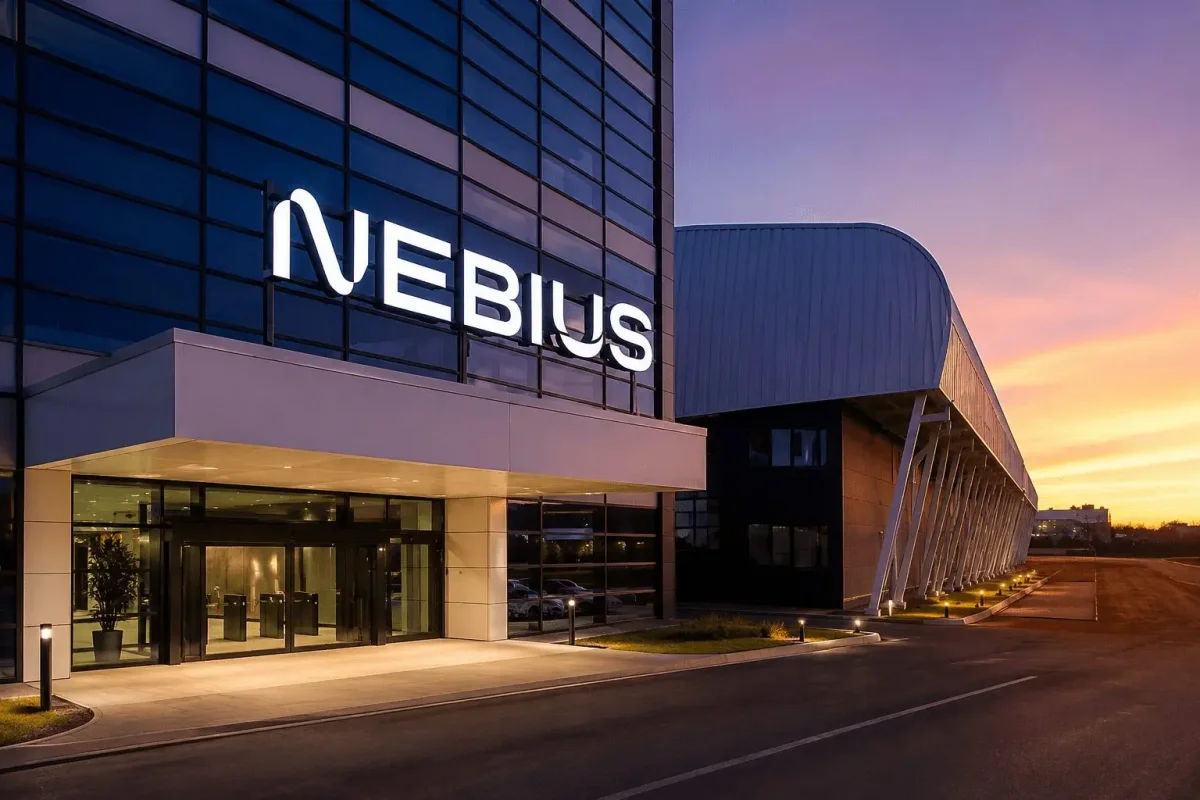
Nebius Group N.V. (NBIS) saw its stock climb 15.6% on Wednesday, closing at $207.27 after touching an intraday high of $217.33. The surge followed a stunning first-quarter earnings report that revealed revenue jumped nearly sevenfold to $399 million, from $50.9 million a year earlier. The Amsterdam-based AI cloud company also raised its 2026 capital expenditure forecast to between $20 billion and $25 billion, up from a prior range of $16 billion to $20 billion, signaling an aggressive push to dominate the AI infrastructure space.
Revenue and Profitability Highlights
Revenue for the quarter ended March 31 came in at $399.0 million, a 684% year-over-year increase. Adjusted EBITDA swung to a positive $129.5 million, reversing a $53.7 million loss in the same period last year. Net income from continuing operations reached $621.2 million, boosted by a non-cash gain from revaluing its stake in ClickHouse. However, adjusted net loss widened to $100.3 million from $83.6 million, reflecting heavy reinvestment in capacity expansion.
CEO Commentary on GPU Demand
CEO Arkady Volozh told Reuters that demand for graphics processing units (GPUs) remains exceptionally strong. “We typically see several customers competing for every GPU we bring online,” Volozh said. In a letter to shareholders, he emphasized that Nebius is not merely reacting to current trends but is proactively building tools and infrastructure to align with the market's future direction.
Massive AI Infrastructure Buildout
Nebius has begun constructing its first gigawatt-scale AI factory campus in Independence, Missouri, which is expected to create roughly 1,200 construction jobs and 130 permanent high-tech positions when fully operational. The company also secured land and power rights for up to 1.2 gigawatts in Pennsylvania for another AI facility. Nebius raised its year-end contracted power target to over 4 gigawatts, up from an earlier goal of more than 3 gigawatts.
Strategic Partnerships and Talent Acquisition
On Tuesday, Nebius announced it is bringing on board Matthew Zeiler, founder of Clarifai, along with key engineers and researchers. The company also entered a licensing agreement for Clarifai’s inference and compute orchestration technology. Inference refers to the phase when a trained AI model begins generating responses or performing actions. Nebius counts Meta Platforms (META) and Microsoft (MSFT) among its major clients. In March, Nebius signed a long-term agreement with Meta to supply up to $27 billion in computing power over five years. Nvidia (NVDA) also committed $2 billion for an 8.3% stake in Nebius, deepening ties between the chip giant and the cloud provider.
Competitive Landscape and Risks
Costs are rising across the AI cloud sector. CoreWeave, an Nvidia-backed rival, raised its 2026 capital spending floor to $31 billion, citing more expensive components. CoreWeave reported first-quarter revenue of $2.08 billion. Nebius faces a tight timeline for its expansion plans, with little room for delays. The company has explored asset-backed financing, corporate debt, and other capital sources, but its own disclosures highlight the pressure to raise funds, retain clients, and fend off competitors. Any slowdown in AI demand, higher borrowing costs, or delays in new site openings could turn the current tailwind into a drag on cash flow and margins.
Market Context
Investors are closely watching specialist cloud providers, often called “neoclouds,” as major tech firms and AI startups vie for access to GPUs. Nebius offers Nvidia-based computing systems for AI training and inference, positioning itself at the center of this rapidly growing market. The company’s aggressive capex plans underscore the race to secure limited power, chips, and data-center capacity before competitors close in.