Shares of NuScale Power Corporation exhibited sharp price swings during Thursday's trading session, reflecting investor reaction to dual policy announcements from Washington that could bolster the advanced nuclear sector. The stock reached an intraday high of $13.23 before pulling back to settle around $11.52 by the afternoon, closing below its previous session's level.
Policy Tailwinds for Nuclear Development
The volatility was triggered by comments from U.S. Energy Secretary Chris Wright, who indicated that the Department of Energy's lending arm is likely to support the first five to ten new American reactor projects with federal loans, describing the outcome as "almost certain." The lending facility reportedly holds close to $290 billion in available capital. Concurrently, a White House directive ordered NASA to commence a space-reactor program within 30 days. The Energy Department was given 60 days to assess whether domestic manufacturers can deliver up to four space reactors, including fuel and long-lead components, over the next five years.
NuScale's Unique Market Position
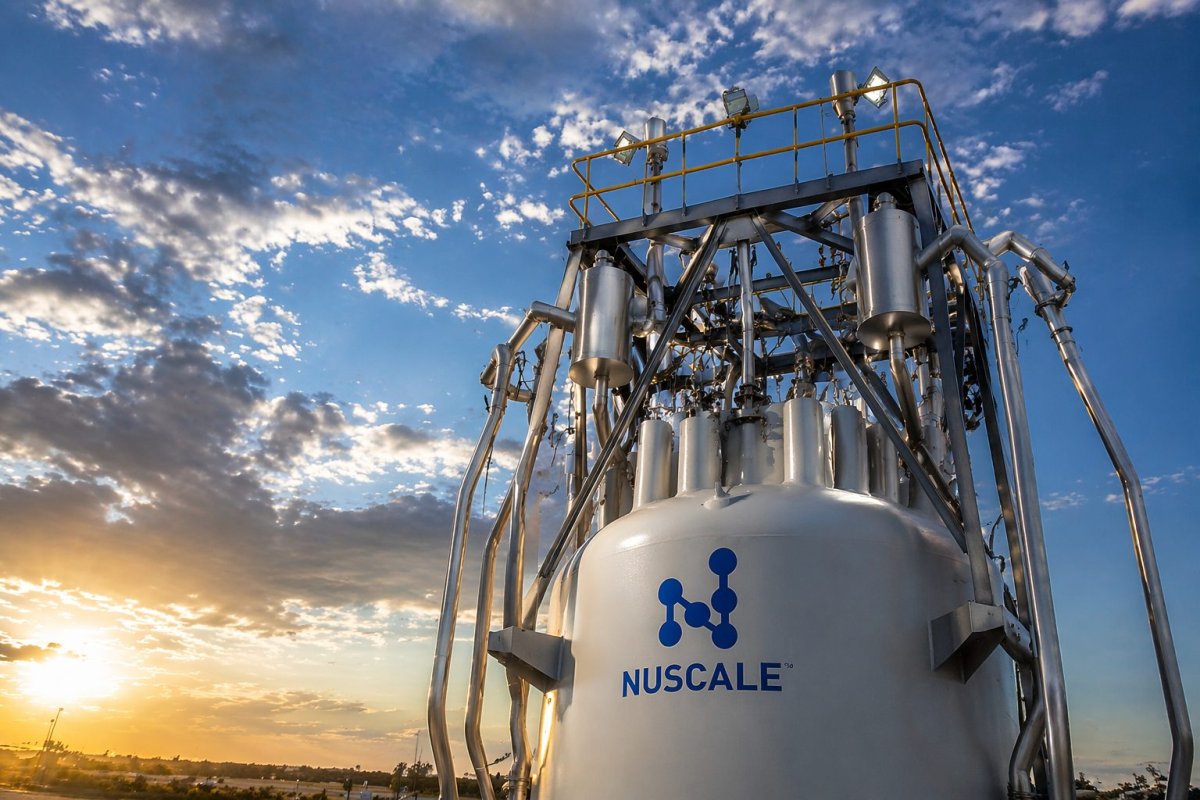
NuScale occupies a distinctive position in the American energy landscape as the only U.S.-based company with a fully approved small modular reactor (SMR) design from the Nuclear Regulatory Commission. The NRC signed off on its larger 77-megawatt design in May 2025. These factory-built, scalable reactors are designed to offer reduced complexity compared to traditional large-scale nuclear plants. CEO John Hopkins recently stated the technology is "near-term deployable," suggesting a committed customer could have an operational plant before the end of the decade.
The Persistent Financing Hurdle
Despite this regulatory advantage and growing policy support, translating approval into commercial reality remains a formidable challenge. The company has yet to secure firm customer orders or lock in the necessary financing to construct its first unit. This gap between regulatory clearance and commercial execution represents the critical sticking point for NuScale and the broader advanced reactor industry. No company in this sector has yet commenced commercial power generation in the United States.
Broader Market and Competitive Context
The market for advanced nuclear is evolving amid surging electricity demand, particularly from artificial intelligence data centers. Major technology firms like Meta, Amazon, and Google have recently expressed support for various advanced nuclear startups, including TerraPower, Oklo, X-Energy, and Kairos. According to BMI senior analyst Shioly Dong, such corporate agreements "create the revenue certainty that commercial banks will require for the construction debt." Notably, Amazon-backed X-Energy launched its U.S. initial public offering on Wednesday, seeking a valuation as high as $7.5 billion.
NuScale has been actively pursuing commercial pathways. In February, the company highlighted progress with the Tennessee Valley Authority under the ENTRA1 partnership, outlining a potential rollout of up to 6 gigawatts of capacity across TVA's seven-state territory. It has also completed front-end engineering and design work for a six-reactor plant in Romania, known as the RoPower project, which local officials estimate could cost between $6 billion and $7 billion.
Expanding the Value Proposition
Company executives are broadening their commercial narrative beyond simple electricity generation. In March, Chief Technology Officer José Reyes pointed to the potential for NuScale reactors to supply high-temperature process steam to industrial sites like petrochemical plants, which could "unlock significant commercial opportunities." Meanwhile, Chief Operating Officer Carl Fisher described a deepened fuel agreement with Framatome as a move to maintain manufacturing schedules, targeting a first U.S. customer by 2030.
Historical Precedent and Future Challenges
The path forward is fraught with known risks. NuScale's experience demonstrates how quickly projects can unravel; its inaugural U.S. SMR project was canceled in 2023 due to escalating costs and the withdrawal of partner municipalities. Financial institutions remain cautious, demanding clear answers on licensing timelines, fuel supply chains, construction schedules, and overall project financing before committing substantial capital.
Financially, NuScale ended 2025 with a strong balance sheet, holding approximately $1.3 billion in cash, cash equivalents, and investments—a war chest deemed sufficient to fund its ongoing development plans. However, the company acknowledges that its long-term prospects ultimately depend on securing firm customer contracts, achieving manufacturing readiness, and potentially raising additional capital. Thursday's market activity underscored the delicate balance between near-term policy optimism and the substantial execution risks that lie ahead.