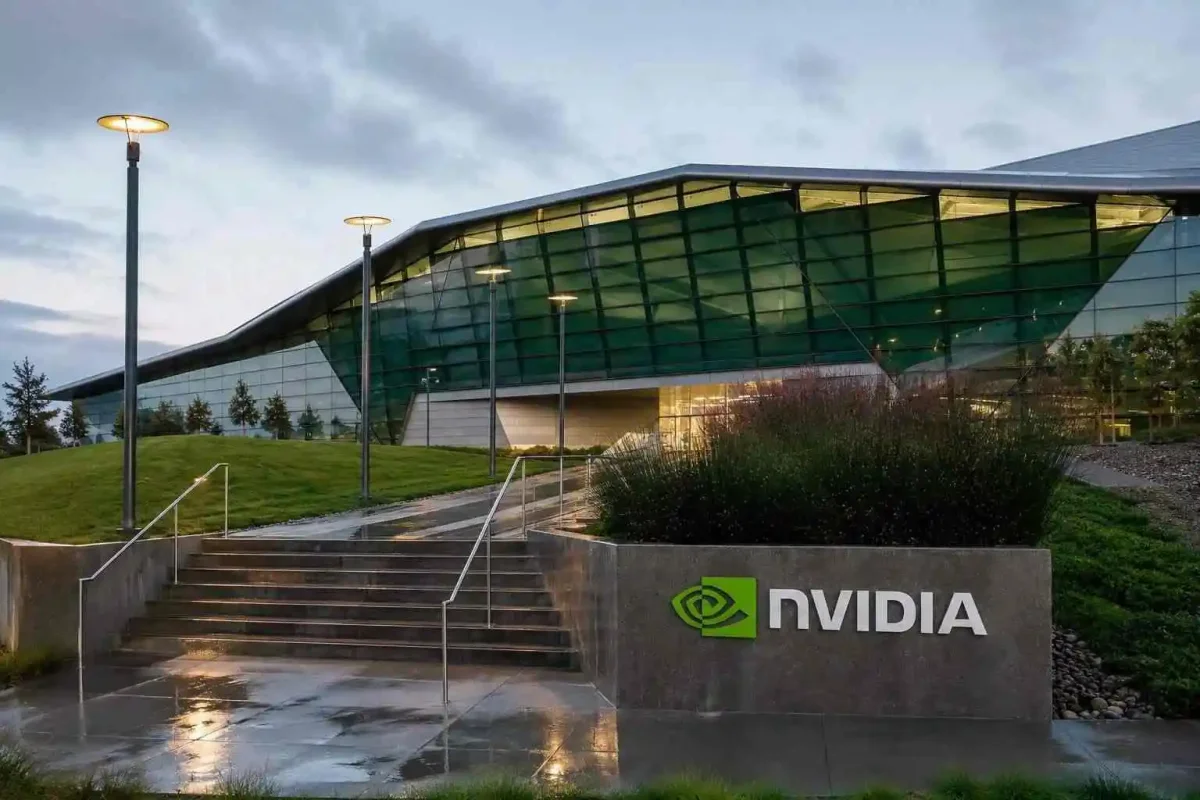
Nvidia Corporation (NASDAQ:NVDA) experienced a decline in its stock price during early trading on Thursday, following the announcement of Japan's ambitious plan to procure 27,500 graphics processing units (GPUs) by 2028. The development has introduced new uncertainties regarding the sustainability of demand growth for the chipmaker's products.
As of 09:44 EDT, Nvidia shares were trading at $207.62, reflecting a drop of 2.3% from the previous close. This movement occurred despite the broader market context, where the company's stock outperformed a equal-weighted basket of its peers by approximately 1.1 percentage points and the iShares Semiconductor ETF (NASDAQ:SOXX) by about 1.2 points during early intraday sessions.
Japan's Infrastructure Initiative
The Japanese government-backed initiative, led by the entity Noetra, targets the acquisition of 27,500 next-generation Rubin GPUs along with 13,750 Vera CPUs. The project aims to establish a 140-megawatt computing infrastructure, with operations slated to commence by June 2028. Construction is expected to begin in April 2027.
While the scale of the order is substantial, analysts at KeyBanc estimate that the GPU count represents approximately 1.5% to 1.6% of their projected Rubin shipments for 2026. It is important to note that this figure is an analyst estimate and not official company guidance. The timeline discrepancy—with the order targeting 2028 operations versus 2026 shipment forecasts—further complicates direct comparisons.
Market and Sector Context
The broader semiconductor sector also faced headwinds on Thursday. Advanced Micro Devices (NASDAQ:AMD) declined 3.8%, Broadcom (NASDAQ:AVGO) fell 3.6%, and Taiwan Semiconductor Manufacturing Company (NYSE:TSM) dropped 2.9%. TSMC, a key manufacturing partner for Nvidia, reported impressive second-quarter results with revenue reaching $40.2 billion and net profit surging 77.4% year-over-year. The company also raised its 2026 capital expenditure forecast to a range of $60 billion to $64 billion, an increase of $8 billion from previous guidance.
TSMC's CEO C.C. Wei emphasized the company's confidence in a "multi-year AI megatrend," which aligns with Nvidia's own optimistic outlook. Nvidia has forecast current-quarter sales of approximately $91 billion, plus or minus 2%, though it has excluded China data-center compute revenue from this guidance.
Analyst Perspectives and Risks
KeyBanc analyst John Vinh maintains his forecast of 1.7 million to 1.8 million Rubin chips shipped this year and has raised his price target for Nvidia to $330, up from $310. Vinh noted that a previously identified thermal issue causing a minor delay has been resolved.
Despite the positive analyst sentiment, risks remain elevated. Potential challenges include lower-than-expected Rubin output, possible shifts in Noetra's 2028 timeline, and the ongoing threat of tighter export controls affecting trade with China. Nvidia CEO Jensen Huang described Japan's initiative as setting up "AI factories that will power the next industrial revolution," though the actual number of GPUs involved is relatively modest compared to overall market projections.
While Japan's commitment broadens Nvidia's demand outlook, it is unlikely to significantly alter near-term earnings expectations. The market's reaction underscores the delicate balance between long-term optimism and short-term growth concerns in the rapidly evolving AI chip sector.