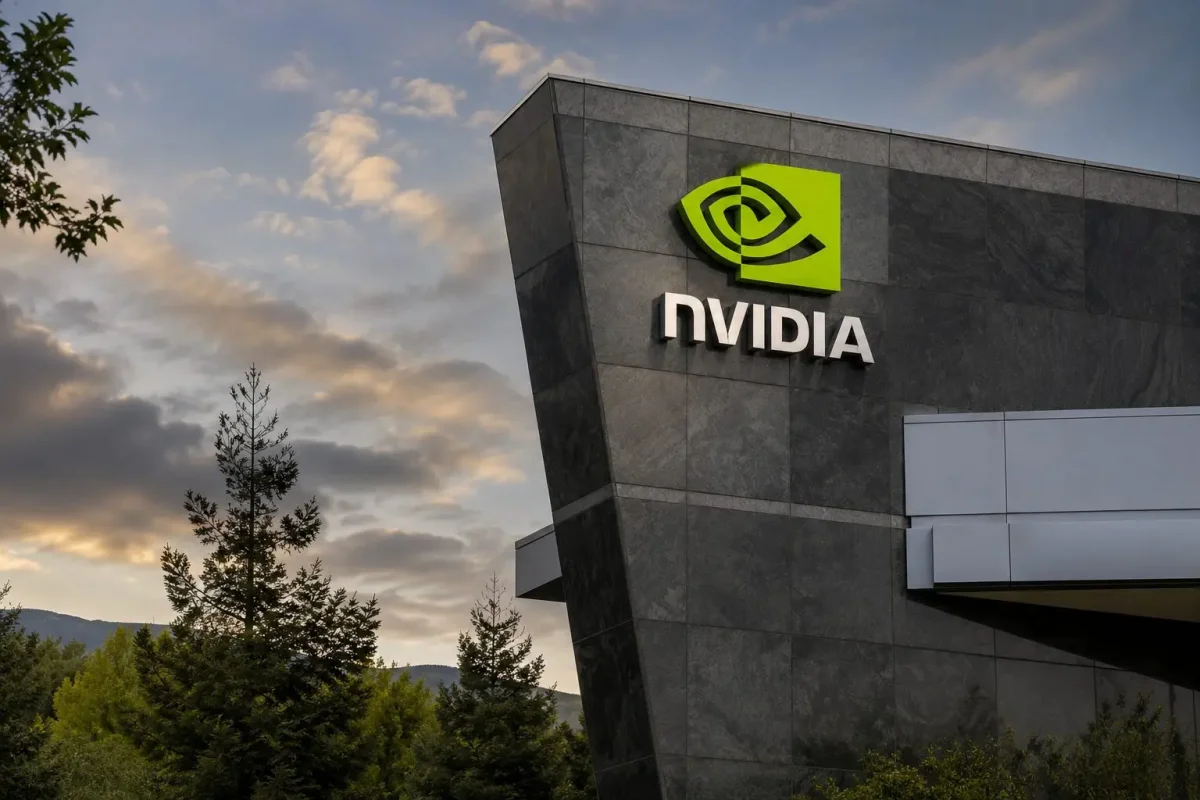
Nvidia shares edged up 0.8% to $214.25 on Thursday, bringing the company's market capitalization to approximately $5.23 trillion. However, the stock has gained only 14% year-to-date, a stark contrast to the 79% surge in the PHLX Semiconductor Index, as investors rotate into memory suppliers, server makers, and custom-chip firms benefiting from the AI boom.
Record Revenue and Strong Outlook
In its fiscal first quarter, Nvidia reported revenue of $81.6 billion, an 85% increase year-over-year, driven by data-center sales of $75.2 billion. The company forecast second-quarter revenue of $91 billion, excluding any data-center compute sales from China. Additionally, Nvidia expanded its share buyback program by $80 billion and raised its quarterly dividend from $0.01 to $0.25 per share.
Vera CPU Takes Center Stage
CEO Jensen Huang is shifting focus from the company's flagship graphics processing units to the new Vera central processing unit, which he said opens up a $200 billion market opportunity. Huang told analysts that Vera could contribute $20 billion in sales this fiscal year, adding that customers are "quite excited" about the new chip.
China Risk Remains
Despite U.S. export restrictions and Beijing's push for domestic chip production, Huang indicated that China remains part of the $200 billion CPU market. He noted that Nvidia has U.S. licenses to ship H200 chips to China but has not yet received Chinese approval and has not shipped any units. This uncertainty continues to weigh on the stock.
Analyst Views Diverge
Bears remain cautious. A Seeking Alpha analysis from Bears of Wall Street maintained a Sell rating, arguing that strong revenue is already priced in. The note cited inventory buildup, China exclusion, customer concentration, and questions about hyperscaler capital expenditure as potential headwinds.
On the bullish side, a Yahoo Finance article suggested that if Nvidia's forward price-to-earnings ratio returns to 40x by end of 2026, shares could rise about 66% from current levels. Morningstar analyst Brian Colello raised his fair value estimate to $280, stating that the stock "appears undervalued to us" and noting widespread demand in the data-center business, with hyperscale cloud clients representing about half of the segment.
Competitive Pressures Mount
Nvidia faces increasing competition from Intel and AMD in both the CPU and inference markets, while major cloud customers are designing their own chips. Marvell Technology told investors this week that its custom-chip revenue should surpass $10 billion by fiscal 2029, with CEO Matt Murphy noting "custom engagements across the board at all the U.S. hyperscalers."
Dell Technologies raised its fiscal 2027 AI-server sales target to $60 billion from $50 billion after first-quarter revenue surged 88%, citing demand for Nvidia-powered servers. The numbers underscore strong AI infrastructure spending even as investors diversify among suppliers.
Supply Constraints and Valuation
CEO Jensen Huang acknowledged that the Vera Rubin platform could be "supply-constrained through the entire life" of the product. China remains excluded from Nvidia's data-center compute outlook. If cloud buyers reduce spending, shift to in-house chips, or if export restrictions tighten further, Nvidia's next earnings beat might struggle to move a $5 trillion market cap.