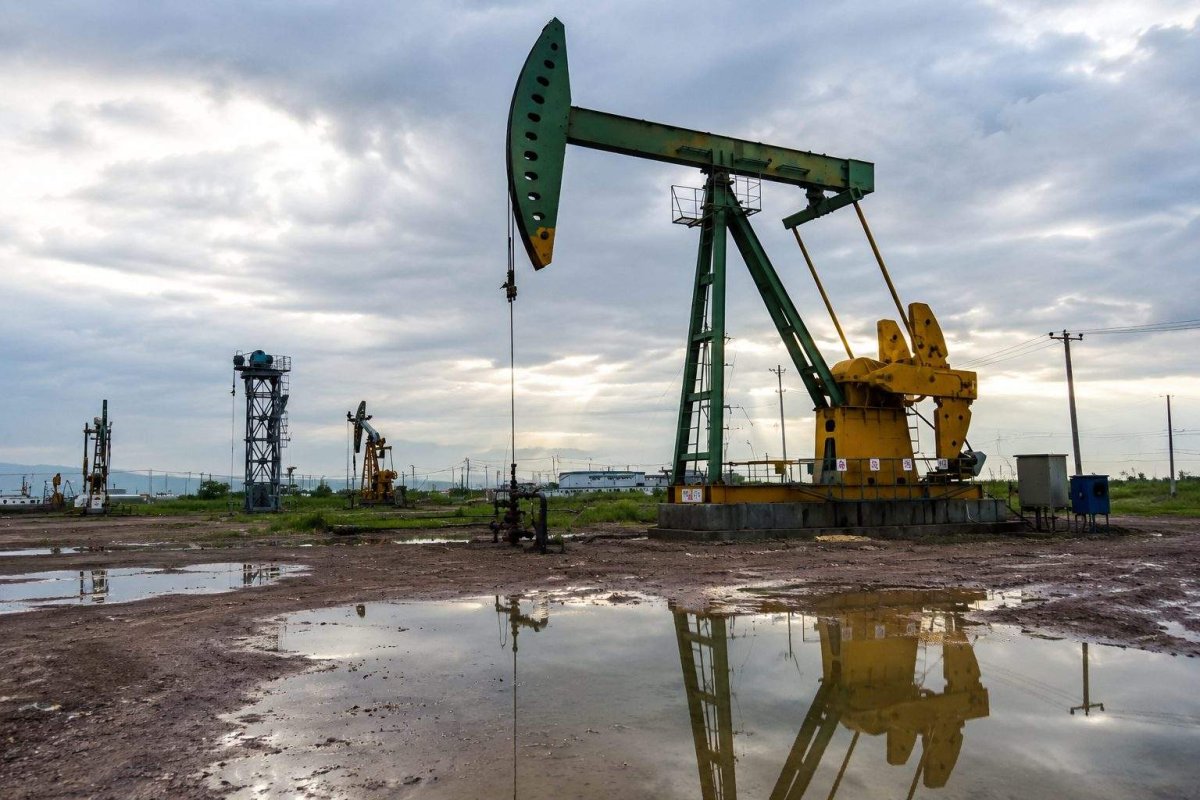
Oil prices experienced a significant decline on Thursday, falling more than $2 per barrel to their lowest levels since early March, following the signing of an interim agreement between the United States and Iran. The deal, which aims to end the conflict and reopen the strategic Strait of Hormuz, has shifted market focus away from supply disruptions and toward the potential for a swift return of Iranian oil exports.
Brent crude futures settled at $77.41 per barrel, down $2.14, while West Texas Intermediate (WTI) crude dropped $2.36 to $74.43. The decline reflects growing market expectations of increased supply, as traders anticipate a faster-than-expected return of Iranian barrels, according to Tony Sycamore, an analyst at IG.
Strait of Hormuz Reopens
The interim agreement, outlined in a 14-point memorandum, grants the US and Iran a 60-day period to finalize a comprehensive deal. Under the terms, the US has agreed to begin rolling back its naval blockade, while Iran has pledged its 'best efforts' to ensure toll-free commercial passage through the Strait of Hormuz. Traffic through the waterway, which carried approximately 25% of global seaborne oil trade in 2025 according to the International Energy Agency (IEA), is expected to normalize within 30 days.
The reopening of the strait has eased immediate supply concerns, but the IEA has cautioned that a quick return to normal is unlikely. Mines must be cleared, and logistics need to stabilize. The agency also warned that if Middle East supply returns too strongly, the market could face a significant surplus by 2027.
Pump Prices Slow to Drop
Despite the sharp drop in crude prices, American drivers are unlikely to see immediate relief at the pump. The national average for regular gasoline stood at $3.999 per gallon on Thursday, according to AAA, down from $4.129 a week ago but still above year-ago levels. Gasoline inventories remain tight, tracking 6% below the five-year average, while refineries are operating at 96.7% capacity, according to the Energy Information Administration (EIA).
Gregory Brew, senior analyst on Iran and oil at Eurasia Group, explained that gasoline prices typically move 'in lockstep' with global crude, but the decline takes time to filter through due to factors like refinery activity, inventories, and taxes. He suggested that if the deal holds, increased Gulf supply would exert 'quite a lot of downward pressure,' but gas prices are likely to remain above $3.50 per gallon due to low inventories and recovering local output.
Market Dynamics and Competition
The agreement has also shifted competitive dynamics in the global oil market. During the war, American producers stepped in to fill the supply gap, but the potential return of Iranian and Gulf oil could weigh on them if demand remains soft. Saudi Arabia and the UAE have pipelines that bypass Hormuz, but most other Gulf states still depend on the strait, according to the IEA.
Meanwhile, the IEA reported that Gulf oil shipments began to climb in early June, with ship-to-ship transfers in the Gulf of Oman pushing total flows from 9.6 million barrels per day in May to around 12 million barrels per day. However, the agency cautioned that a full recovery could take time.
Uncertainty and Regional Variations
The agreement remains fragile, with a senior US official noting that both sides could still pull out, as key issues such as sanctions, sequencing, and Iran's nuclear program remain unresolved. Mukesh Sahdev, CEO at XAnalysts, warned that some tanker owners may hesitate to return ships to the area, and crude demand 'may come faster than supply,' potentially limiting further price declines.
Retail gasoline prices vary widely across the US. AAA data shows regular gas at $3.399 in Indiana and $3.493 in Texas, but much higher in California at $5.642 and Washington at $5.436. These states often see elevated prices due to taxes, fuel standards, and supply distance, even as crude prices drop.