Asian equities traded in a mixed fashion on Tuesday as a sharp increase in oil prices, triggered by renewed US military strikes in Iran, offset optimism from a rally in Chinese semiconductor stocks. The MSCI Asia-Pacific index excluding Japan managed a modest gain of 0.67%, but performance varied widely across the region.
Oil Surge and Market Implications
Brent crude futures climbed 2.39% to settle at $98.44 per barrel, according to delayed LSEG data. The jump came after US forces conducted what Washington described as defensive strikes in southern Iran, dashing investor hopes for a swift resolution to the three-month-old conflict. The Strait of Hormuz, a critical chokepoint for global oil shipments, remains a key concern, with Commonwealth Bank of Australia strategist Joseph Capurso expressing skepticism about a near-term reopening. Higher oil prices add strain to import-dependent economies and complicate central bank efforts to tame inflation, potentially delaying interest rate cuts.
Regional Market Performance
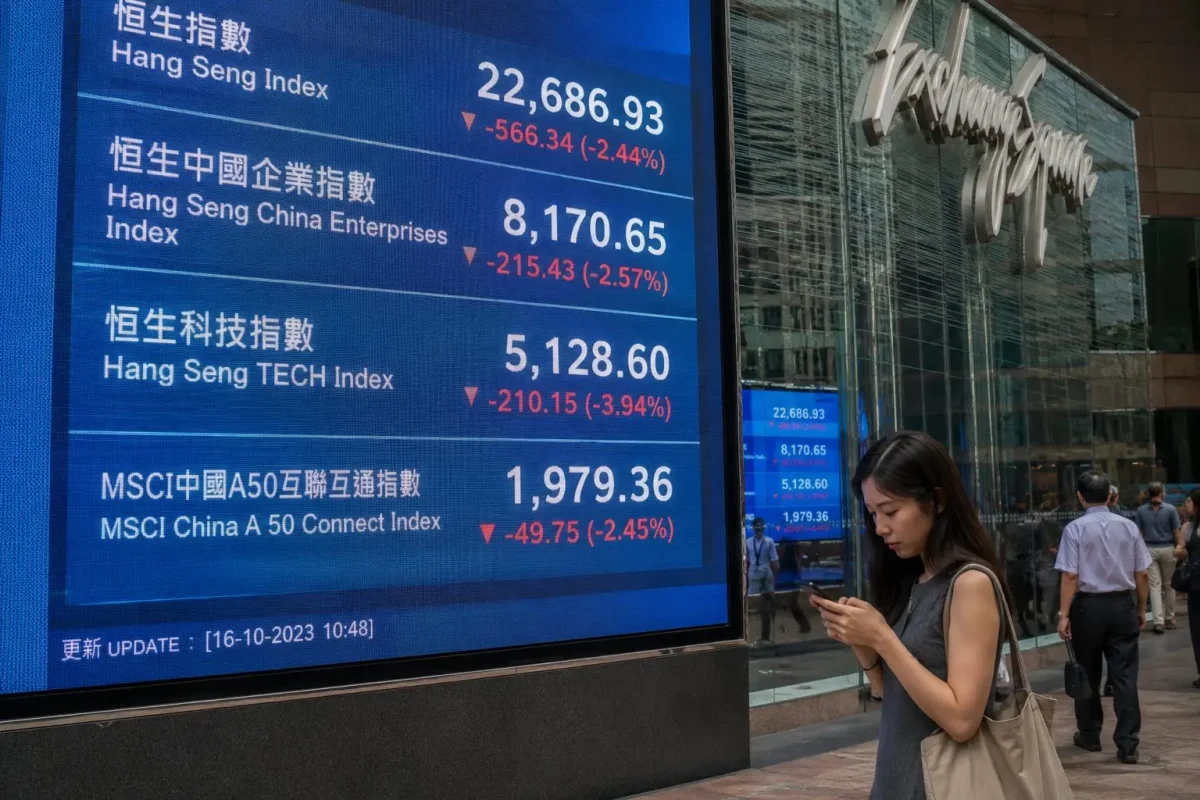
Japan's Nikkei 225 fell 0.25% to 64,996.09, while Australia's All Ordinaries declined 0.37%. The Shanghai Composite edged down 0.26%, and India's Sensex slipped 0.11% to 76,408.07. In contrast, Hong Kong's Hang Seng Index bucked the trend, rising 0.37% to 25,699.64, supported by strength in technology and chip stocks. The dollar remained firm as investors sought safe havens, with the euro slipping to around $1.163 and the yen holding near 159 per dollar. The US dollar index stood at 99.031.
Bond Market Reaction
Bond markets showed a more muted response compared to oil. The US 10-year Treasury yield fell to 4.508%, a decline of 0.064 percentage points in late data. However, the underlying message from yields remained consistent: persistently higher oil prices could keep inflation elevated, reducing the likelihood of central banks cutting interest rates soon.
Chinese Chip Stocks Rally
Hong Kong's market received a significant boost from chip-related stocks. Huawei Technologies announced plans to achieve chipmaking capabilities with transistor density equivalent to 1.4-nanometer by 2031, though it did not provide third-party performance data. He Hui, director of semiconductor research at Omdia, characterized this as a move toward "system-level efficiency scaling" to extract more performance amid potential lithography constraints. This places Huawei back in the global race with Taiwan's TSMC and US-based Nvidia. TSMC currently uses 2-nanometer technology and aims to begin mass production of 1.4-nanometer chips by 2028. Huawei's Ascend chips are seeing increased demand in China as local buyers seek alternatives to Nvidia processors, which are subject to US export restrictions.
Regulatory Headwinds
Hong Kong stocks also faced pressure from regulatory developments. Last week, China announced sanctions against brokers including Tiger Brokers, Futu Holdings, and Longbridge Financial for suspected illegal cross-border money transfers. Clients affected by the probe now face a two-year wind-down period during which they can only sell positions or withdraw funds, not make new purchases. "Beijing wants to keep a closer eye on capital flows leaving the country," said Gary Ng, senior Asia Pacific economist at Natixis.
India Market and Samsung Update
India's Nifty 50 and Sensex indices traded flat to slightly higher in early trade, oscillating between small gains and losses as traders monitored crude oil prices and the upcoming derivatives expiry. "Investor optimism over a US-Iran peace deal has been tempered by fresh US strikes in the Middle East," noted Devarsh Vakil, head of prime research at HDFC Securities. Meanwhile, Samsung Electronics' union for consumer electronics employees went to court to block a vote on a pay deal that predominantly benefits chip workers, despite last week's agreement that averted an 18-day strike. Samsung shares rose 2.7% in early trade but still lagged behind SK Hynix, which has gained 19% since the deal.
Market Outlook
Charu Chanana, chief investment strategist at Saxo in Singapore, cautioned investors against mistaking "positive negotiation noise" for genuine progress. "The real test," she emphasized, is whether tankers can move freely, insurance costs decline, and energy flows return to normal. For now, Asia is not experiencing a broad risk-off move. Instead, it is a split tape, with chip stocks showing optimism while oil and inflation concerns continue to weigh on trade.