Swiss sportswear maker On Holding (ONON) saw its shares erase a premarket gain of about 5% on Friday, after the company unveiled French football star Kylian Mbappé as the face of its entry into the sport. By 10:04 a.m. ET, the stock was trading at $27.13, down $0.20 (0.73%) from Thursday's close of $27.33.
The reversal underscores a key distinction for investors: while Mbappé brings instant global recognition to On's football ambitions, actual revenue from the partnership is still years away. The company has not disclosed financial terms, and the first football boots are not expected until 2027.
What On Announced
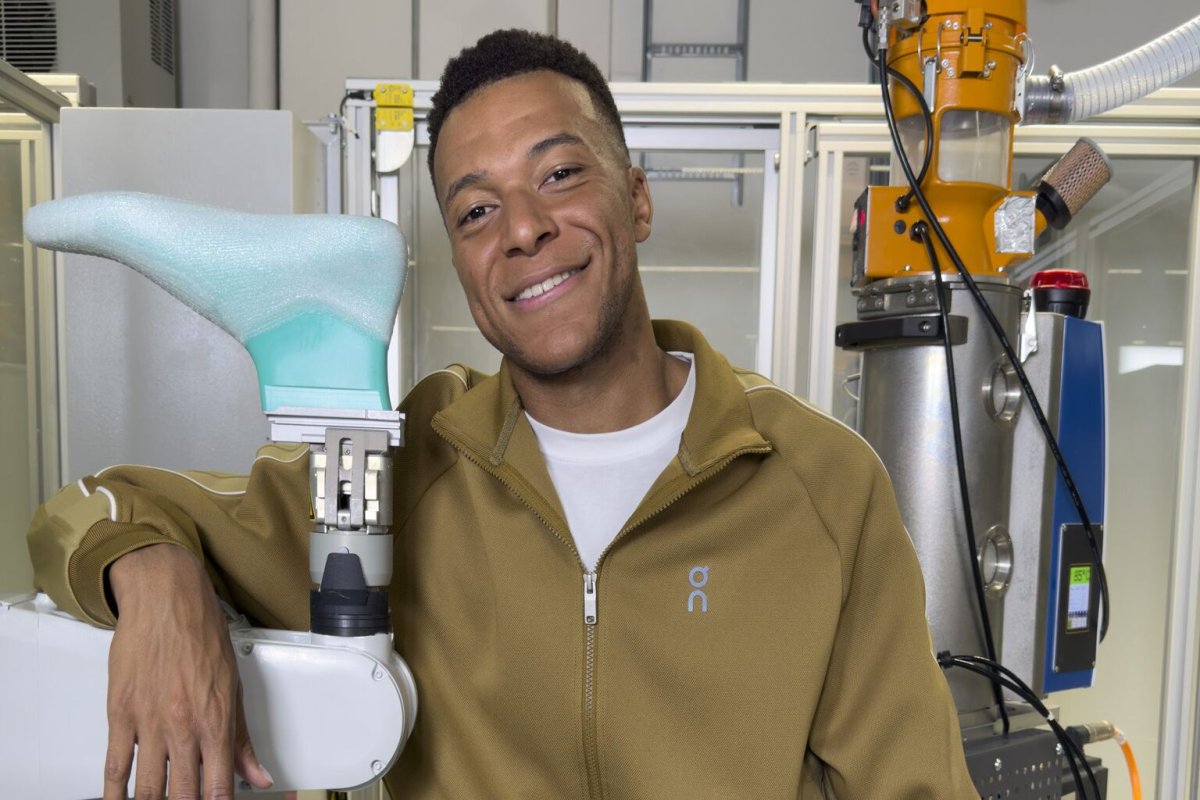
On said Mbappé will serve as a global ambassador and collaborate directly with its product teams on future football footwear and apparel. The announcement also named former Arsenal striker Thierry Henry as director of football, and expanded the existing relationship with FC Barcelona midfielder Sydney Schertenleib into the new category.
The product strategy centers on LightSpray, a manufacturing process introduced in 2024 that creates a shoe upper from a continuous sprayed filament. On plans to adapt this technology to football boots, but the release provided no pricing, production targets, retail dates, or revenue projections.
Mbappé's move ends a long-standing partnership with Nike, which confirmed the split in a statement reported by Reuters. Reuters also noted that On's first football boots are slated for 2027, meaning the endorsement will initially function as a product-development and brand-building expense rather than a retail sales line.
Financial Context
On enters football from a position of strong growth, though its business remains heavily reliant on footwear and the Americas. In the first half of 2026, footwear generated CHF 1.55 billion of the company's CHF 1.68 billion in net sales, representing 91.9% of total revenue. The Americas contributed CHF 902.3 million, or 53.6% of sales, according to figures from On's August 11 financial report.
Football fits naturally with On's footwear expertise and could help diversify its geographic footprint beyond North America. However, it also places On in a category where competitors like Nike, Adidas, and Puma have spent decades building product credibility, athlete rosters, club relationships, and retail distribution.
Bullish Signals and Counterarguments
On's recent execution in adjacent categories offers some optimism. In the second quarter, apparel sales rose 47.7% year-over-year, while direct-to-consumer revenue grew 26% and accounted for 45.7% of quarterly sales. A football range sold through On's own stores and website could preserve higher gross margins than a wholesale-heavy approach. The company's second-quarter gross margin stood at 65.4%, up 3.9 percentage points.
Yet the missing numbers are telling. On has not disclosed the value of Mbappé's compensation—whether cash, stock, or other considerations—nor how quickly football can contribute meaningful sales. High-profile athlete deals can boost awareness while simultaneously pressuring earnings if contract and launch costs outpace demand.
On's full-year outlook already assumes low-20% constant-currency sales growth and an adjusted EBITDA margin of 19.5% to 20.0%, providing investors with a benchmark against which to measure this new spending.
What to Watch Next
Friday's intraday reversal suggests the market is treating Mbappé as a promising entry ticket rather than booked revenue. The next useful catalysts will be more concrete: a confirmed 2027 launch date, retail pricing, distribution plans, and any disclosure of partnership expenses or equity compensation. Until then, the stock's reaction reflects both the excitement of a high-profile signing and the reality that football profitability remains a distant goal.