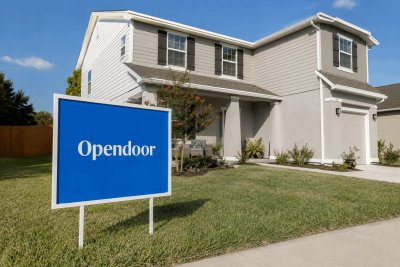
Opendoor Technologies (NASDAQ: OPEN) reported first-quarter revenue of $720 million, surpassing analyst expectations of $664.5 million, according to StockStory. However, the figure represents a 38% decline from $1.15 billion in the same period last year. The company's net loss widened to $173 million, or 18 cents per share, compared to a loss of 12 cents per share a year earlier.
Operational Improvements Amid Market Headwinds
CEO Kaz Nejatian highlighted faster home resales and improved inventory management as key drivers of the quarter's performance. The number of homes purchased increased 45% sequentially, and acquisition contracts exceeded 5,000 during Q1. Notably, only 10% of properties remained on the market for more than 120 days, a sharp improvement from 33% in the fourth quarter of 2025.
Despite these operational gains, high mortgage rates continue to weigh on the housing market. Freddie Mac reported the average 30-year fixed mortgage rate at 6.37% this week, a level that keeps potential buyers cautious and pressures transaction volumes.
Financial Outlook and Market Reaction
Opendoor expects second-quarter revenue to grow approximately 25% from Q1, reaching around $900 million. The company also projected adjusted EBITDA near breakeven—a milestone in its turnaround strategy. Management sees contribution margin landing within the 5% to 7% target range for homes sold after direct costs.
However, Wall Street had anticipated Q2 sales closer to $1.13 billion, according to Sherwood, suggesting the revenue outlook may not fully alleviate investor concerns. Opendoor shares rose about 2% to $5.42 in after-hours trading, though the stock remains down roughly 8% year-to-date.
Balance Sheet Strength and Risks
As of quarter-end, Opendoor held $1.14 billion in real estate inventory and $999 million in cash and equivalents. This liquidity distinguishes it from digital real estate peers like Zillow Group and Compass. The company's iBuying model—buying homes quickly online and reselling them—requires substantial capital, making balance sheet health critical.
Key risks include potential declines in home prices, rising mortgage rates, and shifts in housing supply and demand. Opendoor has flagged variables such as interest rates, inflation, and financing availability as factors that could impact its financial performance.
Industry Context and Sentiment
Simply Wall St had previously flagged high mortgage rates, expensive homes, and soft demand as headwinds for Opendoor. Stocktwits noted that retail sentiment had neutralized ahead of the earnings release. The broader housing market remains sluggish, with elevated rates dampening buyer activity and making each sale crucial for Opendoor's profitability goals.
CEO Nejatian stated that the company has moved from a claim to a track record regarding profitability, describing operations as efficient. He specifically cited the fourth quarter of 2025 and January 2026 cash acquisition cohorts as among the best outside the COVID-era surge.