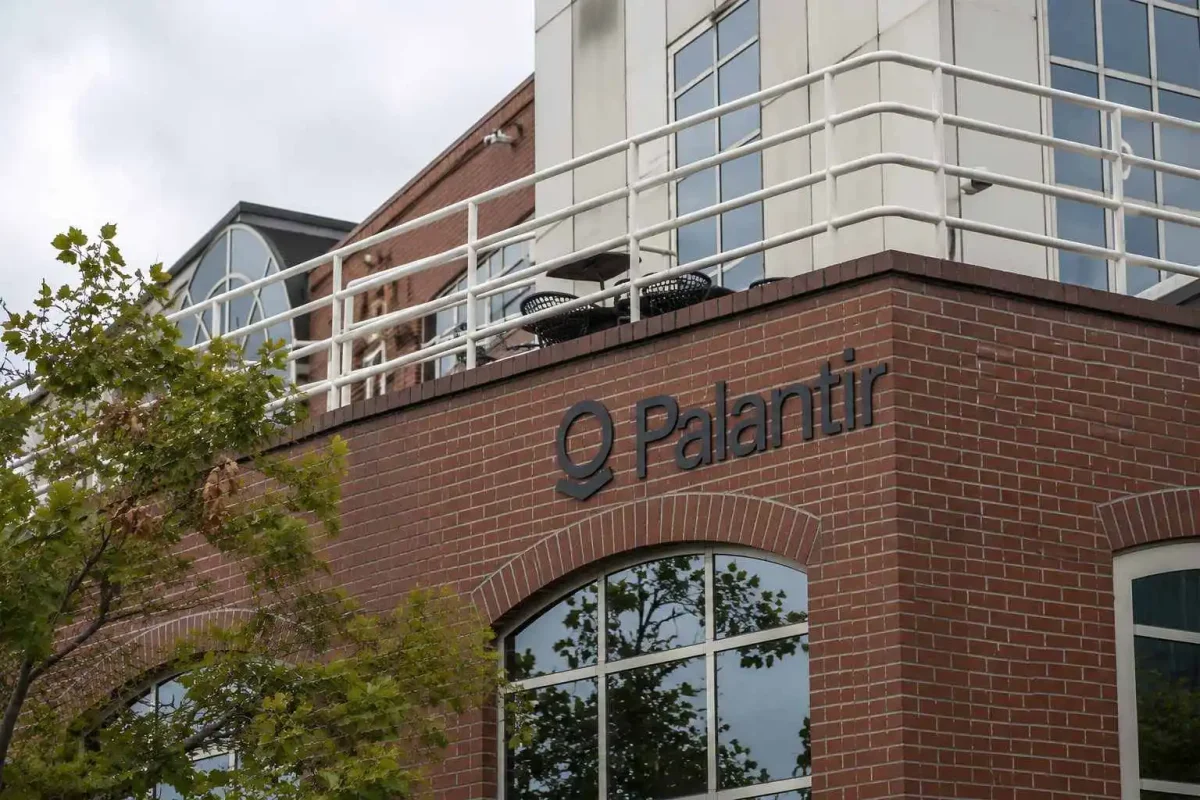
Palantir Technologies Inc. (NASDAQ:PLTR) experienced a sharp decline on Wednesday, with shares falling 6.4% to $124.11, as a broader software sector warning triggered a reassessment of the company's premium valuation. The drop erased approximately $22 billion in equity value, a figure that represents 2.9 times the company's projected 2026 revenue of $7.65 billion to $7.66 billion.
The selloff was largely driven by cautious commentary from Pegasystems Inc. (NASDAQ:PEGA), whose shares tumbled 17.1% after its CEO, Alan Trefler, warned that “letting language models do everything is risky and expensive.” Pegasystems also noted that shifts in the AI market are causing delays in customer purchasing decisions, a sentiment that rippled through the software sector.
Palantir’s valuation, at roughly 42 times forward sales, has long been a point of contention among investors. The company’s enterprise value now stands at about 40.7 times projected revenue, a multiple that leaves little room for error. The $22 billion single-day value destruction underscores the heightened sensitivity to any signals of slowing AI adoption.
The broader software sector also felt the pressure, with the software ETF (BATS:IGV) dropping 3.0%. C3.ai Inc. (NYSE:AI) fell 6.1%, while Datadog Inc. (NASDAQ:DDOG) slipped 3.1% and Snowflake Inc. (NYSE:SNOW) lost 1.1%. The Nasdaq-100 ETF (NASDAQ:QQQ) was relatively flat, dipping just 0.1%.
Palantir’s recent financial performance has been robust, with first-quarter revenue surging 85% year-over-year to $1.63 billion, driven by a 133% jump in U.S. commercial revenue. The company’s GAAP operating margin stood at 46%. Management has guided for second-quarter revenue between $1.797 billion and $1.801 billion, implying about 79% growth, slightly below the first quarter’s pace.
For the full year, Palantir expects revenue of $7.65 billion to $7.66 billion, with U.S. commercial revenue projected to exceed $3.224 billion, a 120% increase. Adjusted free cash flow is anticipated between $4.2 billion and $4.4 billion. The company holds $8.0 billion in cash and Treasuries with no debt, though net cash has minimal impact on its valuation.
Investors are now focused on Palantir’s second-quarter earnings, scheduled for release after the close on August 3. The key question is whether the AI purchasing slowdown observed in other segments has affected Palantir’s Artificial Intelligence Platform. Analysts at Morgan Stanley (NYSE:MS) offered a contrarian view on Tuesday, stating, “We think the market has become too negative,” though their comment was directed at the software sector broadly.
The 10-year Treasury yield rose to 4.66%, its highest since May 21, adding further pressure on growth stocks. If Palantir’s upcoming earnings report exceeds guidance, Wednesday’s repricing could reverse. However, softer AI bookings, inconsistent government awards, or rising yields could intensify the selloff.
Palantir’s valuation remains an outlier in the software space, and the $22 billion move on Wednesday serves as a stark reminder of the risks tied to lofty expectations. The company’s elevated multiples continue to be both its greatest strength and its most significant vulnerability.