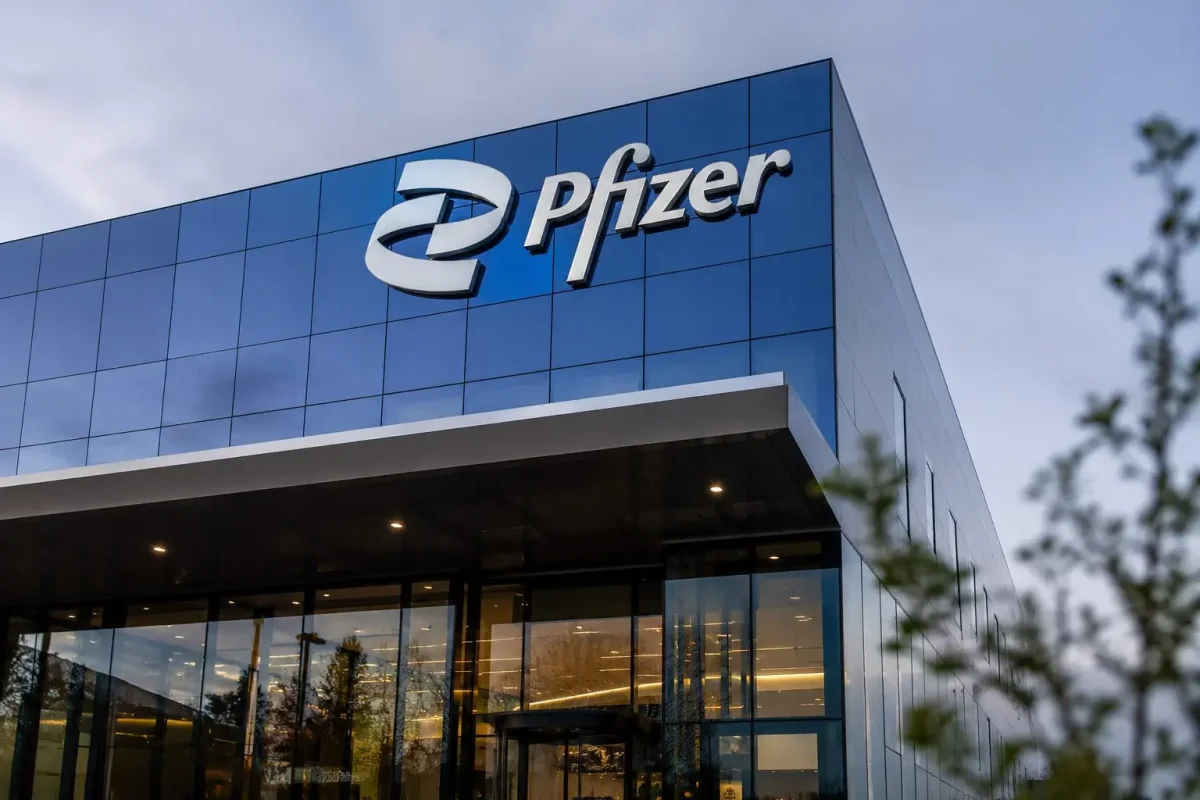
Pfizer Inc. (NYSE: PFE) saw its shares climb approximately 0.9% to $26.04 during regular U.S. trading on Thursday, following the release of its second-quarter earnings report. The stock has now advanced about 4% compared to its closing price before the results were announced on Monday, reflecting investor optimism about the company's underlying business strength.
The headline numbers were encouraging: revenue of $15.03 billion surpassed consensus estimates by 4.4%, while adjusted earnings per share of $0.77 came in 13.2% above expectations. However, the more significant story lies beneath the surface—Pfizer raised its full-year guidance by $500 million, but this net increase masks a more dramatic shift in the company's revenue mix.
Pfizer increased its non-COVID revenue outlook by $1.5 billion, while simultaneously reducing its COVID-related revenue projection by $1 billion. This means the core business upgrade was three times the size of the overall net guidance increase, highlighting the company's successful pivot away from pandemic-era products.
The second-quarter results illustrate this trend clearly. The four largest non-COVID products—Eliquis, the Vyndaqel family, Padcev, and Lorbrena—collectively added $797 million in revenue compared to the same period last year. Eliquis led the way with a 21% revenue surge to $2.43 billion, co-marketed with Bristol Myers Squibb (NYSE: BMY). Meanwhile, Paxlovid and Comirnaty together saw a $526 million decline, representing 66% of the gains from the top four products. This offset explains why a 95% drop in Paxlovid sales did not drag down total revenue.
CEO Albert Bourla emphasized the company's strategic focus on efficiency and reinvestment. Adjusted R&D spending increased 12%, while adjusted selling and administrative expenses declined 3%. "We are creating efficiencies … and we reinvest in R&D," Bourla stated. Despite this, adjusted EPS fell 3% year-over-year to $0.77.
Pfizer maintained its 2026 adjusted EPS guidance of $2.80 to $3.00, which includes an approximate $0.10 impact from the Innovent Biologics deal. The company also reiterated its cost-saving program, expecting to realize about $9.7 billion in net savings by 2029, with an additional $2.5 billion targeted for 2027-2029.
In Thursday's trading, Pfizer outperformed Bristol Myers and Merck (NYSE: MRK) but lagged Eli Lilly (NYSE: LLY), which rose 1.5%. Analyst sentiment remains cautious, with 18 holds, eight buys, one overweight, and two sell ratings. The mean price target stands at $28.42, roughly 9% above Thursday's close, with a range of $25 to $35.
RBC analyst Trung Huynh noted the results showed strength across a broad portfolio but added that Pfizer must deliver on key 2026 milestones. Risks include $4.3 billion in noncash intangible asset impairments, including a $3.8 billion charge related to sigvotatug vedotin, as well as potential patent expiries and pipeline disappointments. The challenge now is translating pipeline progress into sustained growth beyond 2028.