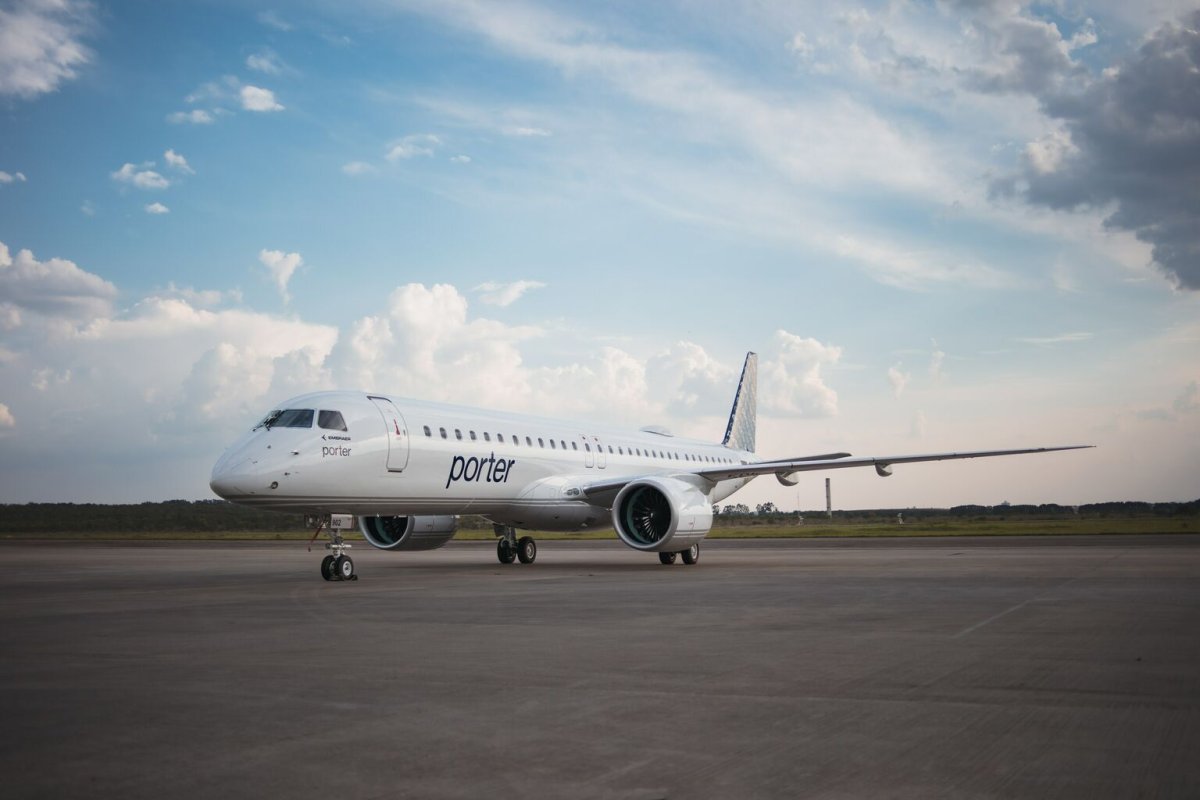
Porter Airlines has tapped into Ottawa's emergency airline-financing program to cushion the blow of surging fuel costs, but conflicting reports have emerged regarding the exact size of the loan. A representative from the Canada Enterprise Emergency Funding Corporation (CEEFC) told Daily Hive on September 15 that C$150 million had been approved for the privately held carrier. However, a Canadian Press report published a day earlier indicated Porter had recently received C$125 million. Porter has declined to comment on the specifics of its agreement, leaving the C$25 million discrepancy unresolved until the airline or CEEFC discloses the final executed amount and draw schedule.
While the precise figure remains murky, the broader program is well-defined. CEEFC's Liquidity for Airline Sector Resilience (LASR) facility, launched on June 8, provides eligible passenger airlines with up to C$150 million in bridge financing. These funds are tied to elevated fuel costs and operational requirements, with loans extending over four years at interest rates above Canada's borrowing cost but below what affected carriers might otherwise secure. Borrowers must maintain routes and employment, cap executive compensation, and make commercially reasonable efforts to source from Canadian suppliers.
This facility is structured as debt, not equity, meaning the government takes no ownership stake. It can help preserve capacity during a temporary oil shock, but it also allows borrowers to continue competing on routes and fares they might otherwise trim. WestJet, which has not utilized the program, argues this distorts competition. Porter, however, says it accessed the facility to mitigate the extreme effects of fuel price spikes.
Fuel-Shock Balance-Sheet Snapshot
For investors, the more telling signal is how the same fuel bill is separating Canada's listed carriers. Transat A.T. (TSX: TRZ) provides the most direct public comparison. It fully drew its C$150 million LASR facility, taking C$125 million during its fiscal third quarter and the final C$25 million in September. Transat then secured an additional C$250 million from CEEFC under an older emergency-financing program.
The cash need is starkly visible in Transat's accounts. Fuel costs surged by C$105 million year-over-year in the July quarter, adjusted EBITDA swung to negative C$0.9 million from positive C$81.2 million, and free cash flow was negative C$301.8 million. The carrier had just C$243 million in cash at July 31. While a loan can bridge this mismatch, it does not repair the underlying fare, load-factor, or cost problems.
Air Canada's Stronger Position
Air Canada (TSX: AC) presents a stronger counterexample. Its second-quarter fuel expense rose 49% to C$1.71 billion, yet the airline still generated C$719 million in adjusted EBITDA and ended June with C$8.91 billion in liquidity. Management says pricing, cost actions, and hedges should offset about 60% of the incremental third-quarter fuel expense and all of it in the fourth quarter. That forecast could prove optimistic if oil or refining margins climb again, but Air Canada's buffer is measured in billions rather than hundreds of millions.
Porter's Growth Ambitions
Porter's loan should not be interpreted as a sign of insolvency. The airline is still expanding: its July financing agreement with Brazil's BNDES covers up to 19 additional Embraer E195-E2 jets, part of a firm order for 75, with 54 already delivered. The sharper question is whether emergency liquidity helps that growth generate cash or merely keeps capacity in a market where fuel cannot yet be fully passed through to passengers.
For shareholders of Air Canada and Transat, Porter's exact draw matters less than its effect on competitive capacity. A supported Porter can continue serving routes and pricing seats while fuel remains elevated. The evidence that will settle the investment case is a published Porter loan amount, followed by any route or fare changes and Transat's next cash-flow report. Until then, C$125 million and C$150 million should not be presented as the same fact.
