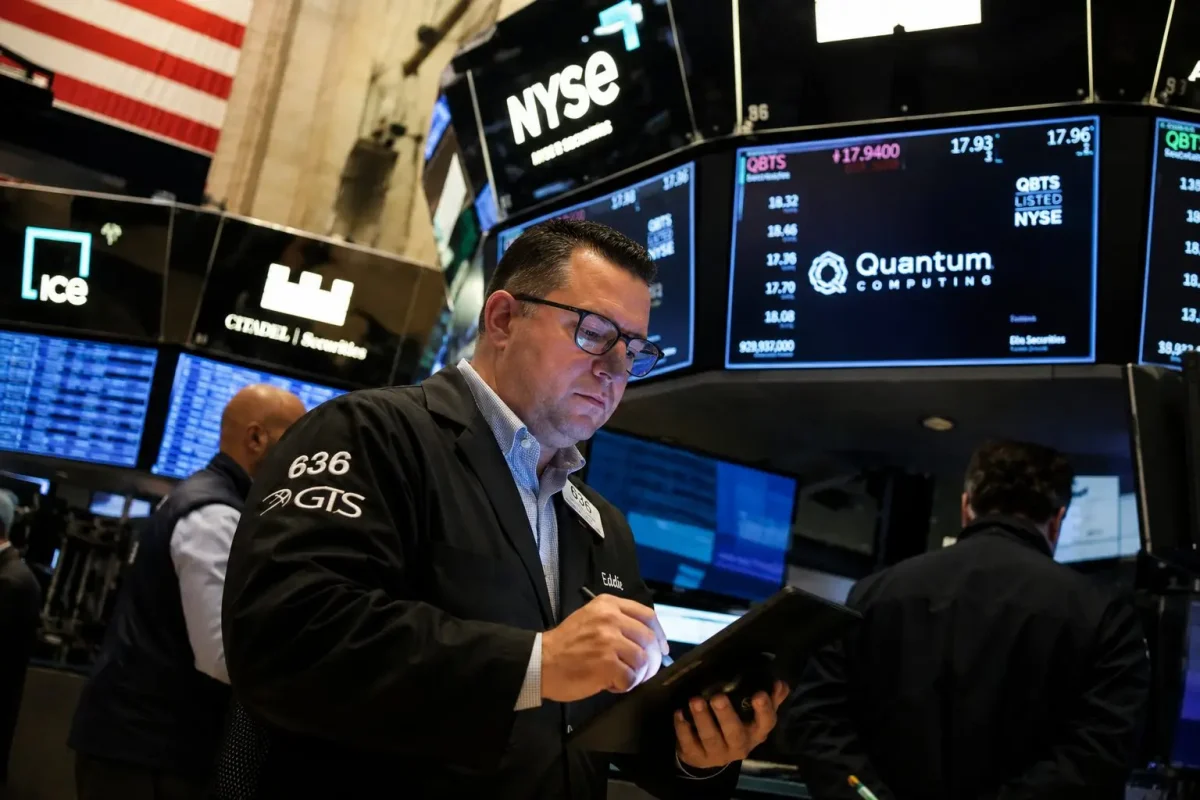
Quantum computing stocks experienced a significant rally on Thursday, driven by a major policy announcement from the U.S. Commerce Department. The department disclosed preliminary agreements totaling $2 billion under the CHIPS Act, specifically targeting the quantum technology sector. This news propelled shares of D-Wave Quantum (QBTS), Rigetti Computing (RGTI), and Infleqtion (INFQ) to gains exceeding 30% during the trading session.
D-Wave Quantum closed the day up 33.37% at $25.74, while Rigetti Computing added 30.57% to finish at $22.04. Infleqtion, a smaller player in the quantum space, saw its stock rise 31.48% to $14.70. The broader market also responded positively, with established technology firms such as IBM and GlobalFoundries advancing on the news.
Government Commitment to Quantum Technology
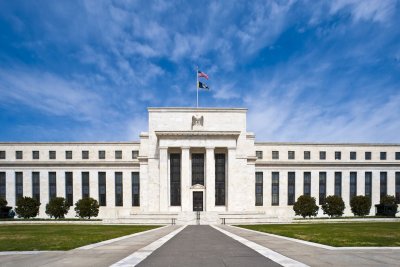
The Commerce Department's move marks a shift from research-focused grants to more concrete financial commitments. The department signed nine letters of intent (LOIs) tied to $2.013 billion in CHIPS Act incentives. While these are not final awards, the department indicated it would take minority, non-controlling equity stakes in each recipient company. This structure aims to ensure taxpayer dollars are used effectively while fostering domestic quantum capabilities.
D-Wave Quantum announced it had signed a LOI for $100 million in proposed funding, which will be directed toward both its annealing and gate-model quantum systems. The company's annealing technology is primarily used for optimization problems, while its gate-model machines represent the more conventional quantum computing architecture that most investors anticipate. CEO Alan Baratz described the development as a "transformative moment" for the company.
Rigetti and Infleqtion Details
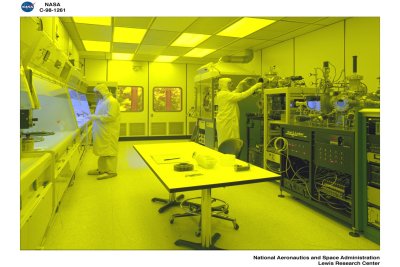
Rigetti Computing revealed that it had signed a LOI for up to $100 million over three years, focused on advancing superconducting quantum computing research. These systems rely on circuits cooled to extremely low temperatures to achieve quantum states. CEO Subodh Kulkarni stated that the funding would enable Rigetti to "tackle key scaling bottlenecks" that have historically hindered progress in the field.
Infleqtion, meanwhile, could receive up to $100 million if it meets specific milestones, with the funds directed toward its neutral-atom quantum technology. This approach traps individual atoms and uses them as qubits, the fundamental units of quantum computation. CEO Matt Kinsella emphasized that quantum computing is a "foundational technology" for maintaining competitiveness and security in the modern era.
Broader Industry Impact
The announcement also benefited larger industry participants. IBM and the Commerce Department are jointly investing $1 billion in Anderon, a separate quantum wafer foundry located in Albany, New York. IBM CEO Arvind Krishna noted that Anderon would be "well-positioned" to support quantum development in the United States. GlobalFoundries announced a $375 million LOI to expand its Quantum Technology Solutions, with the Commerce Department expected to receive roughly a 1% equity stake. CEO Tim Breen highlighted that the initiative supports domestic manufacturing and "supply-chain resilience."
The market interpreted these moves as a clear signal that Washington is committed to building quantum capacity within U.S. borders, not merely supporting experimental setups. This sentiment particularly buoyed smaller companies that still require substantial investment, long development timelines, and investor confidence that commercial quantum machines are on the horizon.
Risks and Caution
Despite the exuberance, the rally carries notable risks. The awards are still preliminary and depend on final documentation and milestone achievements. The equity structures involved may reintroduce dilution concerns for shareholders. Moreover, practical quantum computers continue to face significant technical hurdles, including error rates that can render calculations useless before they are completed.
Looking ahead, Friday will be a key test for whether traders sustain the momentum or opt to take profits ahead of the long Memorial Day weekend. U.S. stocks will trade normal hours on Friday, but bond markets will close early, and both will be closed on Monday. The next major catalysts will come when contracts are signed, milestones are met, and tangible evidence emerges that federal funding is accelerating the transition from laboratory research to commercial products.