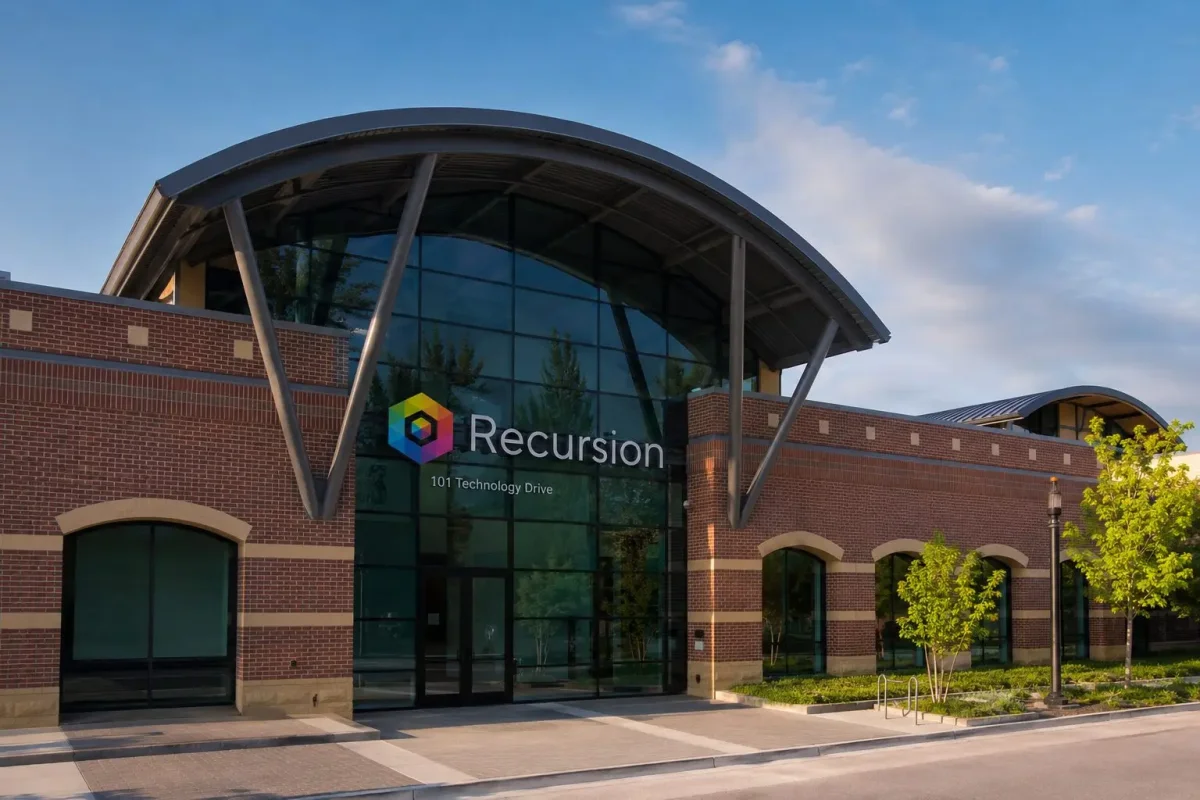
Recursion Pharmaceuticals (RXRX) saw its shares tumble to a fresh 52-week low on Tuesday, as the market weighed disappointing first-quarter earnings against the company's promise of a robust clinical pipeline. The stock fell 2.2% to $2.825, after touching an intraday low of $2.77, with volume exceeding 10 million shares. The stock has now lost approximately 36% of its value over the past year, reflecting ongoing investor skepticism about the firm's ability to translate its artificial intelligence-driven drug discovery platform into commercial success.
The company reported first-quarter revenue of $6.47 million, a steep decline from $14.75 million in the same period last year, and well below the $16.28 million consensus estimate. However, Recursion managed to narrow its net loss to $117.5 million, or $0.22 per share, compared to a loss of $202.5 million, or $0.50 per share, a year earlier. The per-share loss came in better than the $0.26 expected by analysts, offering a modest silver lining for the quarter.
Cash and cash equivalents stood at $665.2 million as of March 31, down from $753.9 million at the end of 2025. The company reiterated its belief that its current cash runway will sustain operations into early 2028, providing a buffer against near-term funding needs. Nonetheless, the market remains focused on the path to profitability, which Recursion has acknowledged is still years away, with no product sales anticipated in the foreseeable future.
CEO Najat Khan struck an optimistic tone, highlighting what she called "strong momentum and execution" across the portfolio. Early clinical data for REC-1245, a candidate for solid tumors, showed no dose-limiting toxicities in a Phase 1 study of 16 patients, with predictable, dose-dependent drug exposure observed. Additionally, the first patient has been dosed in the REC-4539 trial, another program in the pipeline.
Perhaps the most anticipated catalyst is REC-4881, a treatment for familial adenomatous polyposis (FAP), a genetic condition that significantly elevates colorectal cancer risk. Phase 2 results showed median reductions in polyp burden of 43% by Week 13 and 53% by Week 25. The company has initiated discussions with the U.S. Food and Drug Administration (FDA) regarding a registrational trial, which, if successful, could pave the way for a potential approval.
Analyst Gil Blum of Needham reiterated a Buy rating on the stock with a $8 price target, calling the REC-4881 trial design update the "next value driver." Blum noted that there is no regulatory precedent for FAP, which could work in Recursion's favor if the FDA aligns on the trial design. However, the lack of a clear regulatory pathway also introduces uncertainty.
Broader biotech weakness added to the pressure on Recursion. The SPDR S&P Biotech ETF (XBI) edged lower on the day, while other AI-focused drug discovery firms also declined. AbCellera Biologics (ABCL) fell approximately 2.6%, and Schrödinger (SDGR) shares were flat.
Investors are now looking ahead to the second half of 2026, when the company expects to provide updates on REC-4881's regulatory progress and additional Phase 1 dose-escalation data for REC-1245. Until then, the stock is likely to remain volatile, caught between the promise of its AI platform and the harsh reality of a long, capital-intensive road to commercialization.