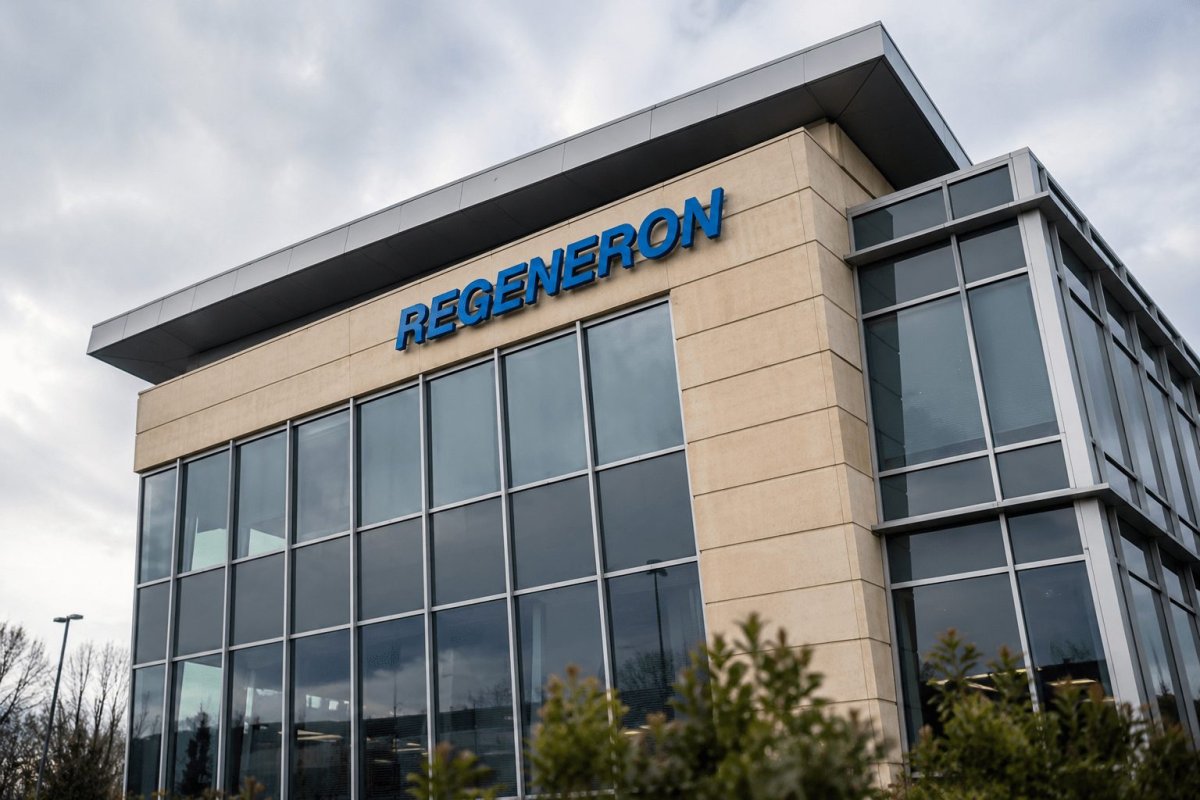
Regeneron Pharmaceuticals (NASDAQ: REGN) saw its stock drop sharply in premarket trading on Monday, following the release of disappointing late-stage trial data for its experimental melanoma combination therapy. The shares fell 11.8% in early trading, reflecting investor disappointment after the high-profile study failed to achieve its primary endpoint.
The trial evaluated a high-dose regimen of fianlimab, Regeneron's LAG-3 inhibitor, combined with cemiplimab (Libtayo), its PD-1 inhibitor, in previously untreated advanced melanoma patients. While the combination demonstrated a median progression-free survival (PFS) of 11.5 months, compared to 6.4 months for Merck's Keytruda (pembrolizumab), the results did not reach statistical significance. The p-value stood at 0.0627, just above the conventional threshold of 0.05 required to confirm that the benefit was not due to chance.
This setback is particularly significant for Regeneron, as the trial was viewed as a key catalyst for the company's oncology pipeline. Investors have been closely watching the company's efforts to diversify beyond its established products, especially given ongoing pressure on its Eylea franchise from competition and regulatory delays. The company's first-quarter results, reported just three weeks ago, showed a 19% rise in revenue to $3.61 billion, but Eylea sales declined 10% to $941 million, underscoring the need for new growth drivers.
Analysts were quick to react to the news. Citi downgraded Regeneron from 'Buy' to 'Neutral' and slashed its price target to $700 from $900, citing the weak Phase 3 results. BMO Capital Markets also cut its price target by nearly 20%. Evan David Seigerman of BMO noted that this was expected to be the defining catalyst for the first half of 2026, with market sentiment tightly linked to the outcome.
Despite the miss, Regeneron emphasized that no new safety signals were observed with the combination. The company also pointed to an ongoing Phase 3 head-to-head trial comparing the high-dose fianlimab combo against Bristol Myers Squibb's Opdualag, which could still provide a path forward for the program. However, if that trial also fails to show a clear benefit, or if full data analysis fails to identify a patient subgroup with a meaningful survival advantage, investor confidence in the LAG-3 program may erode further.
The competitive landscape in advanced melanoma remains dominated by Merck's Keytruda, with Opdualag as the next major challenger. Regeneron's ability to carve out a place for fianlimab will depend on the results of the ongoing trial and the strength of any subgroup analyses.
Regeneron's balance sheet remains robust, with the company having repurchased $803 million in shares during the first quarter and an additional $3 billion buyback program authorized in April. This financial firepower could help support the stock in the near term, but it cannot compensate for a failed late-stage catalyst. The stock closed at $698.25 on Friday, and if the premarket decline holds, it would erase much of the gradual gains seen last week.
The broader market context also weighs on Regeneron. While Dupixent, co-marketed with Sanofi, continues to show strong demand, the Eylea franchise faces headwinds from cheaper biosimilars and Roche's Vabysmo. The delayed approval of a pre-filled syringe for Eylea has compounded these challenges. Investors will now turn their attention to the next data readouts and the company's ability to manage its pipeline and product portfolio.