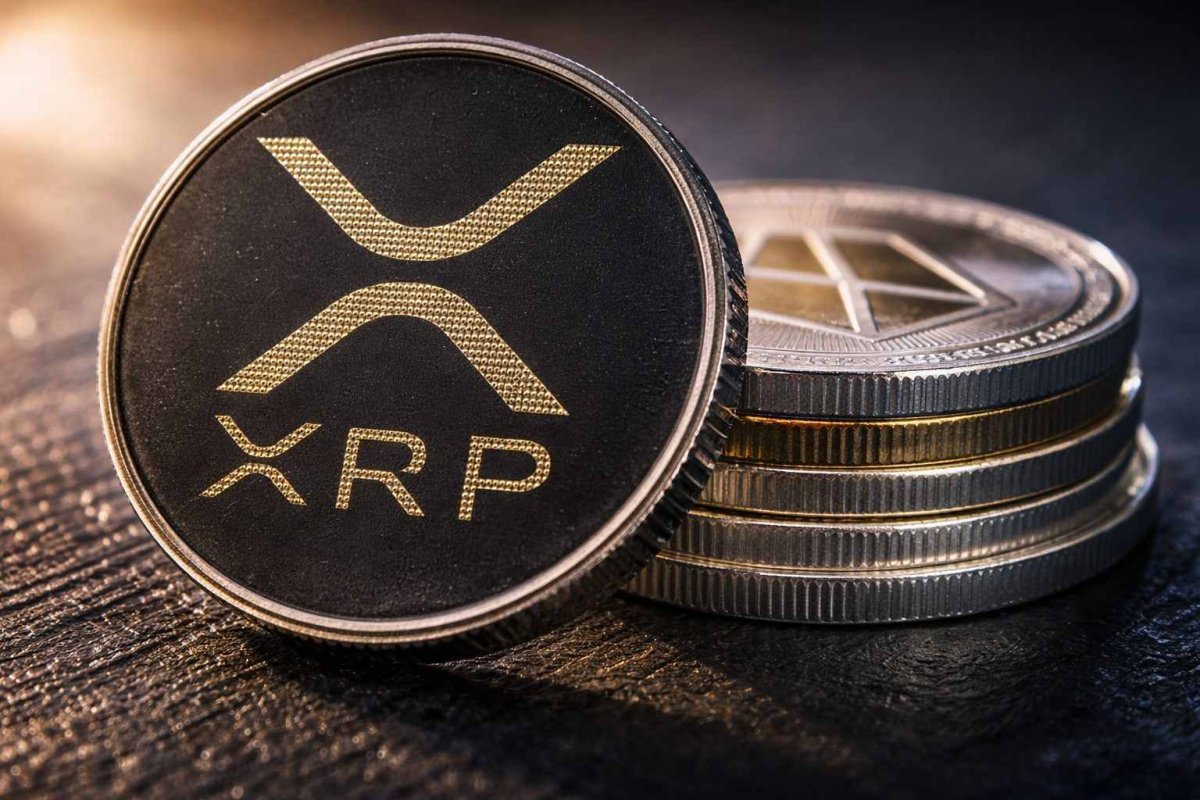
XRP traded in a narrow range between $1.38 and $1.39 on Wednesday, April 15, 2026, as competing headlines shaped its price action. The digital asset found support from a significant institutional partnership announcement but faced headwinds from a delayed exchange listing in a key Asian market.
Institutional Validation from Korea
The primary catalyst for the token's positive movement was Ripple's disclosed collaboration with Kyobo Life Insurance, a major South Korean insurer. The partnership centers on a pilot program for settling government bonds using blockchain technology. Specifically, the project will explore tokenizing these bonds—converting them into digital assets on a distributed ledger—with the goal of slashing settlement times from the traditional two days to near-instantaneous execution.
Ripple highlighted that this marks its first alliance with a leading Korean insurance firm. Settlement operations will be facilitated through Ripple Custody, the company's proprietary digital asset safekeeping platform. Fiona Murray, Ripple's Managing Director for Asia Pacific, framed the development as a maturation of market infrastructure, stating, "Institutional-grade digital asset infrastructure is no longer a future aspiration." Jin Ho Park, Executive Vice President at Kyobo, noted the pilot aims to test whether blockchain can handle traditional financial instruments "securely and efficiently."
Market Performance and Context
According to data from CoinMarketCap and CoinGecko, XRP's price reflected gains of approximately 1.4% to 2.2% over the preceding 24-hour period. Trading turnover reached about $2.5 billion, propelling the token's total market capitalization close to $85 billion. The move occurred alongside broader cryptocurrency market activity, with Bitcoin hovering near $74,340 and Ether quoted around $2,356.
Despite the uptick, XRP's longer-term challenges remain evident. The token continues to trade roughly 62% below its all-time high of $3.65, a level recorded in previous years. This underscores the market's demand for sustained, practical adoption beyond regulatory or legal developments.
Rakuten Delay Caps Enthusiasm
The positive momentum from the Korean announcement was partially offset by news from Japan. On April 7, Rakuten Wallet had announced plans to list XRP and four other digital assets, with trading set to commence on April 15. However, on Wednesday, the company posted an update indicating the launch for all five tokens had been postponed, providing no immediate alternative date. This delay removed a near-term catalyst for increased retail accessibility and trading volume in a significant market.
Evolving Landscape for XRP
The current environment for XRP differs markedly from the bullish setup of the previous year. In March 2025, a pivotal legal development occurred when the U.S. Securities and Exchange Commission dropped its appeal of a 2023 court decision that found XRP sales on public exchanges did not constitute securities offerings. That same month, asset management giant Franklin Templeton filed for an XRP exchange-traded fund (ETF), and weeks later, the CME Group launched XRP futures contracts. These events were viewed as major steps toward mainstream financial integration.
Today, the path forward appears more dependent on tangible use cases. The Kyobo Life pilot represents a test of real-world utility in the massive fixed-income market. However, analysts caution that if the project fails to progress beyond the pilot phase, and the Rakuten delay persists, Wednesday's price increase may prove temporary.
Broader Crypto Sentiment
Market sentiment across the digital asset space remains mixed. On Tuesday, Reuters reported that Goldman Sachs had filed for its first bitcoin ETF. Yet, Morningstar analyst Bryan Armour characterized such a product as "a hard sell" given the asset class's inherent volatility. Separately, the United Kingdom's Financial Conduct Authority initiated a consultation on new cryptocurrency regulations, highlighting the ongoing global regulatory evolution.
For XRP, the immediate future hinges on the execution of its institutional partnerships. The token's recovery from its steep drawdown from all-time highs requires evidence of sticky, operational demand. The market is now watching to see if blockchain-based bond settlement can transition from a promising pilot to a production-scale solution, providing a fundamental driver for the asset's value beyond speculative trading.