Rivian Automotive Inc. faces a critical test when U.S. markets reopen Tuesday, following a dramatic 26.6% surge in its share price on Friday. The electric vehicle maker's stock closed at $17.73, after trading between $16.40 and $18.48 during the session. With markets closed Monday for the Presidents' Day holiday, investors have a long weekend to digest the company's latest financial results and ambitious 2026 projections, which place enormous emphasis on the success of its forthcoming R2 vehicle platform.
Quarterly Results and 2026 Forecast
Rivian's fourth-quarter report, filed with the Securities and Exchange Commission, revealed revenue of $1.28 billion and a gross profit of $120 million. For the full year 2025, the company achieved a consolidated gross profit of $144 million. Perhaps more significant was the 2026 delivery forecast, which the company projects will be between 62,000 and 67,000 vehicles. However, this growth comes with substantial costs. Rivian anticipates an adjusted EBITDA loss—a key measure of operating performance—ranging from $1.8 billion to $2.1 billion for 2026. Capital expenditures for the year are expected to be between $1.95 billion and $2.05 billion.
By the end of 2025, Rivian reported liquidity of $6.58 billion, providing a crucial financial cushion. A notable bright spot was a 109% year-over-year jump in software and services revenue to $447 million, bolstered by the company's joint venture with Volkswagen.
The R2: Rivian's Make-or-Break Vehicle
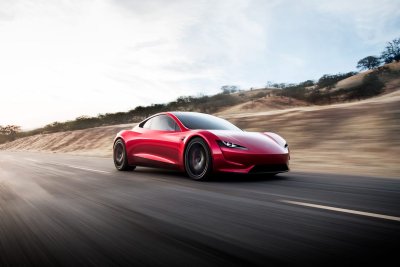
All attention is focused on the R2 SUV, which Rivian expects to begin delivering to customers in the second quarter of this year. The vehicle, with a base price targeting approximately $45,000, is designed to appeal to a broader market and compete directly with Tesla's popular Model Y. "The growth is really, of course, what we see in R2," CEO RJ Scaringe told Reuters, underscoring the model's central role in the company's future.
Analysts echoed this sentiment. Piper Sandler stated bluntly that "nothing matters more than a timely launch for the R2 SUV," while noting the company appears "essentially on track." Dan Coatsworth, head of markets at AJ Bell, interpreted the quarterly report as a sign Rivian is "finding its groove," despite continuing to operate at a loss.
Wall Street Reacts with Upgrades
The quarterly report prompted several analysts to revise their ratings on Rivian stock. Joseph Spak of UBS upgraded shares to Hold from Sell, raising his price target to $16. Edison Yu of Deutsche Bank was more bullish, moving his rating to Buy from Hold and setting a $23 price target, according to Barron's. These shifts reflect a cautiously optimistic reassessment of Rivian's path to scaling production and controlling costs.
Key Dates and Market Risks
The immediate calendar holds two major milestones for investors. The next significant update on the R2, including new product details and the full lineup, is scheduled for March 12. This will be followed by the first customer deliveries of the R2, slated to begin in the second quarter.
However, substantial risks remain. Rivian continues to report heavy losses and plans to spend nearly $2 billion on factories and equipment this year alone. Any stumble in the R2 production ramp-up, or further price cuts in the intensely competitive EV market, could severely impact the company's financial trajectory and stock price.
When trading resumes Tuesday, the market will judge whether Friday's explosive rally has staying power or if profit-taking will erode the gains. The outcome will set the tone for Rivian's stock as it approaches the pivotal R2 launch period, a defining chapter for the EV startup's quest for sustainable growth and profitability.