RTX Corporation (NYSE:RTX) saw its stock edge up 0.37% to close at $195.93 on Friday, following news that its Raytheon UK unit, along with consortium partners, secured a £2 billion contract to train the British Army. The modest share price movement reflects market recognition that the 15-year award will be divided among five companies, limiting the direct revenue impact on RTX.
At Friday's exchange rate of $1.3401 per British pound, the total contract value equates to approximately $2.68 billion. Spread over its 15-year term, that yields an average annual value of roughly $178.7 million. Against the midpoint of RTX's 2026 adjusted sales guidance range of $92.5 billion to $93.5 billion, this annualized figure represents just 0.19%. It is important to note that RTX has not disclosed its specific work share within the consortium, so this calculation uses the full contract value against total group sales and is not a direct revenue forecast for RTX.
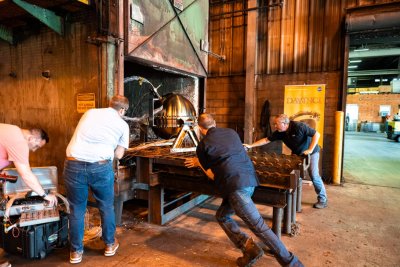
The contract underscores longer-term revenue visibility for RTX rather than an immediate sales boost. The training program is designed to incorporate virtual, synthetic, and data-driven methodologies. James Gray, head of Raytheon UK, stated that the initiative will provide soldiers and commanders with a "new level of training realism."
Despite the muted reaction to the contract, RTX outperformed several larger aerospace peers this week. Lockheed Martin (NYSE:LMT) fell 4.16%, and GE Aerospace (NYSE:GE) declined 4.83%, while the S&P 500 rose 1.20% over the same period. RTX itself slipped 1.67% for the week, reflecting broader market pressures.
Valuation remains a key factor for RTX. The stock trades at 36.8 times trailing earnings, above Lockheed's 25.3 multiple but below GE's 43.4. This suggests investors are assigning RTX some credit for its defense exposure, but not to the extent of GE's commercial aerospace business. The market continues to monitor RTX's execution, margin performance, and order-to-sales conversion rates.
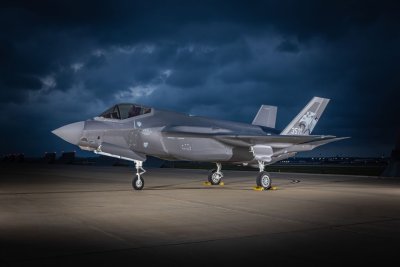
Other developments this week highlighted RTX's focus on production capacity. Raytheon announced it is collaborating with European suppliers to double output of Stinger missiles and is conducting NATO-funded studies to qualify additional manufacturers for the AMRAAM (Advanced Medium-Range Air-to-Air Missile). Tom Laliberty, head of Raytheon's land and air defense unit, emphasized the company is "laser-focused on doubling" Stinger production. No new order figures were provided.
Investors should be cautious about extrapolating the contract's headline value into profit. The annual revenue contribution could fluctuate due to milestone-based payments and the undetermined share RTX will receive. Risks include potential delays, cost overruns, or a smaller-than-expected allocation of work. In April, management disclosed that RTX had paid $500 million in tariffs and might seek refunds—a figure that dwarfs the contract's $178.7 million annual average before any partner share.
Looking ahead, key economic data releases next week include the June U.S. consumer price index (Tuesday), producer price index (Wednesday), and retail sales (Thursday), all at 8:30 a.m. ET. These inflation and spending metrics could influence Treasury yields and valuations, particularly for high-multiple industrial stocks. RTX is scheduled to report its second-quarter results on July 23 at 7:30 a.m. EDT, where investors will focus on any revisions to sales, profit, or cash-flow guidance.